

· AFX Research
Landlocked Property: Easements by Necessity and Recorded Access
How parcels lose road frontage, where a recorded right of access is usually written, why easements by necessity leave no instrument, and what a search can confirm.
Table of Contents
A landlocked parcel is one with no frontage on a public road, so reaching it means crossing land somebody else owns. Buyers run into this most often with rural acreage, back lots behind a subdivision, and inherited family land that was divided informally decades ago. The question is never really “is it landlocked” but “is there a recorded right to get in,” and those have different answers more often than people expect. Our guide to finding easements on a property covers the search itself; this one is about access specifically.
How a parcel loses its access
Very few landlocked parcels were drawn that way on purpose. Most were created by a split.
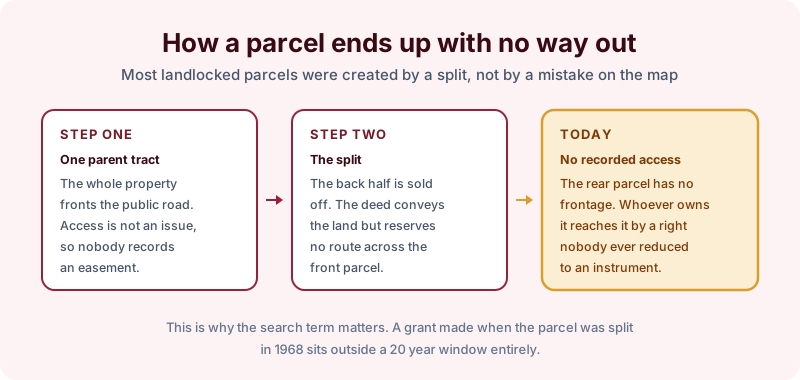
One tract fronted the road. Access was not a problem, so nobody thought about it. Then the back half was sold, and the deed conveyed the land without reserving a route across the front half. Everyone involved knew how the buyer would get in, and everyone involved is now gone.
This is also why the search term matters more here than anywhere else in easement work. If the split happened in 1968, the instrument that would have granted access is nearly sixty years old, and a search that reaches back twenty years cannot find something recorded outside its window. Matching the term to the age of the parcel, not the age of the house, is the difference between an answer and a false negative. The three search terms exist for exactly this reason.
Where a recorded right would be written
When access does exist on the record, it tends to sit in one of a few places.
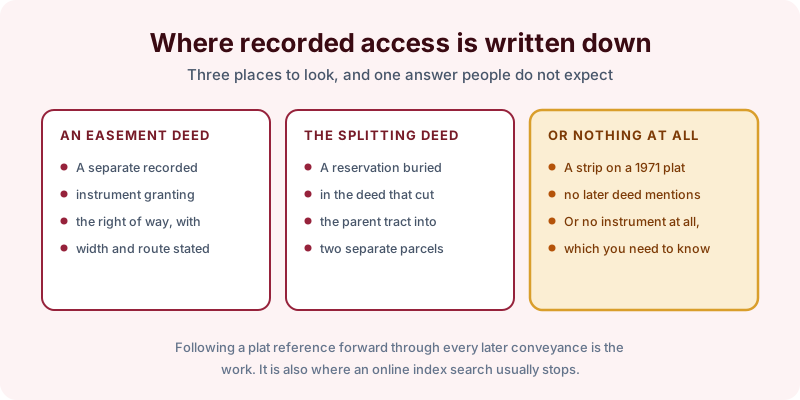
The cleanest case is a separate easement deed stating a width and a route. More commonly the right is a reservation inside the deed that split the parent tract, a clause that never gets mentioned again in any later conveyance. The third place is the subdivision plat, where a strip drawn in 1971 may burden a lot that has changed hands five times since without a single deed naming it.
Following a plat reference forward through every later conveyance is the work, and it is where an online index search usually stops. Indexes are organized by name and by instrument type, and a right of way reserved mid-paragraph in a warranty deed is not indexed as an easement in many counties. Recording and indexing practice varies from county to county, so what is easy to retrieve in one is a records-room job in the next.
Necessity and prescription leave no paper
Here is the part that surprises people: a parcel can have legally enforceable access that no search will ever find.
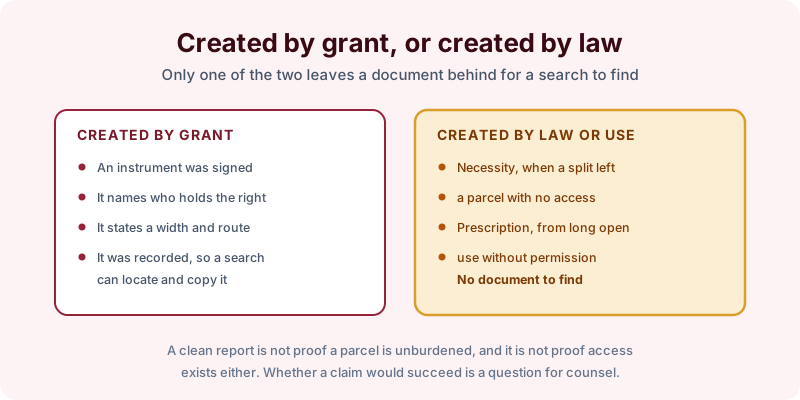
An easement by necessity can be implied when a single tract is divided in a way that leaves one piece with no access. A prescriptive easement can arise from long, open, continuous use without permission. Both are creatures of state law, both are created without anyone signing an instrument, and neither appears in the land records unless a court judgment establishing it was recorded afterward.
So a report showing no recorded access is not a report saying the parcel is unreachable, and a driveway in daily use is not proof that a grant exists. Whether a necessity or prescriptive claim would succeed on a particular parcel is a question for an attorney licensed in that state, and the elements differ meaningfully between states. What the search does is tell you which fight you are in: enforcing a document, or making a claim without one.
What to do before you buy
Order the search before the contingency period closes, and reach back past the conveyance that created the parcel. Read what turns up rather than accepting a summary, because width and permitted use decide whether a right of way can carry a construction truck or only a car. If nothing is recorded, that finding is what you take to counsel, and it is far cheaper to learn it before closing than after. Our process page covers the 2 to 3 business day turnaround, and every search is backed by our search guarantee.
The takeaway
Landlocked parcels usually got that way through an old split, so the recorded answer often sits decades back in the chain, or does not exist at all. Both outcomes are worth knowing before money moves. Start the order online, or send us the address and the county and we will tell you which search term fits and what it would and would not cover before anything is ordered.