

· AFX Research
Utility Easements: What Power, Gas, and Telecom Records Show
Who holds a utility easement, why it belongs to a company rather than a neighboring lot, where the grant is recorded, and what a records search cannot locate for you.
Table of Contents
Almost every developed parcel in the country carries at least one utility easement, and most owners find out about theirs the day a crew arrives to trim trees. Unlike a neighbor’s driveway, a utility easement rarely announces itself. The lines may be buried, the holder may be a company that did not exist when the grant was signed, and the instrument creating it may be seventy years old. Our guide to the types of property easements places it in the wider family, and what a right of way actually grants covers the access variety. This one stays on utilities.
Who actually holds the right
An easement that benefits a neighboring lot is an easement appurtenant: it belongs to that parcel and travels with it. A utility easement is usually the other kind, an easement in gross, which belongs to a company or a district rather than to any piece of land.
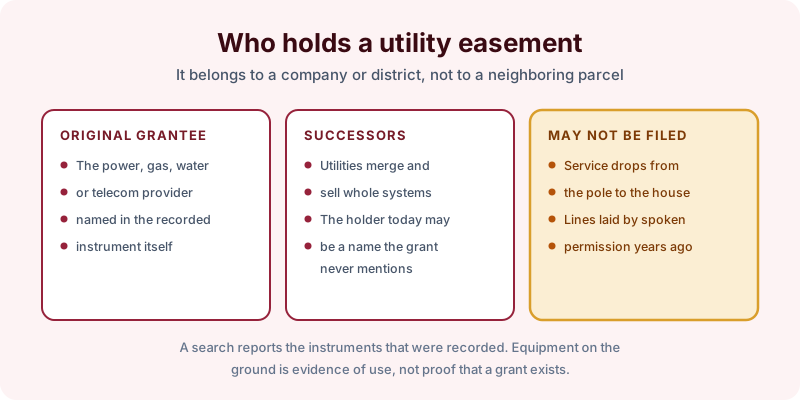
That distinction has a practical consequence. Utilities merge, sell whole systems, and reorganize, and the right moves with the business. An instrument on record may name a rural electric cooperative that was absorbed twice over, while the entity trimming your trees today holds the same easement under a different letterhead. The grant does not lapse because the name on it stopped existing.
There is also a category of facility that never reaches the record at all. The service drop from the pole to your meter, or a line a former owner allowed across the back of the lot on a handshake, can sit on the ground with nothing filed anywhere. Equipment is evidence of use, not proof that a grant exists. The reverse holds as well: a recorded easement with no visible equipment is still a live burden on the parcel.
A defined strip, or the whole parcel
Once the instrument is in hand, the question becomes how specifically it was written.
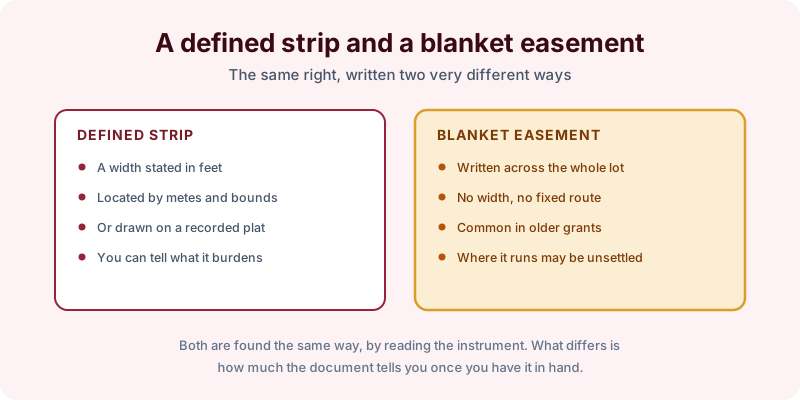
A modern grant usually states a width in feet and fixes the location by metes and bounds or by reference to a recorded plat. You can read it, put it on a map, and see which part of the lot is affected.
Older grants are frequently blanket easements, written across the entire parcel with no stated width and no fixed route. That was ordinary practice when a line was run through open country and nobody expected subdivisions. A blanket easement is not weaker for being vague, and where it may actually be exercised is a legal question rather than a records question.
What the holder may do inside it
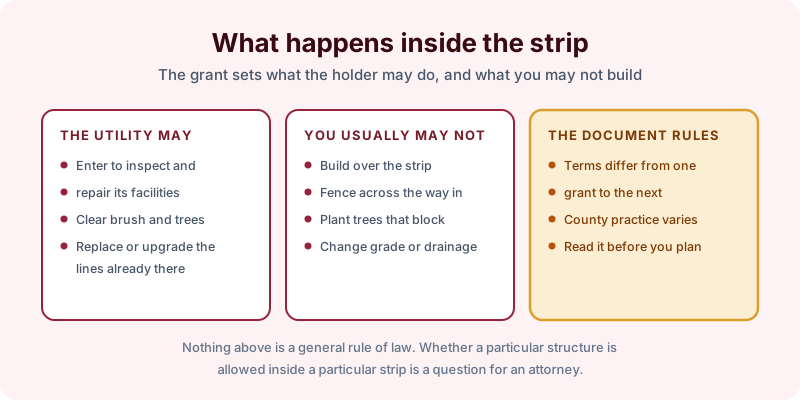
The document sets the scope, not local custom. Most grants let the holder enter to inspect and repair, clear brush and trees, and replace or upgrade the facilities already there. Most restrict the owner from building over the strip, fencing across the way in, or regrading in a way that changes drainage over the line.
Where those terms sit on the spectrum varies enormously between a 1948 pole line easement and a 2019 fiber grant. This is the argument for getting a copy of the instrument rather than a summary of it, which is why our reports attach the documents themselves.
The record and the ground are two questions
An easement search reads the land records. It confirms whether a grant was recorded, who took it, what it permits, and when it was filed, and it hands you the instrument. It does not go to the property and locate the strip between two stakes. That is a surveyor’s work, and the two are complements rather than substitutes.
The search still comes first, because it tells you whether there is anything for a surveyor to locate. How far back it reaches is the choice that matters most: a line easement granted in 1954 is invisible to a search that only looks at the last twenty years, so pick the term against the age of the parcel rather than the age of the house. Our process page covers what the work involves and the 2 to 3 business day turnaround.
The takeaway
Utility easements belong to companies, outlive the names on their paperwork, and are often written far more broadly than owners assume. Find the instrument, read the width and the permitted use, and treat visible equipment and a clean report as two different kinds of information. Start the order online, or send us the address and the county and we will tell you which search term fits and what it would and would not cover before anything is ordered.