

· AFX Research
Why a Recorded Easement Gets Missed, and How to Lower the Odds
How county land record indexes are actually built, the filing and scoping gaps that hide a real easement, what better inputs fix, and what no report can promise.
Table of Contents
Every so often a burden surfaces on a parcel that an earlier search did not report. Sometimes that is a bad search. More often it is a correctly run search meeting a records system that was never built to guarantee completeness. Knowing where the gaps sit is the only way to narrow them.
None of this argues for skipping the search. It argues for scoping it properly and reading the report for what it says.
How the county index is actually built
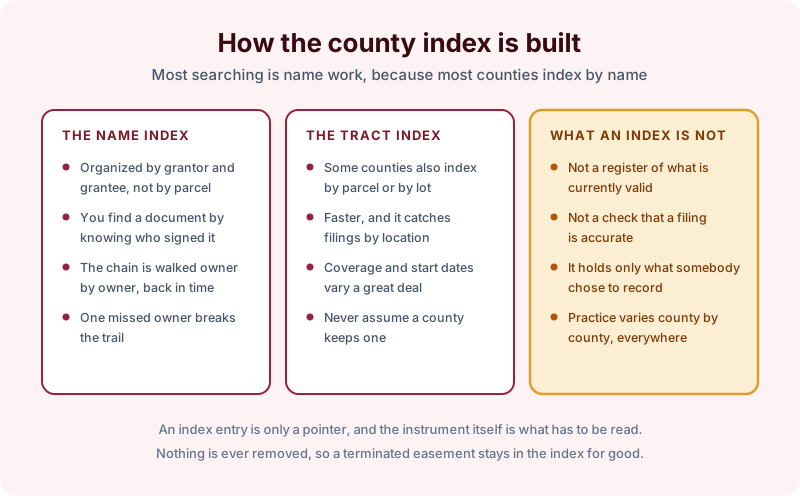
Most counties index land records by name, not by parcel. There is a grantor index and a grantee index, so finding a document means knowing who signed it. An abstractor works backward, owner by owner, using each deed to name the previous owner and searching that name for anything filed while they held title.
Some counties also keep a tract index, organized by parcel or by subdivision lot. Where one exists it is faster, and it catches filings by location rather than by name. Coverage and start dates differ, and none of it is universal — assuming your county keeps one is a reliable way to be wrong.
Either way, the index is a pointer. It is not a register of what is currently valid, it does not vouch for the accuracy of anything filed, and it holds only what somebody chose to record.
Where a real easement slips through
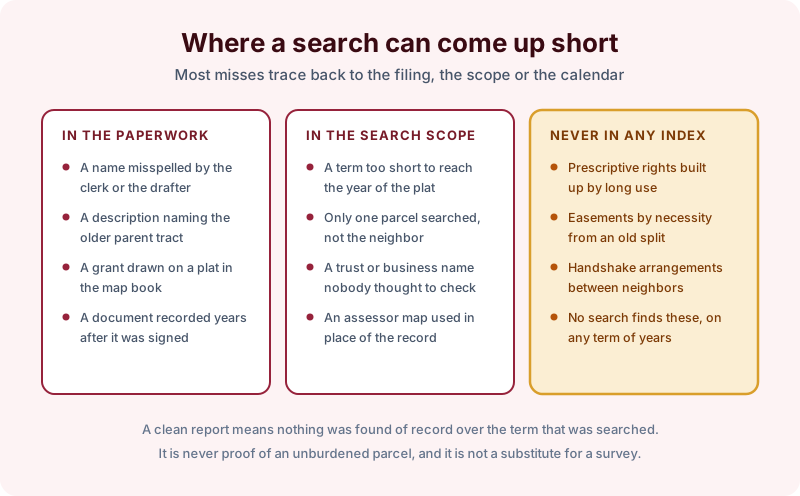
The failures cluster in two places.
In the paperwork. A name is misspelled by the drafter or the clerk, so the document never surfaces under the spelling anyone searched. A grant describes the parent tract that existed before your lot was carved out of it. An easement drawn on a plat lives in the map book rather than the deed book.
In the scope. The term ordered is too short to reach the year the subdivision was platted, which is where the utility and drainage strips were created. Only the subject parcel is searched when the grant that matters was recorded against the neighbor. A prior owner held title in a trust or a business name nobody thought to run.
One related trap deserves a sentence. The assessor’s map is a tax tool drawn for valuation, not the land record, and easements appear on it inconsistently.
The rights no index will ever hold
The wider gap is not an indexing problem at all. A prescriptive easement arises from long and open use rather than from a signature, so nothing is filed. An easement by necessity arises by operation of law when a split leaves a parcel without access, and the deed that caused the problem rarely mentions it. Neighbors agree things across a fence and write none of it down.
No search finds these on any term, which is why a clean report has to be read precisely. It means nothing was found of record over the years searched. It is not proof that the parcel is unburdened, and it is not a substitute for a survey, the tool that locates what is physically on the ground. Whether an unrecorded claim has ripened into a right is a legal question for counsel.
What actually lowers the odds
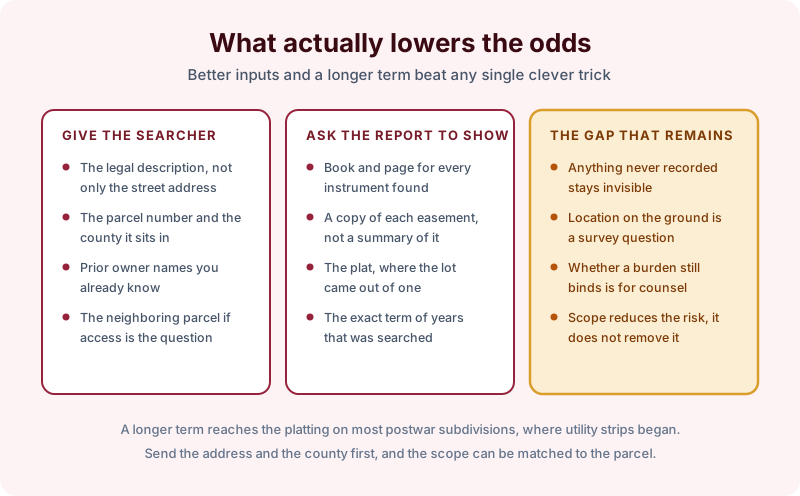
Better inputs help more than anything else. Hand the searcher the legal description rather than only the street address, the parcel number and the county, any prior owner names you have, and the neighboring parcel when access is the question. Ask for the book and page of every instrument found and a copy of each one instead of a summary, the standard our search guarantee is built around.
Then set the term against the parcel’s history rather than a budget. A recent platted lot has a short record behind it. Rural land, split parcels, and anything carrying an unresolved access question need the longer reach, and the three search terms are priced so the choice can be made deliberately. If you are unsure which burdens are even plausible, a quick read of the types of easements narrows it fast.
The takeaway
A land records index is an archive, not a guarantee. It rewards good inputs and a term long enough to reach whatever created the burden. Order against the parcel’s history, read the instruments rather than the index lines, and treat a clean report as a documented absence rather than a certificate of clear land. Where the stakes justify it, pair it with a survey and let counsel draw the conclusions. Our guide to finding easements on a property covers the rest.
Start the order online, or send us the address and the county and we will tell you which search term fits and what it would and would not cover before anything is ordered.