

· AFX Research
When an Easement Was Granted Before the Grantor Owned the Land
Why a premature grant looks perfectly normal on the page, what the doctrine of after acquired title can do to it later, and how a date comparison finds it.
Table of Contents
Developers sign utility easements across ground they are still under contract to buy. Sellers sign access easements for a neighbor a month before closing. Heirs sign before the estate is distributed. None of this is unusual, and none of it is visible by reading the easement deed, which looks exactly like every other easement deed in the drawer. What gives it away is a date, and only if someone thinks to compare two of them. It is the same kind of indexing trap described in our note on why a recorded easement gets missed, arriving from a different direction.
A grant made before ownership
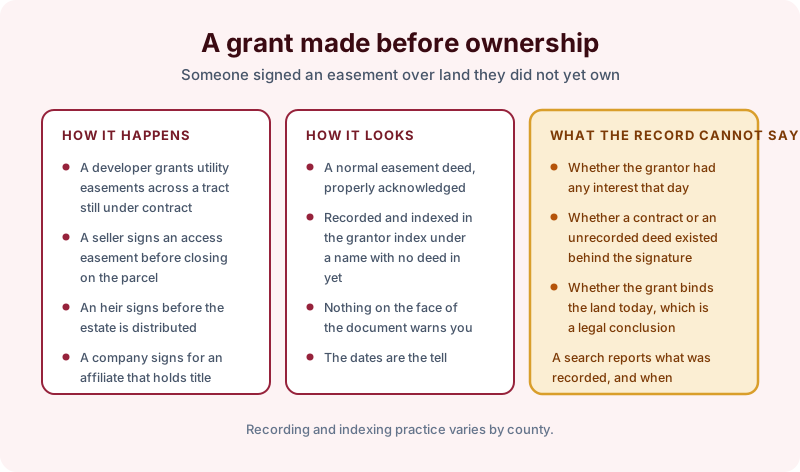
The situations repeat. A developer grants a blanket utility easement over a tract still under contract, because the utility wants the paperwork before it will schedule construction. A seller grants a driveway easement to a neighbor and then closes on the purchase two weeks later. An executor signs before the estate deeds out. A parent company signs for an affiliate that actually holds the title.
On the page it is a normal instrument. Properly signed, properly acknowledged, recorded and indexed in the grantor index under a name that has no deed into it yet. Nothing on the face of the document warns you, because nobody writes “I do not own this” into a grant.
What the record cannot settle is whether the grantor held anything at all that day, whether a contract or an unrecorded deed sat behind the signature, and whether the grant binds the land now. A records search reports what was recorded and when. The rest is a legal conclusion.
What after acquired title can do to it
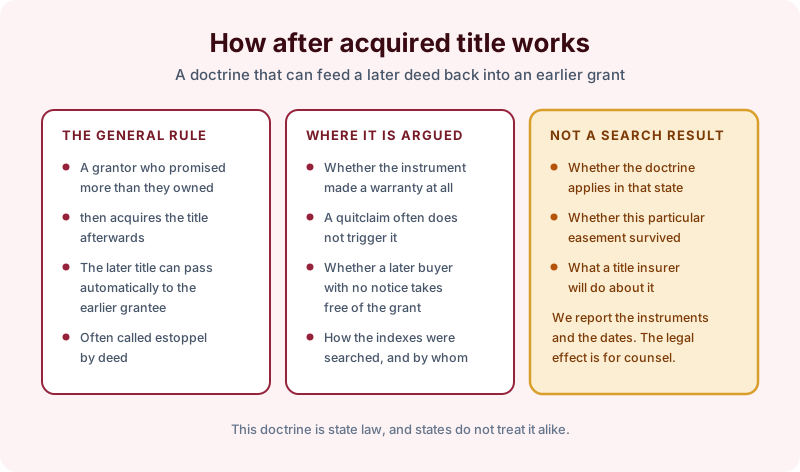
The general rule is well known. If a grantor conveys more than they own and then later acquires the title, that later title can pass automatically to the earlier grantee. Lawyers call it estoppel by deed, and it exists so that a grantor cannot profit from their own shortfall.
Applied to easements it is less tidy. Whether the instrument made a warranty at all matters, and a quitclaim frequently does not trigger the doctrine. So does whether an intervening purchaser took without notice, which turns on how the indexes are searched in that county and what a reasonable search would have found. The grant may sit in the index under a grantor who had no title, which is the classic shape of a wild instrument, and a routine search run against the chain of title alone can walk straight past it.
Whether the doctrine applies in a given state, whether it reached this easement, and what a title insurer will do about it are all for counsel. We report the instruments and the dates.
Finding one in a search
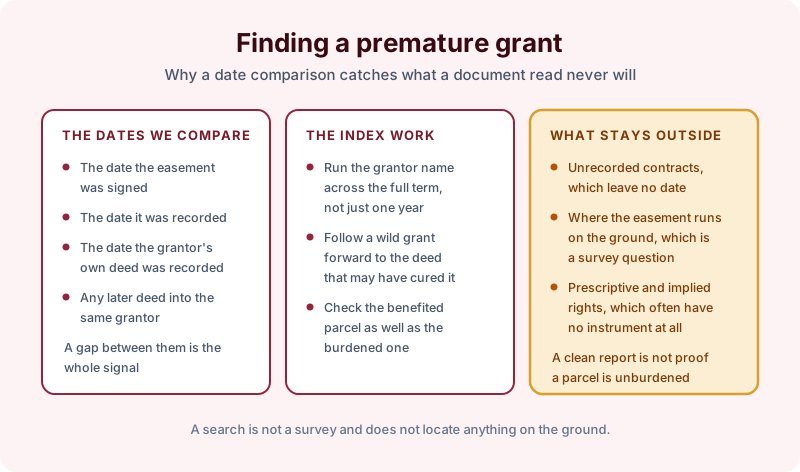
The work is a date comparison. The date the easement was signed, the date it was recorded, the date the grantor’s own deed was recorded, and the date of any later deed into that same grantor. A gap between the first and the third is the whole signal, and it takes a search run across the full term rather than one year to see it.
The index work follows. Run the grantor name forward across the term, follow a wild grant forward to the deed that may have fed it, and check the benefited parcel as well as the burdened one. A 20 year term will miss a 1974 grant that was never cured, which is one of the reasons we ask what the search is for before recommending a term from our easement search packages.
What stays outside is what always stays outside. Unrecorded contracts leave no date. Where the easement runs on the ground is a survey question, not a records question. Prescriptive easements and easements by necessity are frequently created with no instrument at all, so a clean report is never proof a parcel is unburdened. Recording and indexing practice varies by county.
The takeaway
When an easement deed and the grantor’s own deed are months apart in the wrong order, that is worth an hour of somebody’s attention before closing, not after. Ask for both dates and get the documents. Start the order online, or send us the address and the county and we will tell you which search term fits and what it would and would not cover before anything is ordered. Reports run 2 to 3 business days, and our process page sets out the rest.