

· AFX Research
An Easement Granted by a Life Tenant, and How Long It Lasts
Why an easement signed only by a life tenant can end at a death, what the recorded chain shows about who held the remainder, and how to trace the grant afterward.
Table of Contents
An easement is only as durable as the estate the person signing it owned. That sounds abstract until you meet the version that shows up in real files, which is a driveway or a utility line granted by somebody who held the land for life and nothing more. The grant was properly signed, properly notarized and properly recorded. It may also have expired at a funeral twenty years ago, and nothing in the index will say so. The underlying question is the one in our note on who had authority to grant the easement, narrowed to a single common situation.
What a life tenant can give
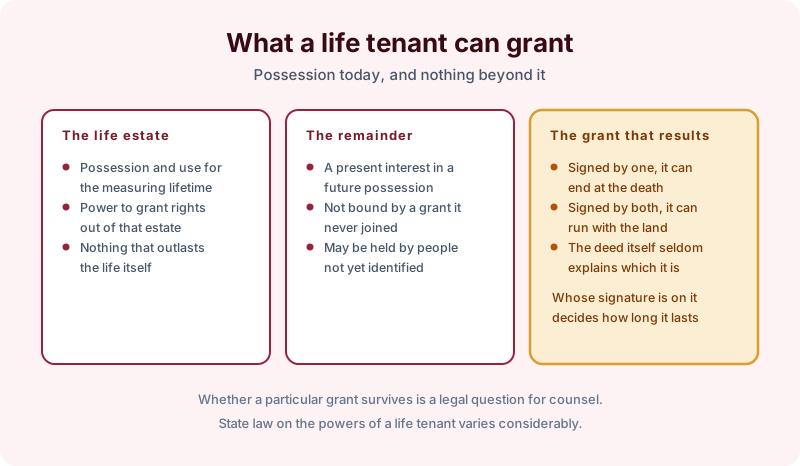
A life estate carries possession and use of the land for the measuring lifetime, usually the life tenant’s own. Out of that estate the life tenant can grant rights, and an easement is one of them. What the life tenant cannot do is grant something that outlasts the estate itself, because nobody can convey more than they hold.
The remainder is a present interest in a future possession. The remainder holders own something now even though they will not take the land until later, and an easement they never joined does not bind them. In a will-created life estate the remainder frequently sits with a class rather than a named person, which can mean grandchildren who had not been born when the grant was signed. Our note on easements and inherited property in probate covers how those interests reach the record.
So the same recorded page can mean two different things. Signed by the life tenant alone, the easement may simply stop when the life estate ends. Signed by the life tenant and the remainder holders together, it can run with the land in the ordinary way. The deed almost never explains which one happened, and in most states a grant that would otherwise expire may still be enforceable on other grounds, which is a matter for counsel rather than for the abstractor.
Reading the signature block
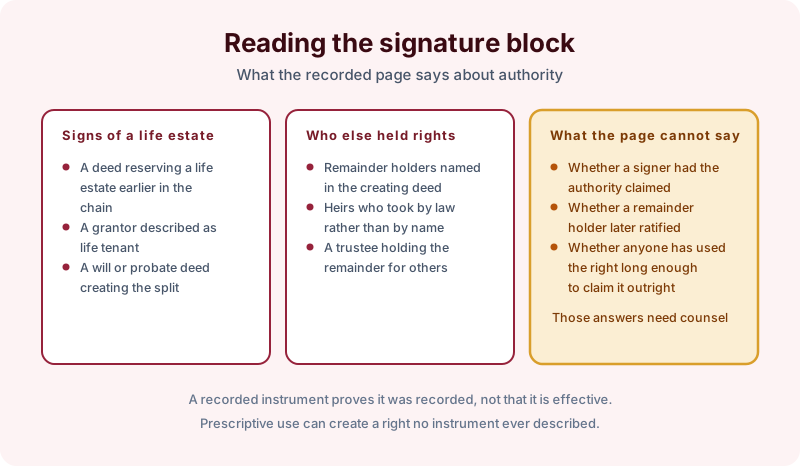
The tell is usually earlier in the chain. A deed in which a parent conveyed to a child while reserving a life estate, a will or probate deed that split the estate, or a grantor described on the face of the instrument as life tenant. Once you know a life estate existed, the easement signed during it has a question attached to it.
The second thing to establish is who else held an interest at the time. Remainder holders named in the creating deed are easy. Heirs who took by operation of law rather than by name are harder, and a trustee holding the remainder for others is harder still, because the trust instrument is rarely recorded.
What a recorded page cannot do is confirm authority. It proves the document was presented and accepted for recording, nothing more. Whether the signer could grant what the deed says, whether a remainder holder later ratified it, and whether anyone has used the right long enough to claim it outright are all outside what a search can settle.
Tracing it through the death
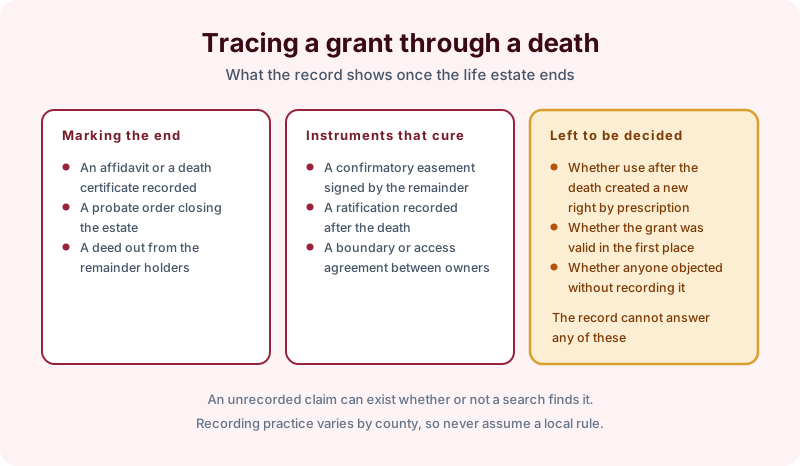
The end of a life estate often leaves a mark. An affidavit of death or a recorded death certificate, a probate order, or a deed out from the remainder holders will usually date it. From there we look for anything that cured the problem, which is typically a confirmatory easement or a recorded ratification signed by the people who took the land.
A 30-year search at $525 normally spans both the creating deed and the grant. A 50-year search at $675 is the one to use where the life estate came out of a mid century will. Either way the turnaround is 2-3 business days, and the report lists what was found of record over the term searched rather than everything that exists. For the full comparison see our easement search packages.
The takeaway
When an easement matters, find out what estate the grantor held on the day they signed, and look for a ratification if a life estate was involved. A search is not a survey and does not locate anything on the ground, and use after a death can create a fresh claim that no instrument describes. Start the order online, or send us the address and the county and we will tell you which search term fits and what it would and would not cover before anything is ordered.