

· AFX Research
Cell Tower and Rooftop Antenna Easements on Your Property
A tower deal is usually a long ground lease plus an access easement, recorded as a thin memorandum. What the county record shows, who holds it now, and what stays hidden.
Table of Contents
A buyer looks at forty acres and notices a fenced compound in one corner with a monopole in it, reached by a gravel track from the road. The listing calls it extra income. It is also an encumbrance that may run another thirty years, may cross ground well away from the compound itself, and may already belong to a party nobody has mentioned. Reading it correctly means separating two different rights, which is a distinction that also drives telecom and fiber easements.
Two rights, recorded thinly
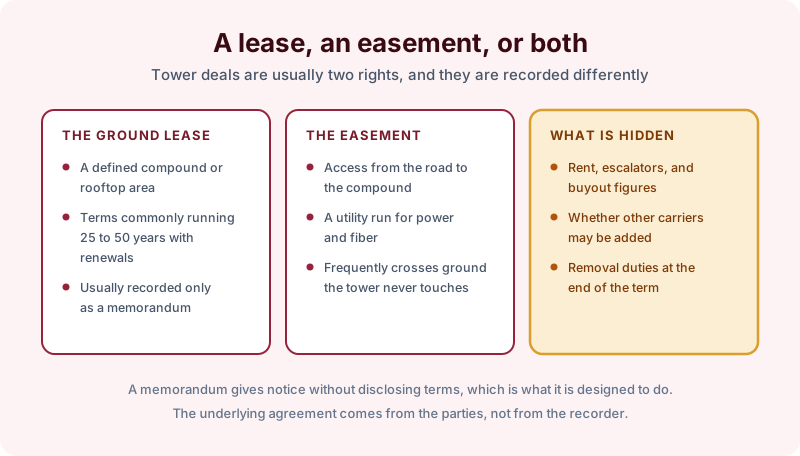
The first right is a ground lease over the compound itself, or over a defined rooftop area on a building. Terms commonly run twenty five to fifty years once renewals are counted, which is longer than most people own the property.
The second is an easement for access and utilities, running from the public road to the compound and carrying power and fiber along with it. This is the one buyers overlook, because it frequently crosses ground the tower never touches and can sit across the middle of the useful part of a parcel.
Both are usually recorded as a memorandum rather than in full. That is deliberate. A memorandum gives constructive notice that an agreement exists without disclosing the rent, the escalators, the buyout figure, whether additional carriers may be added, or who has to remove the structure at the end. Those terms come from the parties, and they are worth asking for.
The party you deal with is probably not the one who signed
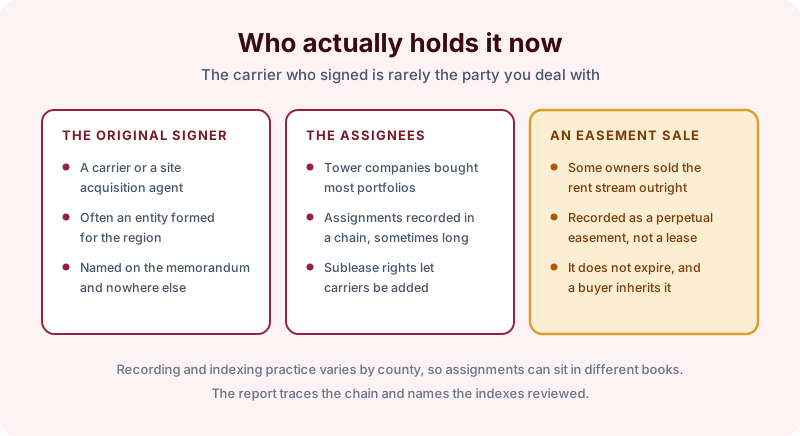
The name on the original memorandum is often a carrier, or a site acquisition agent working for one, or an entity formed for a particular region and used nowhere else. Very little of that survives.
Most tower portfolios were sold to specialist tower companies, so the record typically shows a chain of assignments, sometimes a long one. Sublease rights within the original agreement then allow further carriers to be added to the same structure without any new recording against your land.
Rooftop installations follow the same pattern with an extra wrinkle. The leased area is a portion of a roof, the access easement runs through the building to reach it, and equipment rooms and cable routes inside the structure are commonly part of the deal. On a condominium or a building with an association, the association may have signed rather than any individual owner, which changes who you negotiate with entirely.
There is a further variation worth watching for. Some owners were paid a lump sum for the income stream, and the transaction was recorded as a perpetual easement rather than as a lease. That does not expire. A buyer inherits it permanently, and no amount of waiting for a lease term to run out will help.
What a search settles about it
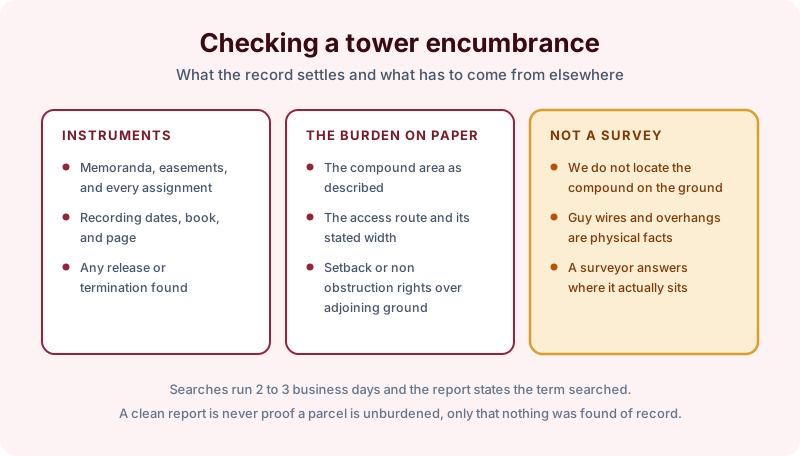
You get the memoranda, the easements, every assignment in the chain, recording dates with book and page, and any release or termination found of record. You get the compound area as described, the access route and its stated width, and any setback or non obstruction rights burdening adjoining ground.
You do not get a survey. Where the compound physically sits, where the guy wires anchor, and whether the access track follows the described route are questions for a surveyor. The distinction matters here more than usual, because tower compounds are frequently built slightly off the described location and nobody notices for years. Our search packages set the term, and searches run 2 to 3 business days.
The takeaway
Treat a tower as two encumbrances rather than one, trace the assignments to find who actually holds it, and check specifically whether the interest was sold as a perpetual easement rather than leased. Then get the underlying agreement from the parties, because the recorded memorandum was written not to tell you. Start the order online, or send us the address and the county and we will tell you which search term fits and what it would and would not cover before anything is ordered.