

· AFX Research
Telecom and Fiber Easements: New Lines, Old Recorded Grants
How a fiber project reaches a property, why a seventy year old telephone grant matters to it, and the terms to settle before signing an easement offer.
Table of Contents
Fiber construction has put easement offers in front of a lot of landowners who never expected one, and it has also put crews on parcels where no new offer was ever made. Both situations are normal, and they come from the same source: telecom lines reach property three different ways, and only one of them produces a document in your chain of title. Knowing which situation you are in is the first question, and the record answers it.
Three ways the line arrives
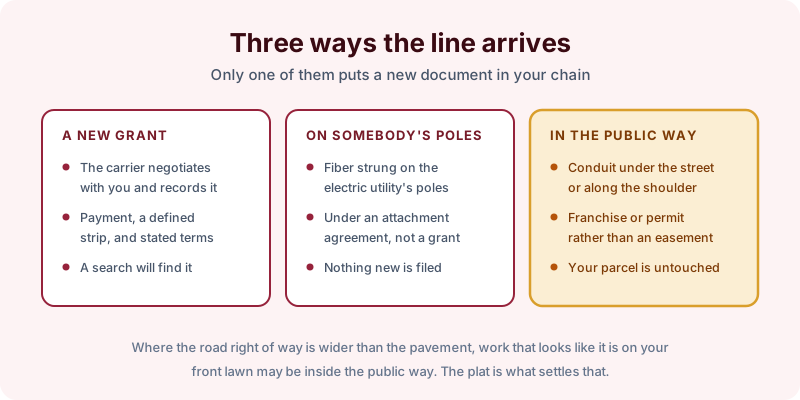
A new grant. The carrier negotiates with you, pays something, and records an easement. Terms, a described strip, a document a search will find later.
On somebody else’s poles. The fiber is strung on the electric utility’s existing pole line under an attachment agreement between the two companies. That agreement is a private contract, nothing new gets recorded against your parcel, and the work proceeds under the utility’s existing easement rather than a new one. Landowners frequently see a crew and assume a mistake has been made.
In the public right of way. Conduit under the street or along the shoulder, under a franchise or a permit from the municipality. Your parcel is not involved at all. This one causes the most confusion, because a road right of way is often considerably wider than the pavement, so work that looks like it is on your front lawn may be inside the public way. The recorded plat is what settles that question.
New lines under old words
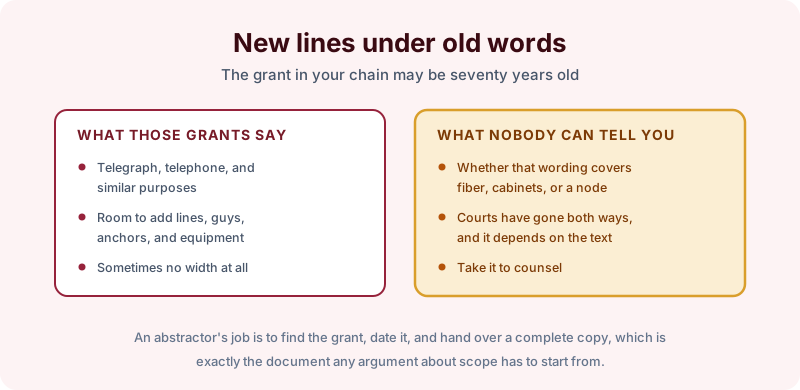
The grant being relied on may be very old. Mid century telephone easements were commonly drafted broadly, covering telegraph, telephone, and similar purposes, with room to add lines, guys, anchors, and equipment, and sometimes with no stated width at all. Some read a great deal like the blanket pipeline grants of the same era.
Whether that wording reaches modern fiber, a ground mounted cabinet, or a small wireless node is a question courts have answered in different ways depending on the text and the state. It is a legal question, and a genuinely arguable one.
What an abstractor does is find the grant, date it, and hand over a complete copy. That document is where any argument about scope has to start, and reading a summary instead is how people end up conceding a point they might have had.
Before you sign the offer
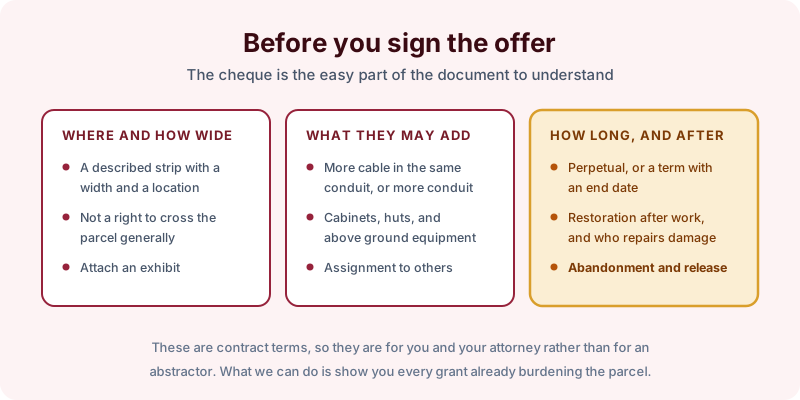
If you have an offer in hand, the payment is the easiest part of it to understand. Three other things deserve attention.
Where and how wide. A described strip with a width and a location, ideally with an exhibit attached, rather than a right to cross the parcel generally.
What may be added later. More cable in the same conduit, more conduit, above ground cabinets or huts, and whether the grant can be assigned to another carrier.
How long, and what happens after. Perpetual or a stated term, restoration obligations after any work, who repairs damage, and whether abandonment produces a recorded release.
Those are contract terms for you and your attorney. Our part is showing you every grant already burdening the parcel, because a new easement negotiated in ignorance of a 1954 one is a weak negotiation.
What the search covers
A search reports the recorded instruments found for the parcel and term searched, on the date searched, with copies. Depth is decisive here, since the operative telephone or utility grant frequently predates a twenty year window entirely. The search terms differ mainly in how far back they reach, and turnaround is 2 to 3 business days. A search is not a survey and does not locate a line on the ground, and rights arising from long use may have no recorded grant at all.
The takeaway
Work out whether the line is coming under a new grant, an old one, or the public right of way, pull the old grant before negotiating anything, and pin down width, added equipment, and assignment in writing. Start the order online, or send us the address and the county and we will tell you which search term fits and what it would and would not cover before anything is ordered.