

· AFX Research
Easement or License: Which One Is Crossing Your Property
The difference between an interest in land and permission to use it, why licenses almost never appear in a search, and what to put in writing before a favor hardens.
Table of Contents
Your neighbor has driven across the corner of your lot for eleven years. Nobody ever signed anything, and now they are selling. Does the buyer get to keep doing it? That question turns on whether what exists is an easement or a license, and the two are so different in consequence that the distinction is worth understanding before you need it.
An interest, or just permission
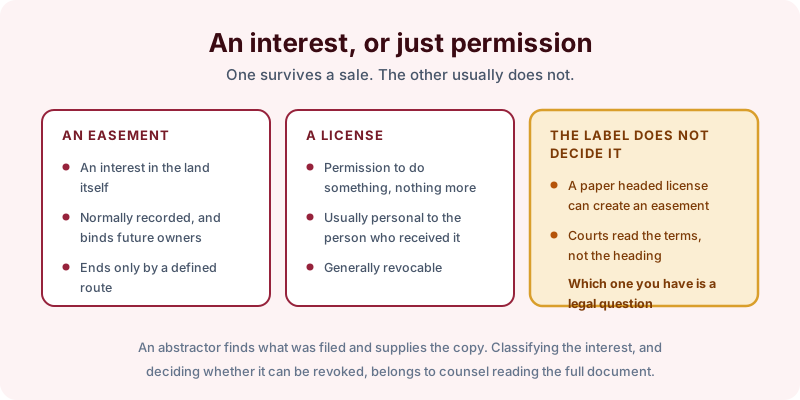
An easement is an interest in the land itself. It is normally created by a written instrument, it is recorded, it binds whoever owns the parcel next, and it ends only through a defined route such as a recorded release, merger, or expiration of its own terms.
A license is permission. Nothing more: consent to do something that would otherwise be a trespass. It is usually personal to whoever received it, it typically does not transfer with either parcel, and it is generally revocable by the owner who gave it.
The caution belongs here rather than at the end. The heading on a document does not decide which one you have. A paper titled “license agreement” can create an easement if its substance conveys a permanent interest, and a document titled “easement” can be read narrowly. Courts look at the terms and the circumstances, so classifying the interest, and deciding whether it can be revoked, is a legal question for counsel reading the whole document. What we do is find whatever was filed and hand over the copy.
Why a license is usually invisible
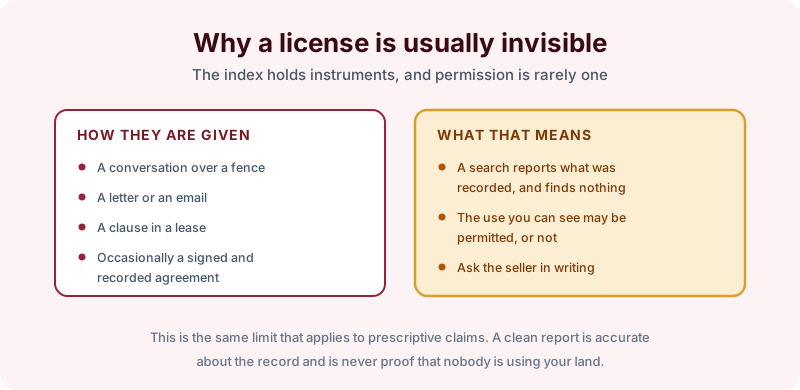
Licenses get granted in conversations. Over a fence, in a letter, in an email, occasionally in a clause of a lease. Only sometimes are they signed, and only rarely recorded.
The consequence for a buyer is direct: a search of the land records reports what was recorded, and on a license there is usually nothing to report. So a clean result is accurate about the record while telling you nothing about the neighbor you can see crossing the back corner. This is the same limit that applies to prescriptive claims, and it is why the record and the ground both need looking at.
Practical step when buying: ask the seller in writing to identify every arrangement, written or not, that lets anyone use the property. It costs nothing and it moves a real risk out of the unknown.
Why the difference matters
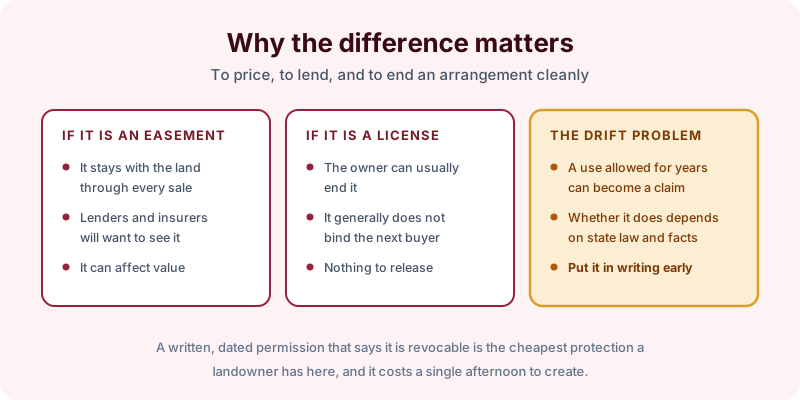
If the arrangement is an easement, it travels with the land through every future sale, lenders and insurers will want to see the instrument, and it can affect what the parcel is worth. If it is a license, the owner can generally end it, it does not bind the next buyer, and there is nothing to release because nothing was granted.
Then there is the drift problem, which is the real reason to care. A use permitted informally for many years can, depending on state law and the specific facts, harden into a claim that no longer depends on your permission. Whether that has happened in a given case is for counsel and possibly a court.
The cheap protection is a written, dated permission that states it is revocable and personal to the neighbor. One afternoon of paperwork, and the character of the arrangement stops being arguable. Our process page covers what a search of the record involves.
What a search establishes
A report states what was found of record for the parcel and term searched, on the date searched. It will find recorded easements, agreements, and any recorded license, and it cannot find an unwritten permission or a claim arising from long use. A clean report is never proof that nobody has rights across your land, which is exactly why finding what is recorded is a starting point rather than a conclusion.
The takeaway
Read the substance of any document rather than its title, expect informal permissions to be absent from the record entirely, and put a written revocable permission in place before an accommodation becomes a claim. Start the order online, or send us the address and the county and we will tell you which search term fits and what it would and would not cover before anything is ordered.