

· AFX Research
Prescriptive Easements: The Burden That Never Reaches the Record
How a right of way can arise from years of use alone, why no search can find one, what a clean report does and does not establish, and the three checks that go with it.
Table of Contents
Most easements start with a document. Someone signed a grant, a developer drew a strip on a plat, a utility took a right of way, and the instrument went to the recorder where a search can find it years later. Prescriptive easements start somewhere else entirely: with a neighbor who has driven across the corner of a field every day since 1998 and never asked anyone’s permission. Our guide to finding easements on a property covers the recorded side. This one covers the burden that no index has ever held.
A right built out of use
The doctrine is old and the elements are broadly similar across states, though the details and the time period differ enough that only the statute where the property sits actually governs.
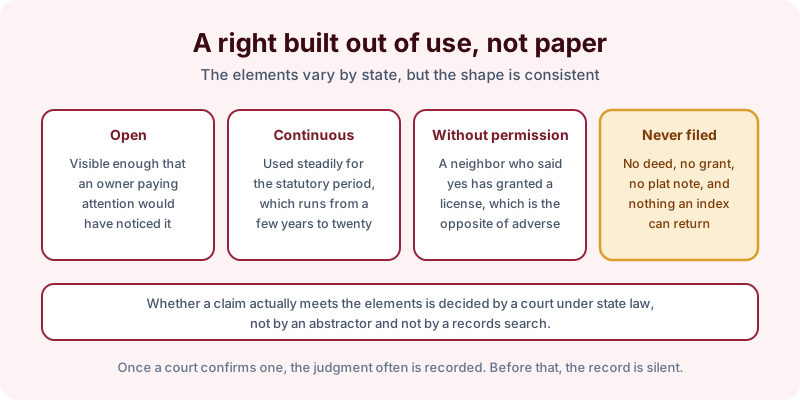
Use has to be open, visible enough that an owner paying attention would have seen it. It has to be continuous for the statutory period, which ranges from a handful of years to twenty depending on the state. And it has to be without permission, which is the element people misread most often. A neighbor who was told “of course, go ahead” has a license, and a license is the opposite of the adverse use a prescriptive claim requires. Permission granted, even casually, generally defeats the claim.
Notice what is missing from that list. Nothing is signed, nothing is filed, and nothing enters an index. A prescriptive easement is created by conduct over time, and whether a particular claim actually satisfies the elements is decided by a court applying state law, not by an abstractor and not by a search. Once a court confirms one, the judgment often does get recorded, which is why some of them eventually become findable. Before that point, the record is simply silent.
Two categories of burden
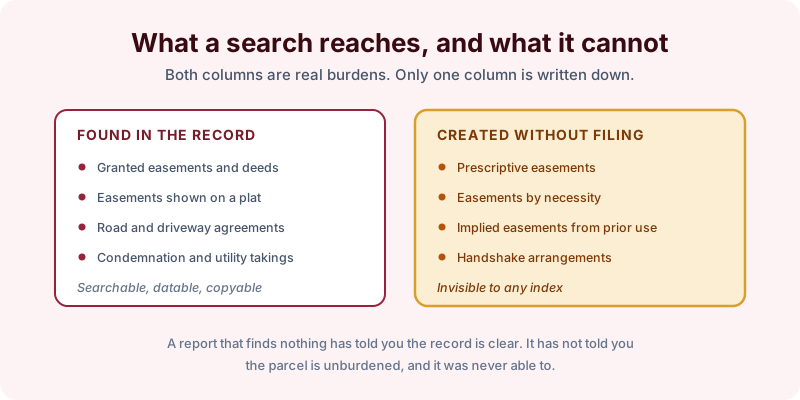
It helps to hold the two categories apart. Recorded burdens are granted easements, plat easements, road and driveway agreements, condemnations and utility takings. They are searchable, they carry dates, and copies can be pulled.
Unrecorded burdens include prescriptive easements, easements by necessity, implied easements from prior use, and informal arrangements that were never written at all. They can be every bit as real and every bit as enforceable. They just are not written down.
This is why we are careful about how a clean result gets described. A report that finds nothing has established that the record is clear for the parcel, county, and term searched. It has not established that the parcel is unburdened, and no records search has ever been capable of establishing that.
What to do with a clean report
The right response is not to distrust the report. It is to know which of the three questions it answered.
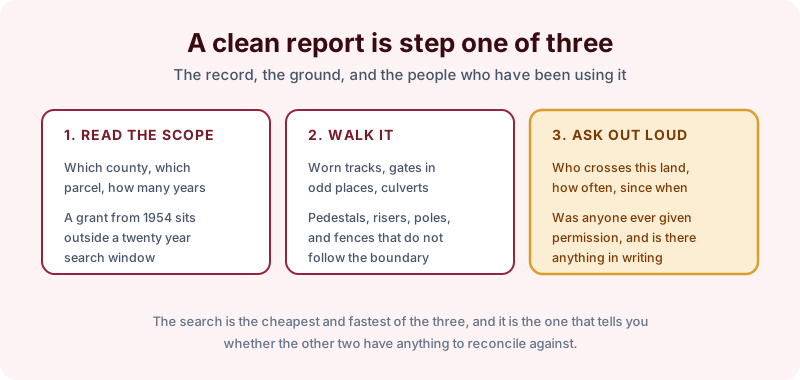
Start by reading the scope. Which county, which parcel, and how many years back. A grant recorded in 1954 sits outside a twenty year search window entirely, so pick the term against the age of the parcel rather than the age of the house. The available search terms differ mainly in that depth.
Then walk the property, looking for what use leaves behind: worn tracks, a gate in an odd place, culverts, utility pedestals and risers, fences that do not follow the boundary line. Physical evidence is not proof of a legal right, and its absence is not proof there is none, but it tells you where to ask.
Then ask out loud. Who crosses this land, how often, since when, and was anyone ever given permission. Sellers frequently know exactly who has been using the back lane for twenty years, and the answer sometimes includes the sentence that matters most: yes, and I told them they could.
Where the search still earns its place
A records search is the fastest and cheapest of the three checks, it comes back in 2 to 3 business days, and it is the one that gives the other two something to reconcile against. It also finds the burdens that are far more common than prescriptive claims, since most parcels carry a recorded utility easement or two and many owners have never read theirs. Our process page covers what the work involves, and a search is a records review rather than a survey, so it does not locate anything on the ground.
The takeaway
Prescriptive easements are created by years of open use without permission and leave nothing for an index to return, so read a clean report as a statement about the record rather than about the parcel, and pair it with a walk and a conversation. Start the order online, or send us the address and the county and we will tell you which search term fits and what it would and would not cover before anything is ordered.