

· AFX Research
Marketable Title Acts, and the Easements They Can Cut Off
How a marketable title act works, which old easements it can extinguish, the exceptions that survive it, and why the search has to reach past the statutory period.
Table of Contents
About half the states have a statute designed to stop the land record growing forever. The common label is the marketable record title act, and the idea is the same everywhere. Pick a deed of a certain age, call it the root of title, and treat most older interests as extinguished unless somebody acted to keep them alive.
For easement work this matters in a particular way. A right of way granted in 1908, never used and never mentioned again, may no longer burden the land at all — and it will still be sitting in the index, looking exactly as alarming as the day it was recorded.
How the statute works
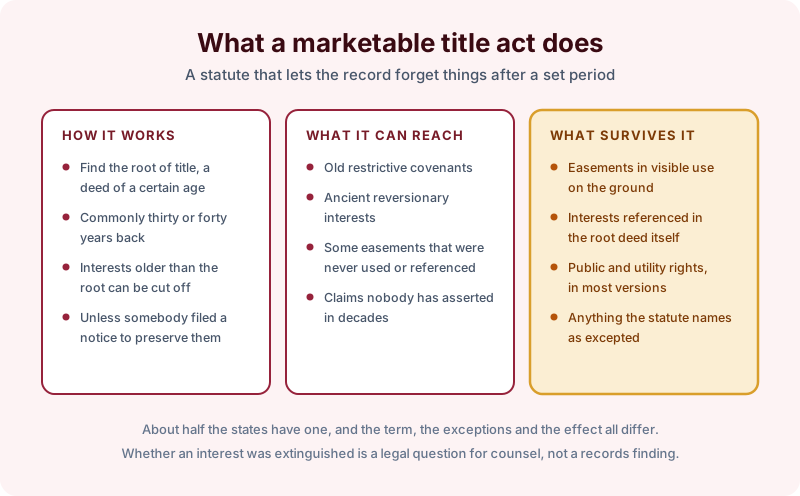
Two moving parts. The root of title is the most recent conveyance at least as old as the statutory period, commonly thirty or forty years. The preservation notice is a filing anybody holding an older interest can record to keep it alive.
Put those together and the rule is roughly this. Interests that predate the root are extinguished, unless a preservation notice was filed, or unless the interest falls into one of the exceptions the statute names.
Those exceptions are where easement work lives, and they are not small.
What tends to survive
Most versions protect easements visibly in use on the ground. The reasoning is sensible — a buyer walking the property can see the power line or the worn track, so the record need not warn them. Utility and public rights are commonly excepted too, as is anything referenced in the root deed itself, which is why reading the root rather than merely dating it matters. The types of easements that survive are largely the ones somebody is still using.
What is genuinely vulnerable is the old paper easement nobody ever used. Access granted to a farm absorbed into a subdivision in 1960. A rail spur for a line lifted before anyone now living was born. These are what the statute was written to clear away.
Why the search reaches further back, not less far
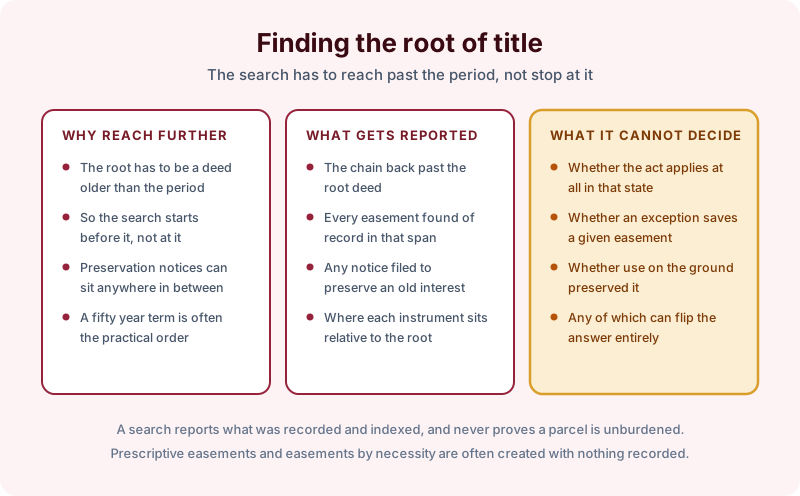
There is a natural assumption that a forty-year act means a forty-year search is enough. It is the opposite. Identifying the root means finding a conveyance older than the period, so the search starts before it. Preservation notices can be filed at any point, so the span between the root and today has to be read as well.
In practice this is an argument for the longer term rather than the shorter one. On a parcel where an old easement is suspected, the 50-year easement search is frequently the one that actually answers the question, because it reaches past the root instead of stopping short of it. Which term fits is worth settling before the order rather than after.
What the search can and cannot tell you
The abstractor lays out the chain past the root, every easement found of record in that span, and any preservation notice. That is a factual report, and it is the raw material for the analysis.
What the search cannot do is decide the question. Whether the act applies, whether an exception saves a particular easement, and whether use on the ground preserved something the paper would have cut off are all legal conclusions, and they belong to counsel. A search reports what was recorded and indexed. It never proves a parcel is unburdened, because prescriptive easements and easements by necessity are routinely created with no recorded instrument at all.
Why the old grant is still in the index
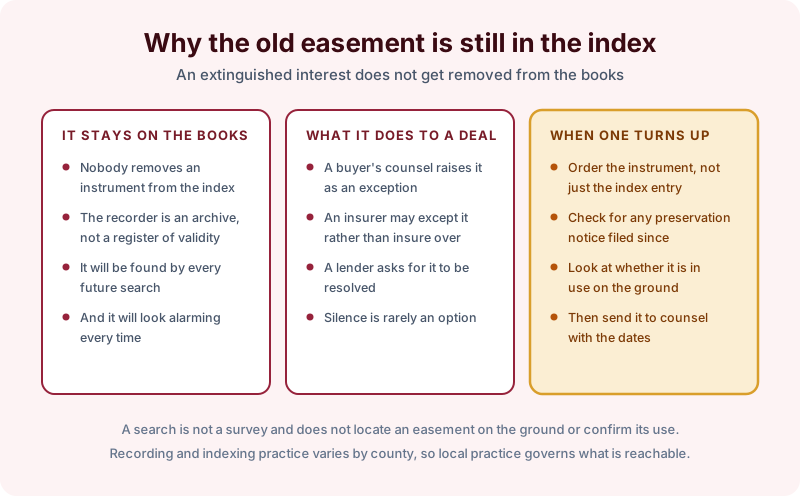
Nothing removes an instrument from the county index. The recorder runs an archive, not a register of what is currently valid, so an easement extinguished in 1994 will be found by every future search. Expect a buyer’s counsel to raise it, an insurer to consider excepting it, and a lender to want it addressed.
When one surfaces, order the instrument rather than working from the index line, check for a preservation notice filed since, note whether anything on the ground suggests use, and hand it to counsel with the dates attached.
The takeaway
A marketable title act can quietly kill an old easement, and it can just as quietly spare one that is still in use. Neither outcome is visible from the index entry alone. Order the term that reaches past the root of title, get the instruments rather than the summaries, and let counsel apply the statute to the facts you have gathered.
Start the order online, or send us the address and the county and we will tell you which search term fits and what it would and would not cover before anything is ordered.