

· AFX Research
Easements by Implication and Estoppel, and Why They Hide
Two doctrines create access rights with no recorded grant at all. What the county record can still contribute, and why a clean search is never proof of an unburdened parcel.
Table of Contents
A buyer closes on a wooded lot, puts up a gate across the old track running through it, and within a week a neighbor is explaining that the track is the only way to reach their house and has been for fifty years. There is no easement in the title report. There may still be an easement. Two doctrines create access rights without anyone ever recording a grant, and they sit alongside prescriptive easements as the reason a clean report is evidence rather than proof.
Implication and estoppel, briefly
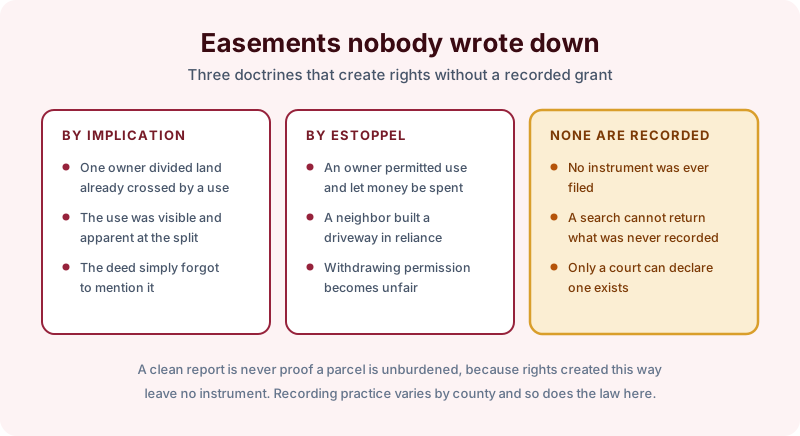
An easement by implication arises when one owner divides land that was already crossed by a visible, apparent, and continuing use, and the deed simply fails to mention it. The classic case is a farm split into two parcels where the back parcel has always been reached by the lane across the front one. Courts infer that the parties intended the lane to continue, because obviously they did.
An easement by estoppel arises where an owner permitted a use, the neighbor spent real money in reliance on that permission, and withdrawing it afterwards would be unfair. Someone was told they could put a driveway in, so they built one, and years later the owner cannot simply revoke.
Neither leaves an instrument. No grant was signed, nothing was filed, and a search of the recorder cannot return what was never recorded. Only a court can declare that one of these exists, and the elements differ meaningfully from state to state.
What the record still contributes
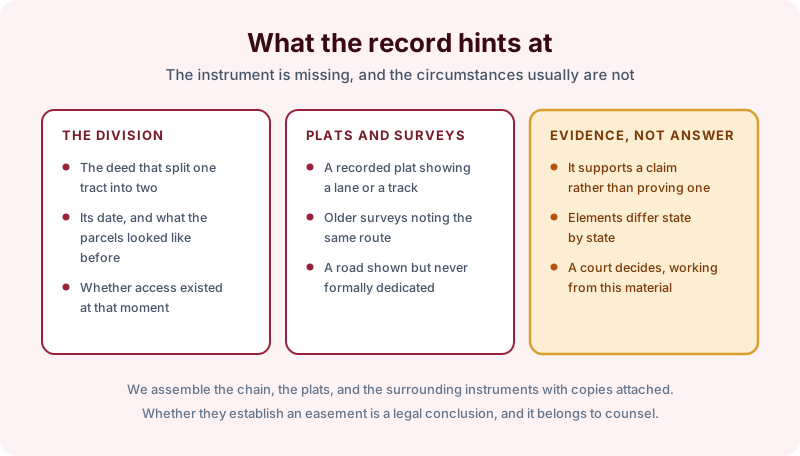
The instrument is missing. The circumstances usually are not, and they are recorded.
The single most useful document is the deed that split the original tract, because implication turns on what the land looked like at the moment of division and whether the back parcel had any other access then. Finding that deed means reaching back to it, which is a search term decision rather than a matter of luck.
Plats and older surveys often show a lane, a track, or a road that was drawn but never formally dedicated. Adjoining chains can show whether a neighbor’s deed ever referenced access across your parcel. None of it decides the question, and all of it is what a court would work from. That is the same relationship between record and conclusion described in how to find easements on a property.
If you are buying into the question
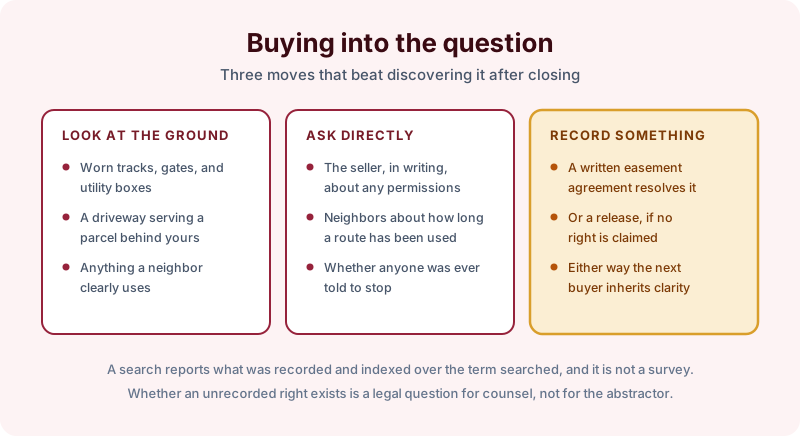
Walk the ground and look for the physical evidence a search cannot see. Worn tracks, gates, utility boxes, a driveway that plainly serves a parcel behind yours, anything a neighbor clearly uses. A search is not a survey and does not observe conditions on site, so this part is yours or a surveyor’s.
Then ask, in writing. The seller about any permission ever given, the neighbors about how long a route has been used and whether anyone was ever told to stop. Answers to those questions are worth more than another week of searching.
If a real question emerges, the cheap fix is to record something. A written easement agreement resolves it on terms everyone accepts, and a release resolves it where no right is claimed. Either way the next buyer inherits clarity instead of the same argument. Our guarantee covers the search itself, and the search is the part that establishes what is on file.
The takeaway
Implication and estoppel create genuine rights that no records search will ever return, so a clean report means nothing was found of record rather than that the parcel is unburdened. Reach the deed that divided the land, read the plats, walk the property, and ask the neighbors. Whether a right exists is a legal conclusion for counsel. Searches run 2 to 3 business days. Start the order online, or send us the address and the county and we will tell you which search term fits and what it would and would not cover before anything is ordered.