

· AFX Research
Historic Preservation and Facade Easements on the Record
What a preservation easement restricts, who holds it, how long it lasts, where it appears in the county record, and why a landmark designation is a separate question.
Table of Contents
Most easements give somebody the right to do something on your land. A preservation easement does the opposite, giving somebody the right to stop you from changing your own building. Owners frequently discover one only when a contractor asks who has to approve the new windows, and by then the instrument has usually been recorded for thirty years. It belongs to the same family as the conservation easement, pointed at architecture rather than open space.
What the instrument actually restricts
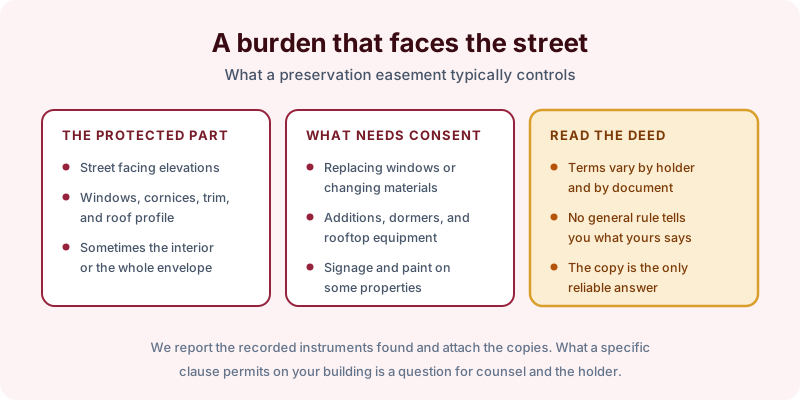
The common form protects the exterior, meaning the street-facing elevations, the windows and their muntin patterns, cornices and trim, materials, and the roof profile. Some are broader and cover the entire envelope or, less often, significant interior spaces. Under most of them, altering a protected feature requires the holder’s written consent before work starts.
That is the general shape, and the general shape is not what governs your building. These are negotiated documents, and two easements a block apart can differ on whether they reach the rear elevation, whether routine repair needs consent, and what happens if the building burns. The recorded copy is the only reliable answer, which is why the deliverable that matters is the instrument itself rather than a note that one exists. Ordinary maintenance is a good example of the variation, because some documents exempt in-kind repair outright, others require the holder to be notified first, and a few draw no distinction between repair and alteration at all.
Who holds it, and for how long
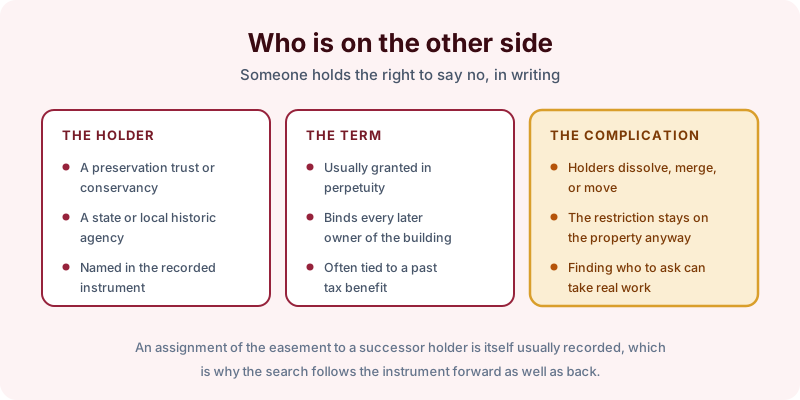
The holder is named in the document, and it is normally a preservation nonprofit or a public agency. These are typically granted in perpetuity, which is what makes them different from an agreement between neighbors, since the burden runs with the land, so a buyer inherits it whether or not anyone mentioned it during the sale. Many were granted in exchange for a federal tax deduction, and the perpetual term was a condition of that benefit.
The practical complication is holder continuity. Nonprofits dissolve, merge, and transfer their portfolios, and an easement whose original holder no longer exists is still a live restriction. An assignment to a successor holder is generally recorded too, which is one reason a search follows the instrument forward through the record rather than stopping once it finds the grant. Amendments matter for the same reason. A protected feature list agreed to in 1988 may have been narrowed since, and only the later document says so. The types of easements that behave this way share a trait worth remembering, which is that the burden is defined by paperwork rather than by anything visible on the ground.
Finding it, and the thing it will not find
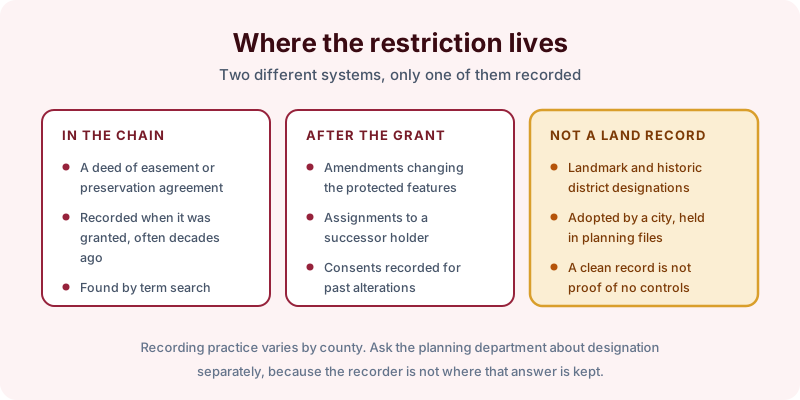
The grant sits in the chain of title, recorded on the date it was made. On a building that changed hands three times since 1985, an abbreviated look at recent instruments can miss it entirely, which is the ordinary argument for a longer term. Our easement search packages run 20, 30, and 50 years at $325, $525, and $675, and on a historic property the longer terms are usually the right call, because the grant is old by definition.
Here is the limit worth stating plainly. Local landmark status and historic district zoning are not easements. They are adopted by a city or county through a land use process, they live in planning department files, and they may never be recorded in the land records at all. A search that comes back with no preservation easement therefore does not mean the building is unregulated. Ask the planning department that question separately. Recording and indexing practice also varies by county, so a clean report describes the record searched, not the world.
The takeaway
On an older building, order the search before scoping any exterior work, and read the recorded document rather than a summary of it. Our search process returns the instruments found with copies attached, in 2-3 business days. Start the order online, or send us the address and the county and we will tell you which search term fits and what it would and would not cover before anything is ordered.