

· AFX Research
Conservation Easements: A Permanent Limit on Development
Why a conservation easement restricts building rather than granting access, the four terms worth reading in the instrument, and why search depth decides whether you find it.
Table of Contents
Every other easement in this lane gives somebody a right to use your land. A conservation easement does the opposite: nobody gains a right to cross, and the owner gives up the right to develop. That inversion catches buyers out, because a parcel under one can look completely unencumbered on the ground while carrying a restriction that permanently caps what it can become.
Not the kind of easement you can see
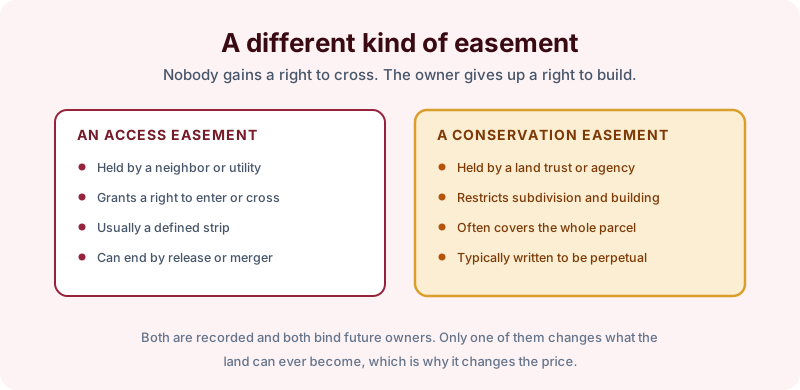
An access easement is held by a neighbor or a utility, grants a right to enter, usually covers a defined strip, and can end by release or merger.
A conservation easement is held by a land trust or a government agency, restricts subdivision and construction, frequently covers the entire parcel rather than a strip, and is typically written to be perpetual. Both are recorded and both bind future owners. Only one of them changes what the land can ever be, which is why it changes what the land is worth.
The holder’s interest here is negative. They are not there to use the property; they are there to make sure nobody else develops it. That is a genuinely different relationship from a utility with a pole line, and it comes with monitoring rather than maintenance.
The four terms worth reading
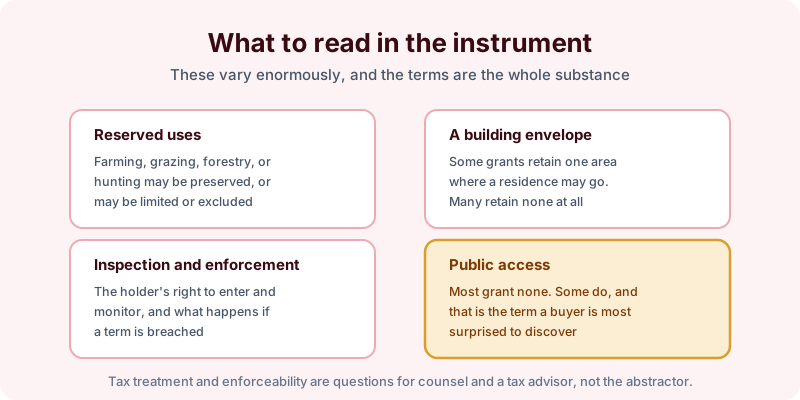
These instruments vary enormously, far more than a utility grant does, so the terms are the entire substance.
Reserved uses. Farming, grazing, forestry, and hunting are sometimes preserved explicitly, sometimes limited, sometimes excluded. A buyer planning to run cattle needs to read this rather than assume agricultural use survived.
A building envelope. Some grants retain one area where a residence may be built. Many retain none.
Inspection and enforcement. The holder’s right to enter and monitor, how often, and what follows a breach.
Public access. Most conservation easements grant none, and buyers assume none. Some do grant it, and that is the term people are most startled to find after closing.
Whether a given restriction is enforceable, and how it affects tax treatment, are questions for counsel and a tax advisor. An abstractor’s job is to find the instrument and hand over a copy, which is why we attach the documents rather than summarizing them.
Search depth decides whether you find it
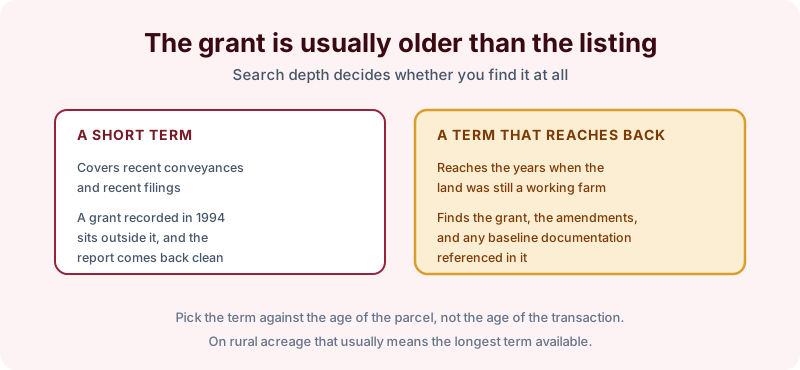
This is the practical failure mode. Conservation easements are frequently decades old, granted when the land was a working farm and the family wanted it to stay one. A search covering recent years finds recent conveyances and comes back clean, while a 1994 grant sits just outside the window governing the whole parcel.
Pick the term against the age of the parcel rather than the age of the transaction. On rural acreage that usually means the longest term available. The search terms differ mainly in depth, and the same logic applies to finding any easement on land that has been in one family a long time.
Worth asking for alongside the grant: any recorded amendments, and any baseline documentation the instrument references. Amendments happen, and a grant read without its amendments can describe terms that no longer apply.
What a clean report does and does not establish
A report states what was found of record for the parcel and term searched, on the date searched. On this subject that is a strong result, because a conservation easement is created by a recorded instrument rather than by conduct, so unlike prescriptive rights there generally is something filed to find.
The caveat is the term. A clean report on a twenty year search of a parcel that has been farmed since 1890 is a narrow statement, and reading it as proof the land is unrestricted is the mistake worth avoiding. Our process page covers what the work involves and the 2 to 3 business day turnaround.
The takeaway
Treat a conservation easement as a restriction on what the land can become rather than a right of way, read the reserved uses and any building envelope before pricing the parcel, and choose a term old enough to reach the grant. Start the order online, or send us the address and the county and we will tell you which search term fits and what it would and would not cover before anything is ordered.