

· AFX Research
Private Roads: Who Maintains Them, and What Is Recorded
Access and upkeep are two different documents, and rural parcels often have one without the other. What a road maintenance agreement covers, and what to ask for.
Table of Contents
The listing says the property is on a private road, and the agent says the neighbors take care of it. Both statements can be true and still leave a buyer with no enforceable arrangement at all, because the right to use a road and the obligation to maintain it come from separate instruments. Plenty of rural and lake parcels have the first and not the second. This is the practical cousin of the shared driveway question, scaled up to a road serving a dozen homes.
Two documents, not one
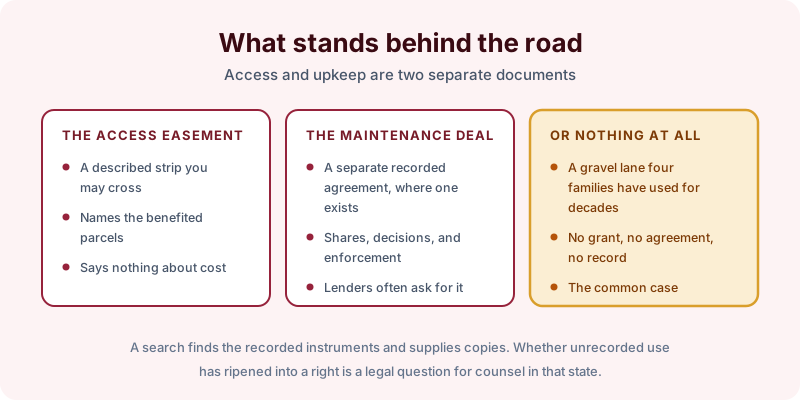
The access easement describes a strip you may cross and names the parcels that benefit from it. That is the document that gets a car to the house, and it usually says nothing whatsoever about money.
The maintenance agreement is separate, and it is the one people assume exists. Where a recorded agreement is in place it allocates cost shares, sets out how decisions get made, and says what happens when someone will not pay. Lenders frequently want to see one before financing a house on a private road, which is often the moment a buyer discovers there is not one.
Or there is nothing. A gravel lane four families have used for thirty years, with no grant and no agreement anywhere in the index, is an ordinary situation rather than an exotic one. Whether that use has ripened into a right is a legal question for counsel in that state, and it is one no records search can answer.
What the agreement should answer
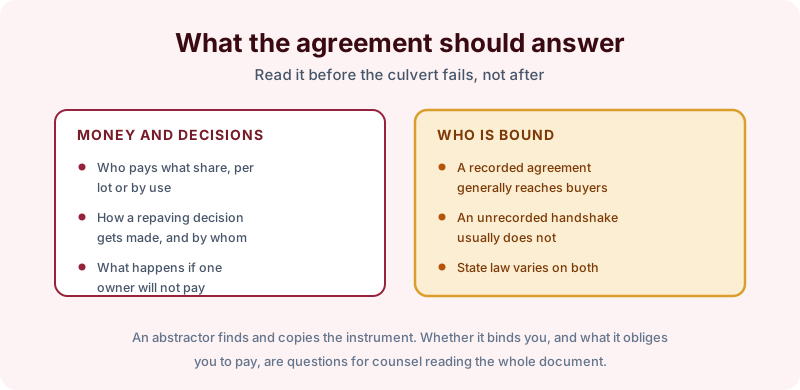
Read for money and for decisions. How are shares calculated, equally per lot or by distance travelled or by use? Who decides that the road needs resurfacing, and by what vote? What is the remedy when an owner refuses to contribute, and is there a lien mechanism or only a lawsuit?
Then read for who is bound. A recorded agreement drafted to run with the land generally reaches later buyers; an unrecorded understanding between the original neighbors generally does not, which means the friendly arrangement the seller describes may evaporate at closing. State law varies on both points, and the wording matters more than the label on the document.
Two other items turn up in these files. Some subdivisions handle roads through an association with assessment authority, which is a different structure entirely and worth identifying early. And some private roads have been offered for dedication to a public body and never accepted, leaving a road that looks public and is not.
One sequencing note. On a purchase, both documents belong in front of you before the inspection period closes, because the fix for a missing agreement is a negotiation with neighbors rather than a repair.
What to send, and what comes back
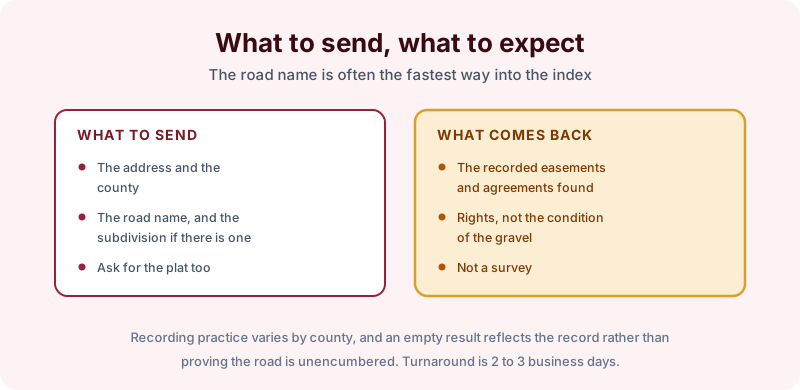
Send the address and the county, the road name, and the subdivision name if there is one, and ask for the recorded plat along with the instruments. Road names are often the fastest way into an index for an agreement recorded decades ago against a description nobody uses anymore.
What comes back is the easements, agreements, and dedications found of record for that parcel over the term searched, with copies attached. What does not come back is the condition of the road, who has actually been grading it, or where the strip sits on the ground, since a search is not a survey. Recording practice varies by county, and an empty result reflects the record rather than proving the road is unencumbered or unmaintained. The three search terms let the depth match the parcel, and turnaround is 2 to 3 business days.
The takeaway
Confirm both halves before you buy: the recorded right to use the road, and the recorded obligation to maintain it. If only one exists, that is worth knowing while you still have leverage rather than after the culvert washes out. Start the order online, or send us the address and the county and we will tell you which search term fits and what it would and would not cover before anything is ordered.