

· AFX Research
Sidewalk and Pedestrian Access Easements on Private Land
How a public walkway ends up crossing a private parcel, who is responsible for keeping it up, and what an easement search of the county record can and cannot establish about it.
Table of Contents
The strip of concrete in front of a house looks like it belongs to the city, and often it does not. In a great many places the sidewalk sits on private land, and what the public has is a right to walk across it. That right has to come from somewhere, and where it came from decides who may fence it, who has to fix it, and whether it can ever be closed. It is the same question as a right of way easement, asked about feet instead of vehicles.
Three ways a walkway arises
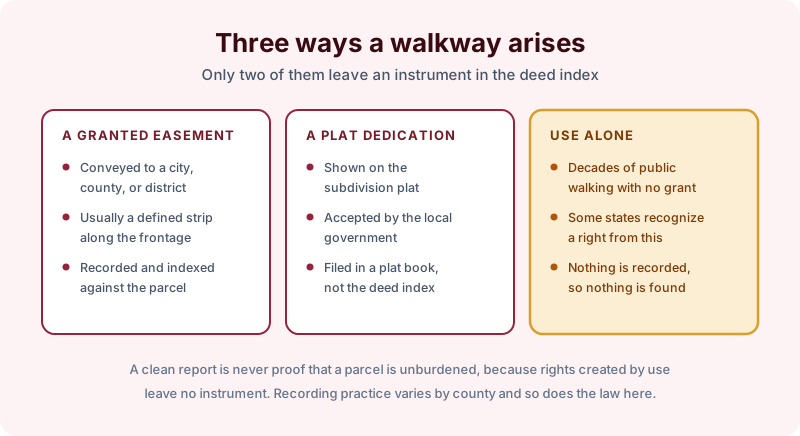
A granted easement. The owner or a predecessor conveyed a defined strip to a city, county, or district. It is recorded, indexed against the parcel, and turns up in an ordinary search. Frontage strips granted as a condition of a permit or a rezoning belong in this group too, and they are easy to forget because the owner who agreed to them may have sold years ago.
A plat dedication. The walkway was shown on the subdivision plat and accepted by the local government when the tract was created. This is extremely common in planned developments, and it lives in a plat book rather than the deed index, which is why a search that skips plats can miss it entirely.
Use alone. In some states, decades of uninterrupted public use can create a right without any grant, dedication, or filing. Nothing was recorded, so nothing will be found, and this is the honest limit of what any records search can do here. The same principle sits behind prescriptive easements, and it means a clean report is never proof that a parcel is unburdened.
Who has to keep it up
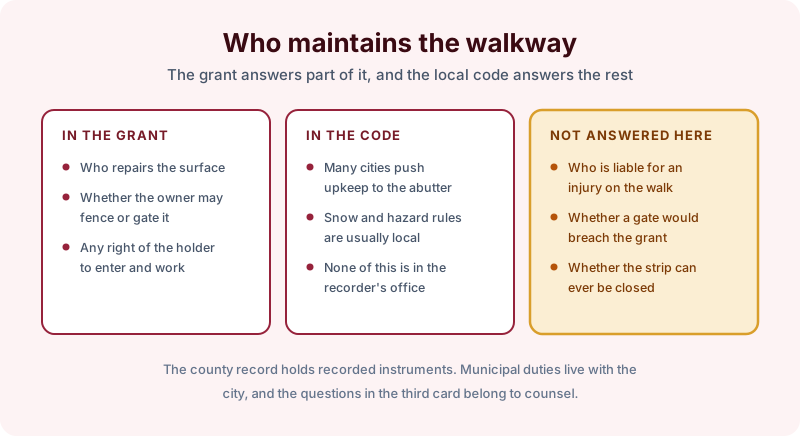
The recorded grant usually says something about repair, about whether the owner may gate or fence the strip, and about the holder’s right to enter and do work. Read it, because the answers are not standard.
Then read the local code, which frequently pushes upkeep back onto the abutting owner regardless of who holds the easement. Snow clearance, hazard repair, and the consequences of ignoring either are municipal rules, and none of them are in the recorder’s office. So the full answer to who is responsible almost always needs two sources, and the county record is only one of them.
Liability for an injury, whether a proposed gate would breach the grant, and whether the strip could ever be closed are legal questions. We can put the recorded documents in front of counsel, and counsel takes it from there.
What a search actually delivers
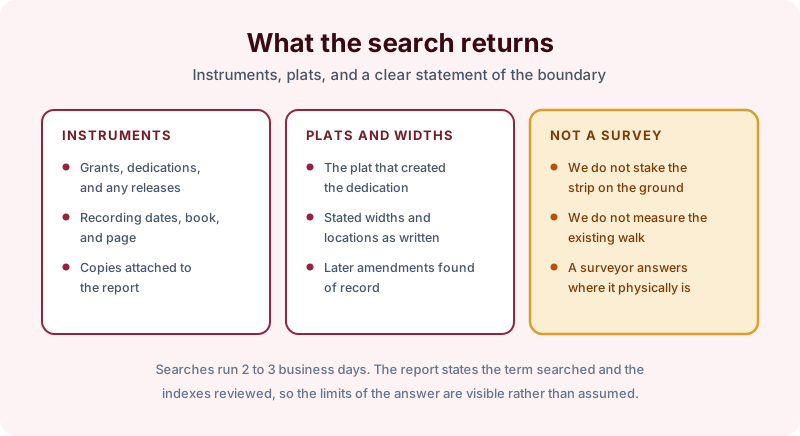
You get the grants, dedications, and any releases, with recording dates, book and page, and copies attached. You get the plat that created the dedication and the widths and locations as written, plus any later amendment found of record. The report names the term searched and the indexes reviewed, which is how our search guarantee stays meaningful.
You do not get a survey. We do not stake the strip on the ground or measure the existing walk, and a recorded width of five feet tells you nothing about where the concrete actually sits. If the location matters, and near a fence or a planned structure it usually does, a surveyor answers that question.
That division of labor is worth keeping straight, because the two documents get confused constantly. The records search establishes that a right exists, who holds it, and what its terms say. The survey establishes where it physically runs and whether anything is sitting in it. Buyers who order one and assume they have both are the ones who get surprised later, and our process is explicit about which of the two you are getting.
The takeaway
A sidewalk crossing private land is an easement like any other, and the instrument that created it decides most of what follows. Search the deed index and the plat book, read the grant and then the city code, and treat a clean result as what it is rather than as proof of nothing. Searches run 2 to 3 business days. Start the order online, or send us the address and the county and we will tell you which search term fits and what it would and would not cover before anything is ordered.