

· AFX Research
Access Easements Across Federal and State Land: The Record
A road across public land may be an easement, a revocable permit, or a claim with no instrument at all, and the county may hold none of it. What a search can show.
Table of Contents
Private parcels surrounded by public land are common across the West and in much of the East’s forest country, and the route in is often a road built and maintained by an agency rather than by anybody in the chain of title. Buyers see a graded road, drive it, and reasonably assume access comes with the property. Sometimes it does. Often what exists is a permission rather than a right, and the distinction only surfaces when a lender asks or the agency changes a policy. This is the public land version of the problem in our note on landlocked property and easements by necessity.
An asset, or a privilege
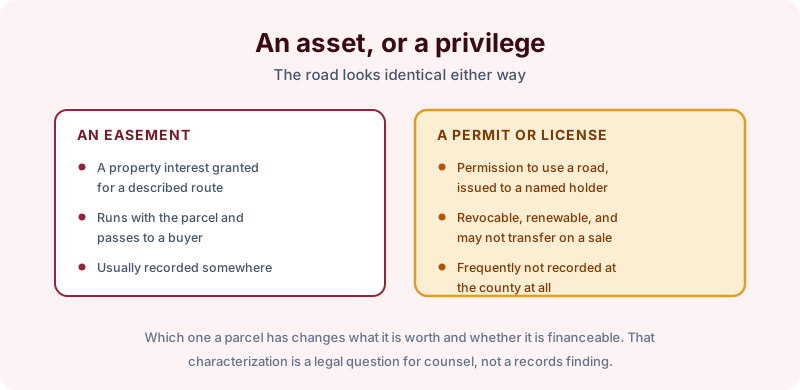
An easement is a property interest for a described route. It runs with the parcel, it passes to a buyer, and it is the thing a lender wants to see. A permit or license is permission issued to a named holder: revocable, renewable, subject to conditions, and in many cases not transferable on a sale at all.
The road on the ground looks identical under either arrangement, which is why this gets missed. Which one a parcel actually has changes what the parcel is worth and whether it is financeable, and that characterization is a legal question for counsel rather than a records finding. What the record can do is tell you whether an instrument granting a permanent right exists at all.
There are further possibilities worth knowing about. Some historic road claims trace to nineteenth century statutes and may exist with no recorded instrument. Reciprocal road use agreements between an agency and a timber or mining company sometimes carry rights that reach a private inholding. And a route shown on a published map is not, by itself, a grant of anything to anyone.
Two files, one road
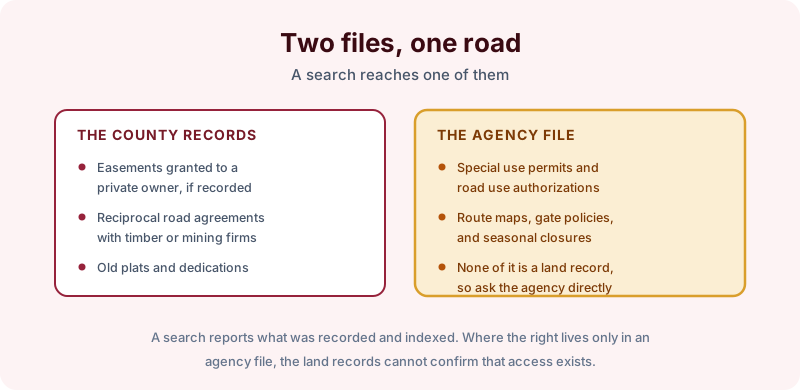
The county holds recorded easements granted to private owners, reciprocal road agreements, and old plats and dedications. Those a search finds, with copies.
The agency file holds the rest: special use permits, road use authorizations, route maps, gate policies, and seasonal closure orders. None of it is a land record, none of it is indexed against the parcel, and no title search reaches it. That has to be requested from the agency office with jurisdiction, and it is a separate errand rather than an afterthought.
Before you rely on the road
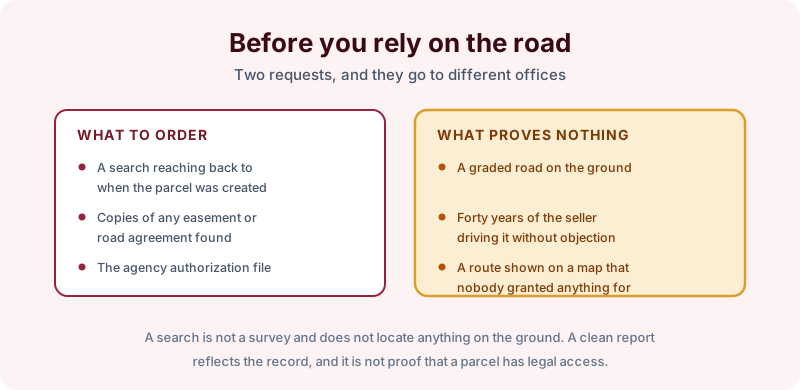
Order a search term long enough to reach back to when the parcel was separated from the surrounding land, because that is when an access easement would have been granted if one ever was. Ask for copies of anything found rather than an index summary, since the width, the permitted uses, and any maintenance obligation are in the instrument. Turnaround is 2 to 3 business days. Where the route is shared, the cost sharing question is the one our note on private road maintenance agreements covers.
Three things prove nothing on their own: a well graded road, forty years of the seller driving it unchallenged, and a route drawn on a map. Long use can create rights in some circumstances, and it does so without any filing, which means a search cannot confirm it either way.
What the search shows
The report is what was recorded and indexed over the term searched, with copies: easements and their descriptions, road agreements, plats, and any release or amendment. Read it alongside the types of easements that could apply.
Its limits matter more here than usual. A search is not a survey and does not locate the route on the ground. It cannot see a permit in an agency file, and it cannot establish that a parcel has legal access, so a clean report reflects the record rather than proving anything about the road. Recording and indexing practice varies by county, and in sparsely settled counties the older indexes are frequently the least complete.
The takeaway
Find out whether the parcel has an easement or a permission before you rely on the road, which means one order at the county and one request to the agency. Start the order online, or send us the address and the county and we will tell you which search term fits and what it would and would not cover before anything is ordered.