

· AFX Research
Access Easements and Gated Communities, What the Record Shows
Private streets belong to somebody, your right to drive them comes from a recorded grant, and the gate does nothing to the rights that already existed before it.
Table of Contents
Behind a gate, access feels like a settled matter. There is a guard, a code, a wall, and the obvious conclusion that nobody gets in without permission. The land record tells a more complicated story, because the streets are private property owned by somebody, the right to drive on them comes from a recorded document, and a gate built in 1998 does nothing to an easement granted in 1962. This is the private version of the question in shared driveway easements, scaled to a subdivision.
Who owns the street
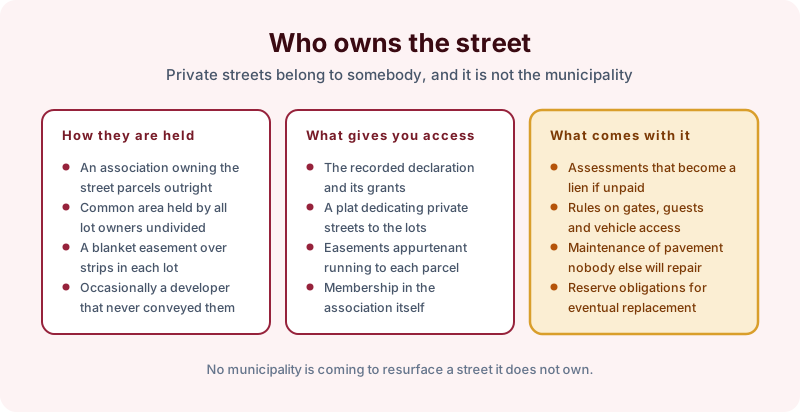
Four arrangements are common. An association owning the street parcels outright. Common area held undivided by all the lot owners. A blanket easement over strips running through each lot, which is tidier on paper and messier in practice. And occasionally a developer who never conveyed anything, which is a defect rather than a structure and turns up more often than it should.
What gives a lot owner access is the recorded declaration and its grants, the plat dedicating the private streets to the lots, easements appurtenant running to each parcel, or membership in the association itself. One of those should be present, and on a well documented subdivision several will be.
What comes with the right is the obligation. Assessments that become a lien if unpaid, rules on gates and guests and vehicles, maintenance of pavement no municipality will ever resurface, and reserve obligations for the day the whole street needs replacing. A private street is a shared capital asset, and the declaration is where the cost-sharing lives. The mechanics are those in private road maintenance agreements.
Who else can get in
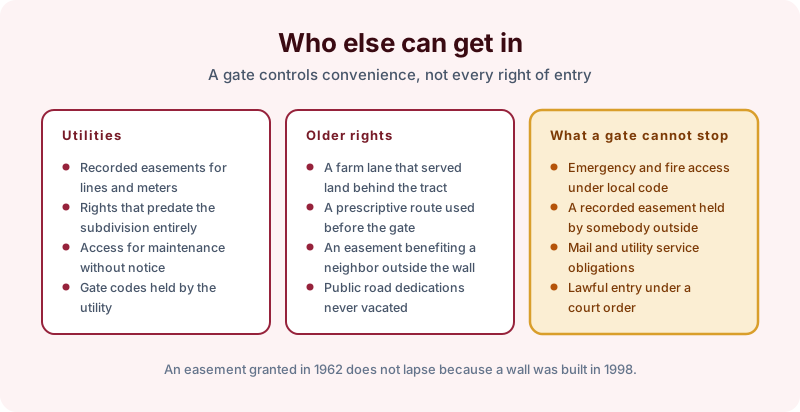
Utilities hold recorded easements for their lines and meters, frequently granted before the subdivision existed, with rights of access for maintenance that do not depend on anybody’s permission.
Older rights are the interesting category. A farm lane that served land behind the tract. A route used openly before the wall went up, which may have ripened into a prescriptive right. An easement benefiting a neighbor whose land sits outside the gate entirely. A public road dedication that was never formally vacated, which means a street everyone treats as private may not be.
And some entry a gate cannot lawfully prevent. Emergency and fire access under local code, which is why gates carry override systems. A recorded easement held by somebody outside. Mail and utility service obligations. Lawful entry under a court order. The gate controls convenience, not the underlying rights, and the two are frequently confused by buyers.
Why this matters to a buyer specifically
Because the thing being bought is a lot plus a bundle of shared rights and obligations, and the bundle is only as good as the documents behind it. A subdivision where the developer never conveyed the street parcels to the association has a real problem that will surface at the worst moment. A declaration with no reserve requirement means a special assessment is coming.
A records search reports what was recorded and indexed over the term searched. Prescriptive rights can arise with nothing filed, a search is not a survey and does not locate anything on the ground, and a clean report is not proof that no outside party holds a right of entry.
Scoping the search
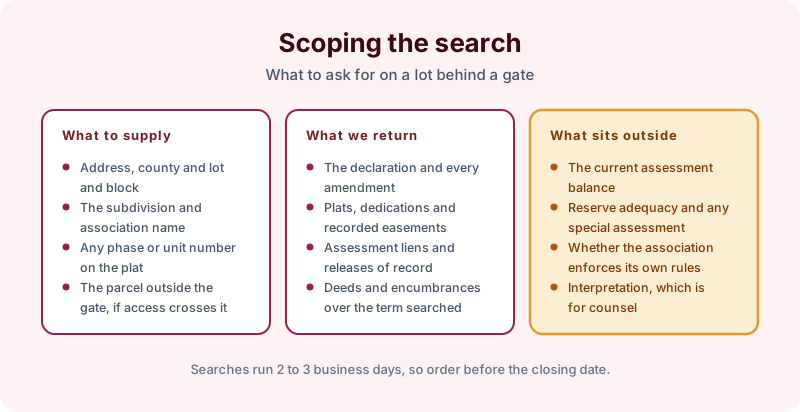
Give us the address, county, lot and block, the subdivision and association name, any phase or unit number on the plat, and the parcel outside the gate if access crosses it. What comes back is the declaration and every amendment, the plats, dedications and recorded easements, the assessment liens and releases of record, and the deeds and encumbrances over the term searched. Our search packages set out the terms available.
What sits outside is the current assessment balance, reserve adequacy, any pending special assessment, and whether the association actually enforces its own rules. Those come from an estoppel letter and from counsel.
The takeaway
A gate is a convenience built on top of a set of recorded rights, and it does not create or extinguish any of them. Read the declaration for what you are buying into and search the record for who else can already get in. Start the order online, or send us the address and the county and we will tell you which term fits and what it would and would not cover before anything is ordered.