

· AFX Research
Access for a Neighbor's Construction Work, and What It Requires
A wall on the property line cannot be repaired from the inside. What routes exist for entry, what gets recorded, and why permission is worth putting in writing.
Table of Contents
The neighbor is repointing a brick wall that sits exactly on the boundary, and the scaffolding has to stand on your side because there is nowhere else for it to go. Or they are excavating for a basement and your foundation needs underpinning to stay where it is. These are ordinary situations with a set of answers that range from a friendly conversation to a court order, and the one thing that matters afterward is whether anybody wrote anything down. This is the neighborly version of temporary construction easements and the record.
When a neighbor needs in
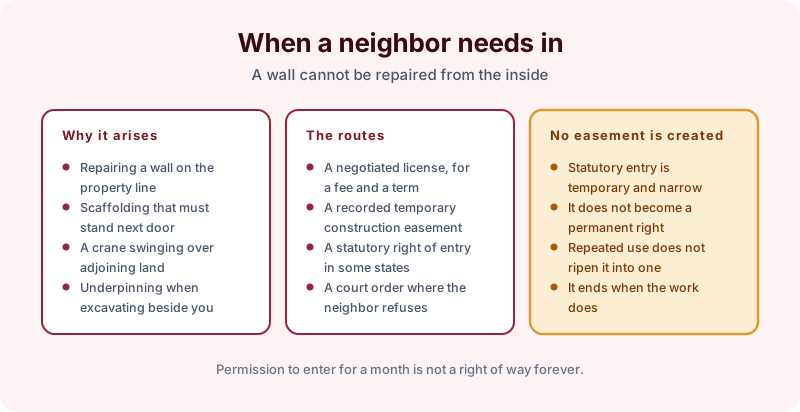
It arises for physical reasons rather than legal ones. A wall on the line can only be worked on from the other side. Scaffolding needs a footprint. A crane swings over adjoining airspace whether anybody intended it to or not. And excavation beside a neighbor’s foundation frequently requires underpinning that neighbor’s building, which means working on their land for their protection.
Four routes exist. A negotiated license, usually for a fee and a defined term, which is how most of these resolve. A recorded temporary construction easement, which is the formal version. A statutory right of entry, which a number of states provide on notice and conditions. Or a court order where the neighbor simply refuses and the work is necessary.
None of them creates a permanent right. Statutory entry is temporary and narrow by design, it does not ripen into an easement, and repeated use does not change that. It ends when the work does, which is the crucial difference from the arrangements described in easement versus license.
What the record shows
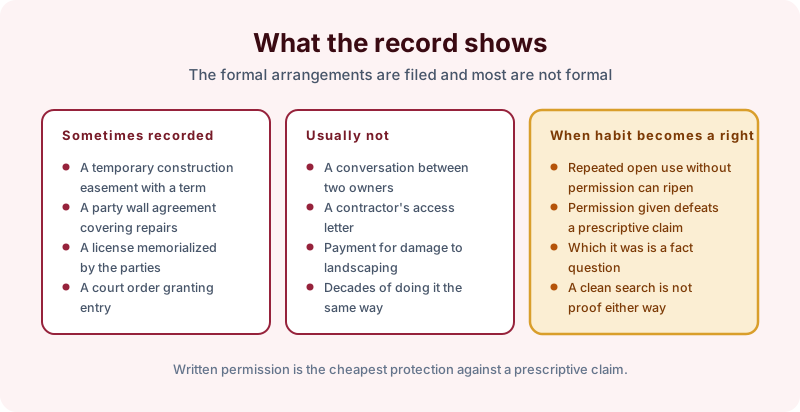
Sometimes recorded — a temporary construction easement with a stated term, a party wall agreement covering repairs and access, a license the parties chose to memorialize, or a court order granting entry.
Usually not recorded — a conversation between two owners, a contractor’s access letter, a payment for trampled landscaping, or decades of simply doing it the same way whenever the gutters need clearing.
That last category is where it gets interesting. Repeated open use without permission can ripen into a prescriptive right in most states. Use with permission generally defeats that claim entirely, which is why a one-line written consent is worth more than its length suggests. Which of the two occurred is a fact question, a search reports only what was recorded over the term searched, and a clean report is not proof either way.
The practical advice in one paragraph
Put it in writing, even when everybody is friendly. A short license stating the dates, the area, who repairs what damage and that the permission is revocable costs nothing, protects the neighbor doing the work, and protects the owner granting it from an argument ten years later about whether a right was established. Where the work will recur — a shared wall on a commercial building, for instance — record a party wall agreement instead and stop having the conversation.
Scoping the search
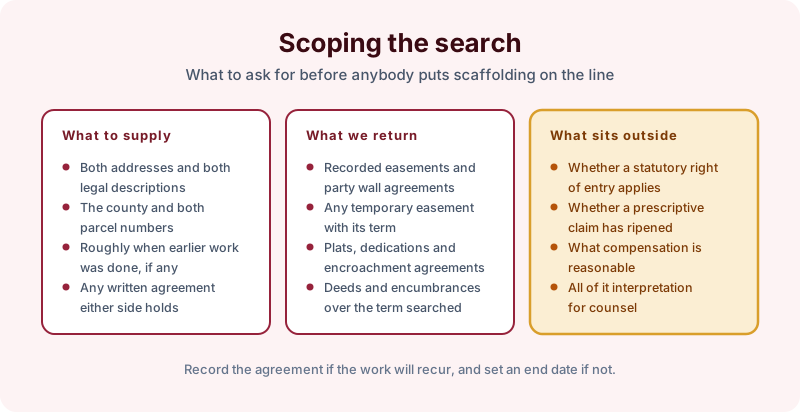
Give us both addresses and both legal descriptions, the county and both parcel numbers, roughly when earlier work was done if any, and any written agreement either side holds. What comes back is the recorded easements and party wall agreements, any temporary easement with its term, the plats, dedications and encroachment agreements, and the deeds and encumbrances over the term searched. Our process page explains how that work is done.
What sits outside is whether a statutory right of entry applies in that state, whether a prescriptive claim has ripened, and what compensation is reasonable. Those are matters for counsel.
The takeaway
Access for a neighbor’s work is a short-term problem with a long-term record consequence, and the difference between a license and an easement is usually just whether somebody wrote it down. Search for what already exists, then put the new arrangement in writing with an end date. Start the order online, or send us both addresses and the county and we will tell you which term fits and what it would and would not cover before anything is ordered.