

· AFX Research
Temporary Construction Easements, and What the Record Shows
What a construction easement grants, why an expired one can still appear live in the land records, and the four terms that decide what you are buying.
Table of Contents
Most easements are forever. A temporary construction easement is the exception, a right to use part of a parcel for the duration of a project and then give it back. Road widenings, pipeline installations, sewer replacements, and dense infill construction all depend on them, because the work needs somewhere to stage equipment and a route to reach the site.
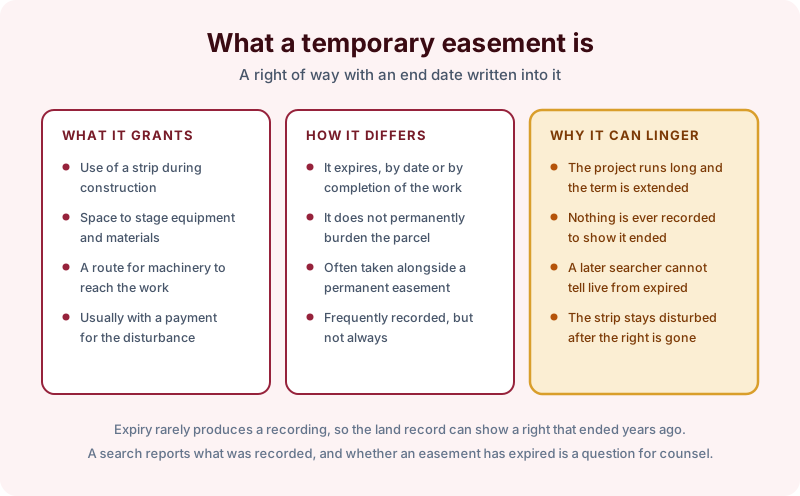
They are also the easement most likely to confuse a searcher, for a reason that is almost administrative. Easements are recorded when they are created. They are rarely recorded when they end.
Recorded at birth, silent at death
A permanent easement sits in the record and stays true. A temporary one sits in the record and slowly stops being true, with nothing to mark the change. The project finishes, the term lapses, and the instrument remains indexed exactly as it was on the day it was signed.
So a report showing a construction easement from 2019 is telling you something narrower than it appears. It says an instrument was recorded. Whether the right still exists depends on what the document said about its term and on what actually happened, and that is a question for counsel rather than for the abstract. The same asymmetry runs through how an easement is terminated, where creation is almost always documented and termination frequently is not.
Who takes one
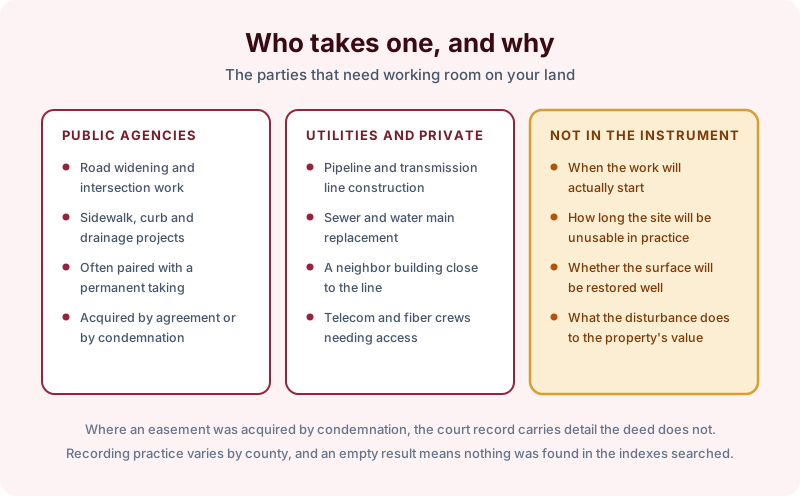
Public agencies are the most common. A road project takes a permanent strip for the widened travel way and a temporary strip behind it for the machinery, and the two are often acquired in the same transaction — which is why finding one should prompt you to look for the other. Where the acquisition came through condemnation, the court file carries detail the recorded deed does not, a pattern covered in condemnation easements and the record.
Utilities take them for pipeline and transmission work and for main replacements. Private builders take them from neighbors on tight sites. What none of the instruments tell you is when the work actually starts, how long the yard will really be unusable, or how well the surface gets restored.
Four terms worth reading
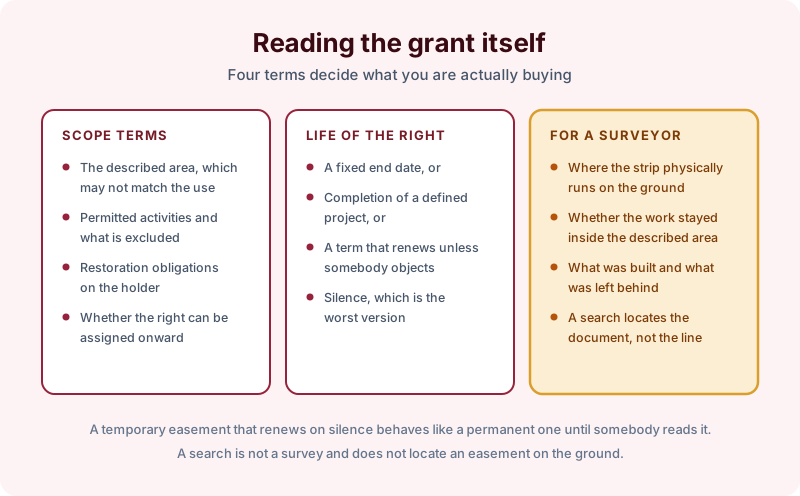
Read the described area, and notice that it may be larger or differently placed than the use anyone described to you. Read the permitted activities, since a grant for access is a different burden from a grant for material storage. Read the restoration obligation, which is the clause you will care about afterwards. And read whether the right can be assigned, because a contractor’s successor may end up holding it.
Then find the end. A fixed date is the clean version. Completion of a defined project is workable. A term that renews unless somebody objects is the one that quietly behaves like a permanent easement, and silence on the point is worse still.
What the search can and cannot do
A search locates and reports the recorded instruments found in the offices searched, as of the date the work is done. It is not a survey. It will not tell you where the strip physically runs, whether the crews stayed inside the described area, or what was left buried when they finished. Those are questions for a licensed surveyor, and building near an easement covers why that distinction matters before anyone pours concrete.
Recording and indexing practice varies by county, so an empty result means nothing was found in the indexes searched rather than that the parcel is unburdened. Reports run 2–3 business days.
The takeaway
A temporary construction easement is the one burden that can be dead on the ground and alive in the index. Find the instrument, read the term and the restoration clause, look for the permanent easement that probably came with it, and treat the absence of a release as meaning nothing either way. Start the order online, or send us the address and the county and we will tell you which search term fits and what it would and would not cover before anything is ordered.