

· AFX Research
Adverse Possession Versus a Prescriptive Easement Explained
One takes ownership of the ground, the other takes a right to cross it. What each requires, why exclusivity is the dividing line, and why neither appears in the index.
Table of Contents
From the driveway they look identical. Somebody has been using a strip of your land for years, nobody ever granted them anything, and the question is what they now have. The answer is one of two quite different things, and the difference decides whether you still own the ground. Both sit in the same blind spot as prescriptive easements generally, which is that they arise without a document.
Taking the land, or taking a use
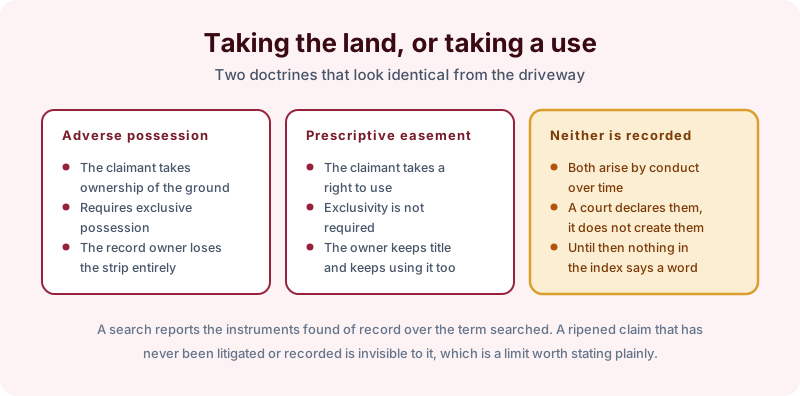
Adverse possession transfers ownership. If the elements are met, the claimant becomes the owner of that ground and the record owner loses it. The strip is gone.
A prescriptive easement transfers a right to use. The claimant gets to keep crossing, draining or parking, and the owner keeps title and can keep using the strip themselves so long as they do not block the established use. That is a much smaller loss, and it is by far the more common outcome.
Neither one is recorded when it ripens. Both arise from conduct over time, and a court declares that they happened rather than creating them. Until somebody litigates, or the parties paper it voluntarily, the index says nothing at all.
What each one requires
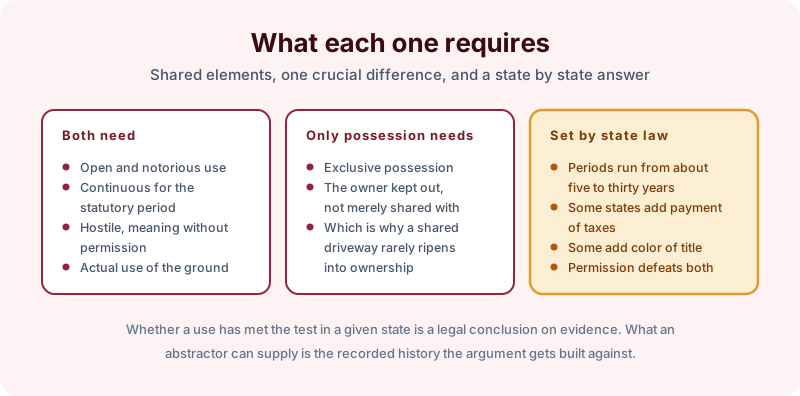
Both doctrines share most of their elements. The use has to be open and notorious, so the owner had a fair chance to notice it. It has to be continuous for the statutory period. It has to be hostile, which in this context means without the owner’s permission rather than unfriendly. And it has to be actual use of the ground rather than an intention to use it.
The dividing element is exclusivity. Adverse possession generally requires it, meaning the claimant kept the owner out rather than sharing. Prescription does not. That single difference explains why a shared driveway almost never ripens into ownership but frequently ripens into a right of way.
The periods and the extra requirements are set by state law and vary a great deal, running from roughly five to thirty years, with some states adding payment of property taxes and some adding color of title. Whether a use has met the test in a given state is a legal conclusion drawn on evidence, and it belongs to counsel. What an abstractor supplies is the recorded history the argument gets built against.
Spotting one before it matters
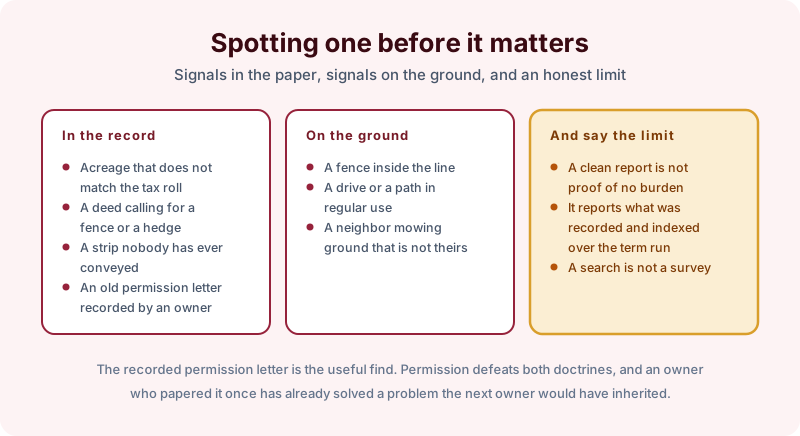
Some signals sit in the paper. Acreage in the deed that does not match the tax roll. A description calling for a fence or a hedge rather than a distance. A strip that no instrument in the chain ever conveys. And occasionally the most useful find of all, a recorded permission letter from a previous owner, because permission defeats both doctrines and an owner who papered it once has already solved the problem for everybody after them.
The rest is visible only on the ground, which is why a survey belongs alongside the search rather than instead of it, and why an encroachment and an easement get confused so regularly. A fence set inside the line, a path in regular use, a neighbor mowing ground that is not theirs.
And the limit has to be stated. A clean report tells you what was found of record over the term run, in the indexes read. It is not proof the parcel is unburdened, and a search is not a survey and locates nothing on the ground. Recording and indexing practice varies by county, so no local habit is a general rule.
The takeaway
If somebody has been using part of your land, work out first whether they are occupying it or merely crossing it, because that decides whether you are arguing about ownership or about access. Get the chain read against a term long enough to reach the original division, using whichever search package fits, get the ground surveyed against it, and take the question of whether the period has run to a lawyer in that state. Start the order online, or send us the address and the county and we will tell you which search term fits and what it would and would not cover before anything is ordered.