

· AFX Research
Encroachment or Easement: What That Fence Actually Means
One is a physical thing in the wrong place, the other is a recorded right. Why the distinction decides your options, and which document answers which question.
Table of Contents
A survey comes back and the neighbor’s shed is two feet inside your line. Or their driveway clips the corner, or their garage eaves overhang, or a retaining wall was built where nobody can now explain. The first instinct is to ask whether they have an easement. That is the right question, and it is a different question from the one the survey just answered.
A thing, or a right
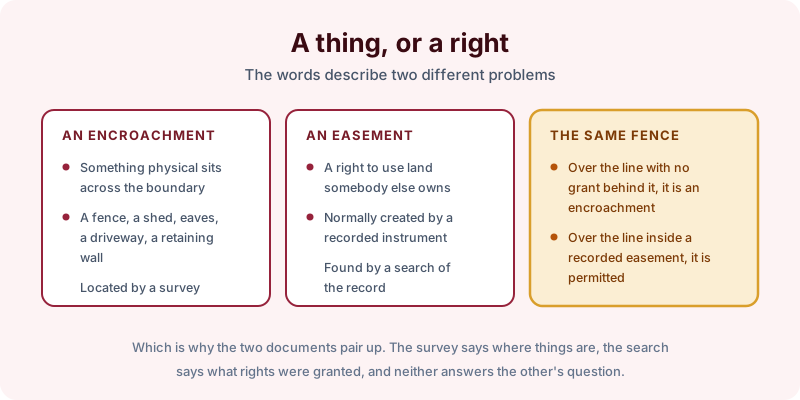
An encroachment is physical. Something built or placed sits across the boundary: a fence, a shed, eaves, pavement, a wall. Its existence and position are established by a survey, because only a licensed surveyor can put the recorded description on the ground.
An easement is a right. It permits someone to use land they do not own, and it is normally created by a recorded instrument, which is what a records search finds.
So the same fence can be either one. Sitting past the line with no grant behind it, it is an encroachment. Sitting past the line inside a recorded easement, it is permitted and everybody has simply forgotten why. The two documents pair up because each answers what the other cannot.
Why is it there in the first place
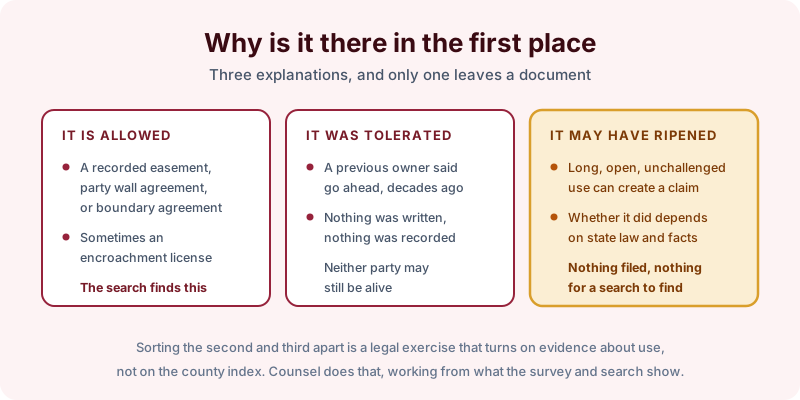
Once you know something crosses the line, there are three explanations and they lead in different directions.
It is allowed. A recorded easement, a party wall agreement, a boundary line agreement, or an encroachment licence permits it. A search finds these, and finding one usually ends the matter quietly.
It was tolerated. A previous owner said go ahead, decades ago, and nothing was written down. Neither of the people involved may still be around. Nothing was recorded, so there is nothing for a search to find, which is the same limit that applies to any informal permission.
It may have ripened. Long, open, and unchallenged use can, depending on state law and the specific facts, create a claim that no longer depends on anyone’s permission. Whether that has happened is a legal determination, and it turns on evidence about use rather than on the county index, exactly as it does with prescriptive claims.
Sorting the second from the third is counsel’s work, done from what the survey and the search show.
Fixing it on paper
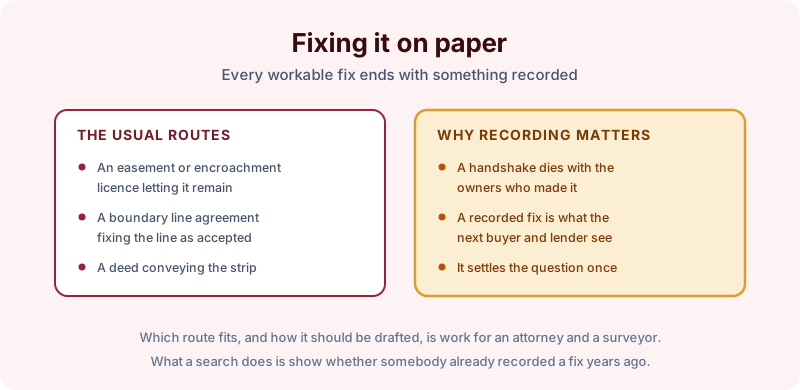
Most encroachments get resolved rather than litigated, and the workable routes all end the same way.
An easement or encroachment licence lets the structure remain on stated terms. A boundary line agreement fixes the line where both owners accept it. A deed conveys the disputed strip outright. Which one fits, and how it should be drafted, is work for an attorney and a surveyor together.
The common feature is worth stating plainly: each of these gets recorded. A handshake resolves the argument between two current owners and dies with them, leaving the next buyer to discover the same problem with less information. A recorded fix is what a future buyer, lender, and title insurer will actually see. And a search will sometimes reveal that somebody already did this in 1987, which is the cheapest possible outcome.
What a search establishes
A report states what was found of record for the parcel and term searched, on the date searched, with copies. On this subject the useful result is often a negative one: no recorded easement covering that strip, which tells you the structure is unpermitted of record and moves the question to counsel. A clean report is not proof that no claim exists, and it does not locate anything on the ground. Finding what is recorded is a starting point.
The takeaway
Establish position with a survey and rights with a search, treat an unrecorded accommodation as a problem to document rather than a settled arrangement, and insist that whatever fix you agree on gets recorded. Start the order online, or send us the address and the county and we will tell you which search term fits and what it would and would not cover before anything is ordered.