

· AFX Research
Air Rights and Overhang Easements, and Where to Find Them
What ownership above a parcel covers, how a cornice, balcony or crane jib becomes a recorded burden, and why so many of these agreements never reach the record.
Table of Contents
Property is usually discussed as a flat thing, a shape on a plat with boundaries running along the ground. It is not. The space above a parcel is part of what is owned, it is divisible, and it gets conveyed, leased, reserved, and burdened exactly like the surface. Most owners never think about it until a neighbor’s building leans over the line or a crane starts swinging above the roof.
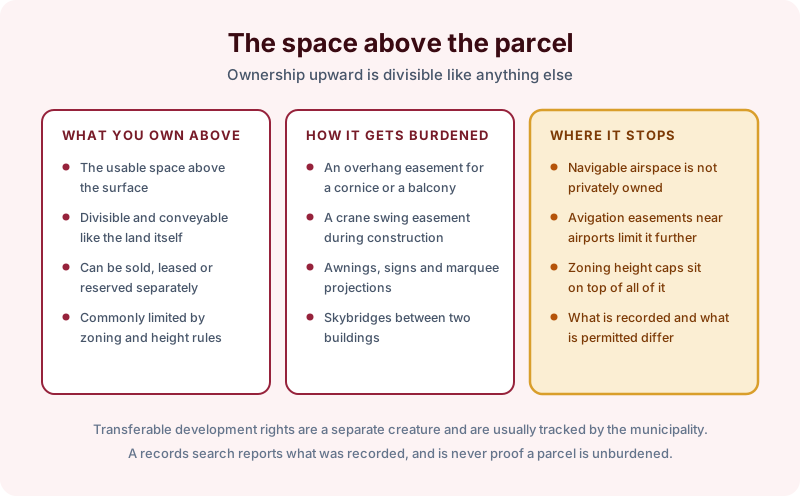
What you own upward, and where it stops
Ownership reaches into the usable space above the surface, and that space can be sold, leased, or reserved separately from the land. Cities are built on this. A tower gets developed above a rail yard, a parking structure carries apartments above it, and the two interests are held by different owners under recorded documents.
The upper limit is not infinite. Navigable airspace is not privately owned, and near an airport the burden goes further through a recorded avigation easement, which is the subject of avigation easements near airports. Zoning height caps sit on top of everything, and what is recorded and what is permitted are two separate questions with two separate answers.
How the space above gets burdened
The ordinary versions are small and permanent. A cornice or a balcony that projects across the line. An awning, a marquee, or a sign that hangs over a sidewalk or a neighbor’s yard. A skybridge between two buildings. Each of these can be papered as an overhang easement, a recorded right for a defined structure to occupy defined space above someone else’s parcel.
Where no agreement exists, the same projection is an encroachment instead, and that is a materially different problem — the distinction is worked through in encroachment or easement.
Crane swing, the temporary version
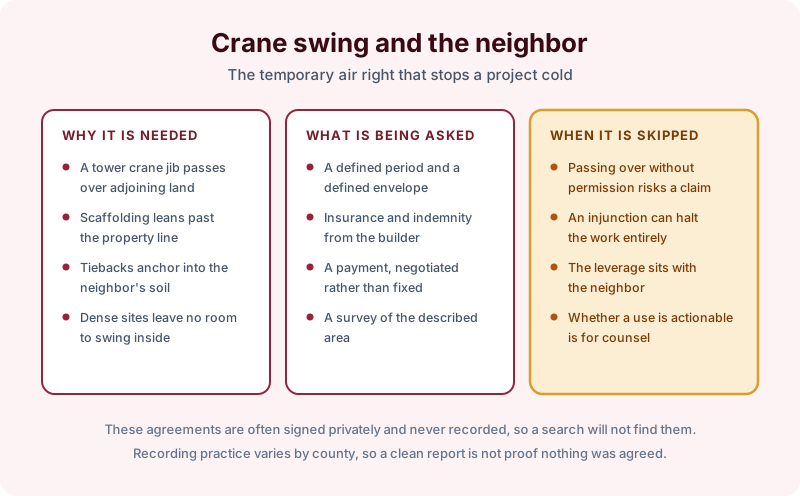
On a constrained site a tower crane cannot do useful work without its jib passing over adjoining land, scaffolding leaning past the line, or tiebacks anchoring into the neighbor’s soil. So the builder asks for a crane swing easement, a temporary right over a defined envelope for a defined period, usually with insurance, indemnity, and a negotiated payment attached.
Where the right was never obtained, the builder is exposed. Passing over without permission can support a claim, and an injunction can stop the job entirely, which puts remarkable leverage in the hands of whoever owns the parcel next door. Whether a particular use is actionable is a legal question for counsel in that state.
The practical difficulty for a searcher is that a great many of these agreements are negotiated privately between two owners and never recorded at all. A clean report is not evidence that nobody agreed to anything.
Searching the vertical
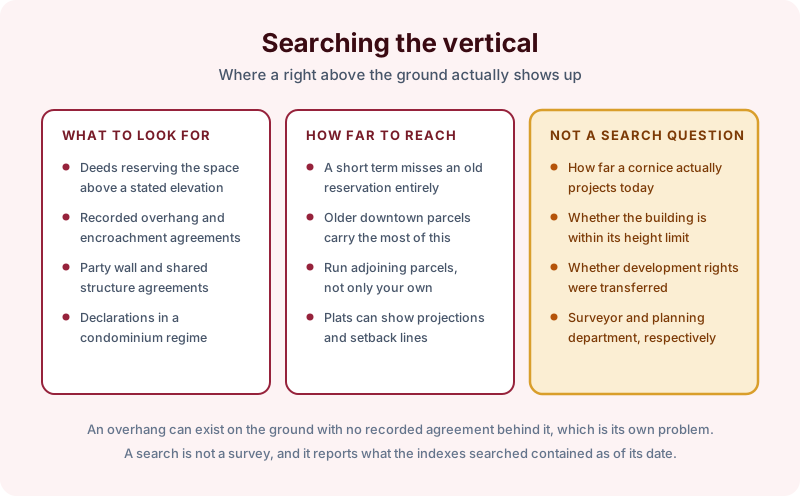
Look for deeds that reserve or convey the space above a stated elevation, recorded overhang and encroachment agreements, party wall and shared structure agreements, and condominium declarations where the regime divides space vertically by definition.
Reach back far enough to catch them. Downtown parcels carry reservations written generations ago, and a short term simply will not see them, which is the argument made in how to find easements on a property. Run the adjoining parcels too, since the burden on your land was frequently created in the neighbor’s chain rather than in yours.
What a search will not settle is how far a cornice actually projects today, whether a building is inside its height limit, or whether development rights were transferred away. Those belong to a surveyor and to the planning department. A search is not a survey, recording practice varies by county, and reports run 2–3 business days.
The takeaway
The space above a parcel is real property, and it carries recorded rights that a ground-level search framed around access and utilities will miss. Look upward deliberately, reach back far enough to find old reservations, search the neighbors, and treat silence in the record as silence rather than as proof. Start the order online, or send us the address and the county and we will tell you which search term fits and what it would and would not cover before anything is ordered.