

· AFX Research
Avigation Easements: What an Airport Records on Your Land
Airports buy the airspace over nearby parcels and record the grant. What an avigation easement gives up, what it limits, and how to find one before you buy.
Table of Contents
Property near an airport frequently carries an encumbrance nobody thinks to ask about, because it burdens the sky rather than the ground. An avigation easement is a recorded grant giving an airport the right to fly over the parcel, along with a waiver of the noise and vibration claims that flying over it would otherwise create. It runs with the land in the ordinary case, which means the person who signed it may have died decades before you closed. Like a utility easement, it is a recorded burden that shapes what an owner can do without ever appearing on the ground.
What the airport is buying
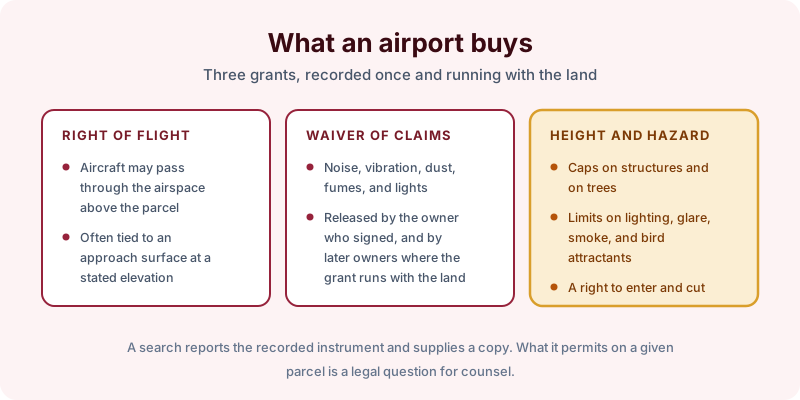
A right of flight through the airspace above the parcel, commonly tied to an approach surface described by elevation or by slope from the runway end.
A waiver of claims for noise, vibration, dust, fumes, and lights associated with aircraft operations. This is the operative bargain: the airport paid once, historically as part of a federally funded noise or land acquisition program, in exchange for giving up the nuisance claim.
Height and hazard restrictions are the third piece, and the one that reaches daily life. Caps on the height of structures and of trees, limits on lighting and glare, smoke, and anything that attracts birds, and frequently a right for the airport to enter and cut vegetation that penetrates the protected surface.
Related instruments show up in the same neighborhoods. A clear zone or runway protection zone easement can be far more restrictive, and some parcels carry only a height limitation without any waiver of noise claims. The label on the document matters less than its terms.
What it means for a buyer
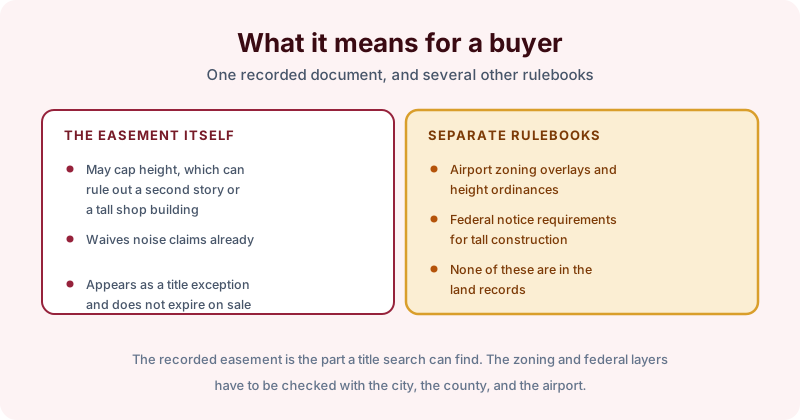
The practical consequences are concrete. A height cap can rule out a second story, a tall shop building, or a grain leg. The noise waiver is already spent, so an owner who later objects to a change in traffic is arguing from a weaker position than a neighbor whose parcel was never encumbered. And it does not expire at closing. A recorded easement of this kind appears as a title exception and stays with the parcel.
It is also worth separating the recorded easement from the other rulebooks that apply near airports. Municipal airport overlay zoning, county height ordinances, and federal notice requirements for tall construction all operate independently of the easement, and none of them live in the land records. Confirm those with the city, the county, and the airport. Our note on building near an easement covers the same split between what is recorded and what a permit office controls.
Finding one before you close
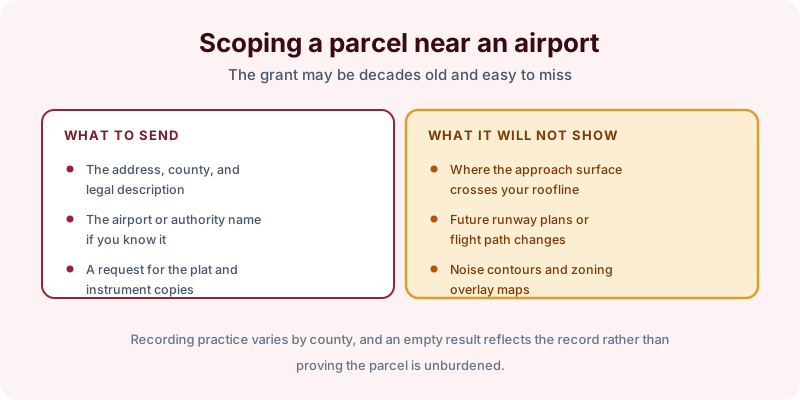
These grants are recorded, so a search of the county records is the way to find them, and depth matters because many were recorded in the 1970s and 1980s during federal noise compatibility programs. Send the address, county, and legal description, and the airport or authority name if you know it, and ask for the plat and copies of every instrument found. Our search terms run 20, 30, and 50 years so the depth can match the era you need to reach, and turnaround is 2 to 3 business days.
What comes back is the easements, restrictions, and agreements found of record for that parcel over the term searched, with the instruments attached so the height language can be read rather than paraphrased. What does not come back is where an approach surface crosses your roofline, which is survey and engineering work, or the airport’s future plans. Recording practice varies by county, an empty result reflects the record rather than proving the parcel is unburdened, and what a given easement permits is a legal question for counsel.
The takeaway
If a parcel sits under a flight path, assume an avigation easement is possible and check before you plan a second story or a tall outbuilding. The document is usually short, it is usually old, and it is usually the only place the height limit is written down. Start the order online, or send us the address and the county and we will tell you which search term fits and what it would and would not cover before anything is ordered.