

· AFX Research
An Easement Granted by One Co-owner of the Burdened Land
What a single co-tenant can convey, how a partial grant looks in the county record, and the comparison that catches a signature page short of the owners.
Table of Contents
A recorded easement is clean on its face. Proper description, a stated width, a purpose, an acknowledgment, filed in 2011. The trouble is the deed that put the land in those owners’ names in 2007, which names three people. The easement carries one signature. Nothing in the document says so, and nobody noticed for fourteen years. This is a cousin of the problem in who had authority to grant the easement, and it turns up more often than the clean paperwork suggests.
What a co-owner actually owns
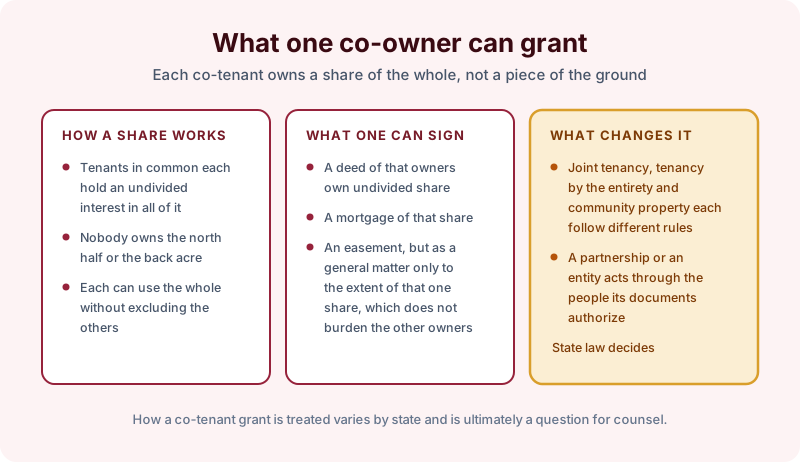
Tenants in common each hold an undivided interest in the whole parcel. Nobody owns the north half or the back acre. Three siblings who inherit a farm each own a third of every square foot of it, and each may use all of it so long as they do not shut the others out.
What one of them can sign alone follows from that. A deed of that owner’s own undivided share, a mortgage of that share, and an easement, but as a general matter only to the extent of that one share. A grant from one co-tenant does not, by itself, burden the interests of the owners who did not sign.
The form of ownership changes the answer. Joint tenancy, tenancy by the entirety and community property each follow their own rules, and several states will not let one spouse encumber homestead property alone at all. A partnership or a limited liability company acts through whoever its own documents authorize, which is a separate question again. All of it is state law.
What it looks like in the record
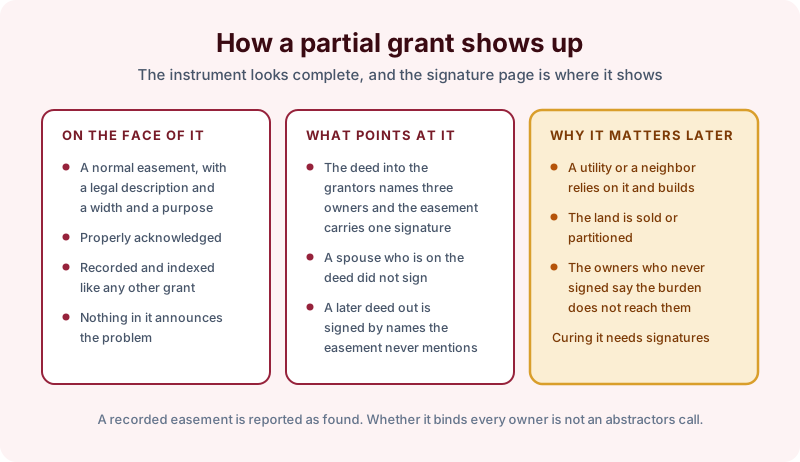
The instrument gives nothing away. It reads like any other easement and it is indexed like any other easement. What points at the problem sits around it rather than in it. The vesting deed names three owners and the grant carries one signature. A spouse who appears on the deed is absent from the signature page. A later deed out of the property is signed by names the easement never mentions.
The consequences arrive long after the recording. A utility or a neighbor relies on the grant and builds something expensive in reliance on it. The land is sold, or a co-owner forces a partition, and the owners who never signed take the position that the burden was never theirs. Curing it then means going back for signatures from people who may have died, moved or fallen out with each other.
The comparison that catches it
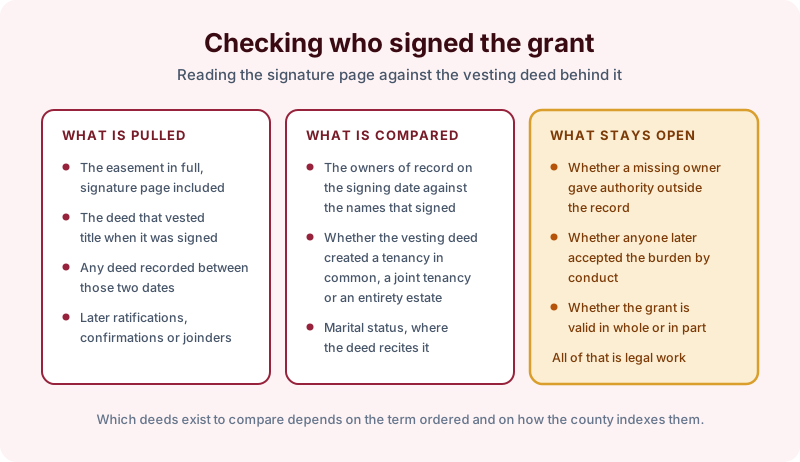
We pull the easement in full, signature page included, along with the deed that vested title on the day it was signed, any deed recorded between those two dates, and any later ratification, confirmation or joinder. Then the owners of record on the signing date get compared against the names that actually signed, and the vesting deed gets read for what kind of estate it created.
What stays open is whatever happened off the record. Whether a missing owner gave authority some other way, whether anyone later accepted the burden by conduct, and whether the grant is good in whole or in part are legal conclusions for counsel. We report the easement as found of record, with the mismatch noted. Which deeds exist to compare against depends on the term ordered and on how the county indexes its grantors, and practice there varies a great deal.
When you are on the benefited side
If you hold or are buying the benefit of an easement, this is worth checking before you rely on it rather than after. A grant signed by fewer than all the owners of the burdened land is a weaker right than it appears, and the fix is usually a confirmatory grant from the remaining owners while everyone is still findable and still cooperative. The search packages differ mainly in how far back the deeds run, and the vesting deed you need to compare against may be older than you expect.
The takeaway
An easement is only as good as the signatures on it, and the signature page has to be read against the deed that was in effect the day it was signed. Start the order online, or send us the address and the county and we will tell you which search term fits and what it would and would not cover before anything is ordered.