

· AFX Research
Easements Created by a Court Order or a Partition Decree
When a judge splits co-owned land or settles an access fight, the resulting right of way lives in a case file. Where it is indexed, why searches miss it, and what to ask for.
Table of Contents
Most easements start with somebody signing something. A landowner grants a utility a strip, two neighbors agree on a shared driveway, a developer dedicates access on a plat. But a meaningful number are created by a judge, in a case neither current owner was party to, and they behave differently in the record because of it. They are as binding as any granted easement, and they are considerably easier to miss than the ones created by a subdivision plat.
When a court makes the easement
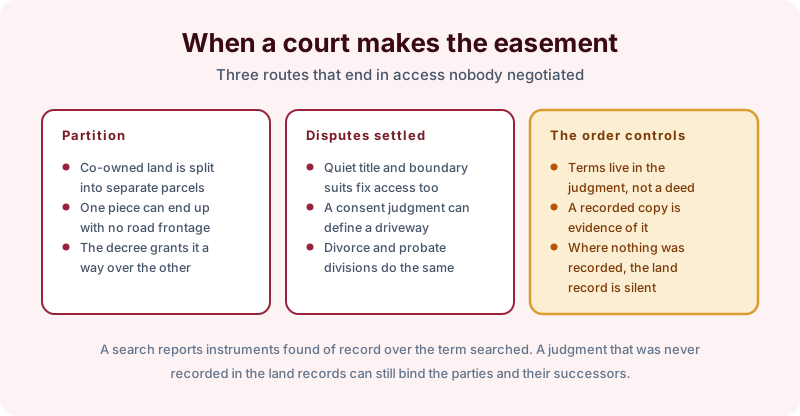
Partition is the classic route. Heirs, siblings or business partners co-own a tract, one of them wants out, and the court divides the land into separate parcels. Geometry being what it is, one of those parcels frequently ends up with no frontage on a public road, so the decree grants it a way over one of the others. That easement exists because a judge drew it, and there is no deed of easement anywhere.
Litigation produces the same result by other paths. A quiet title suit, a boundary dispute or an ejectment action can end in a judgment that defines access as part of the remedy. Consent judgments do it all the time, where the parties settle and ask the court to enter the terms they have negotiated. Divorce and probate divisions of land can do it too.
In every case the operative document is the order, not a deed. A certified copy recorded in the land records is evidence of the easement; it is not the grant. Where nothing was ever recorded, the easement can still bind the parties and everybody who takes from them, while the land record says nothing at all.
Two offices, two indexes
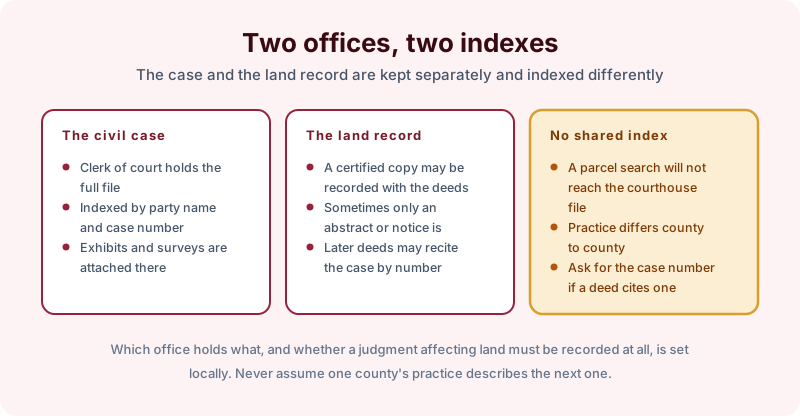
This is the structural problem. The clerk of court holds the case file, indexed by party name and case number, with the surveys and exhibits attached. The recorder holds the land records, indexed by grantor, grantee and increasingly by parcel. They are different offices with different indexes, and in most counties nothing automatically moves a judgment from one to the other.
What you find in the land records varies. Sometimes a full certified copy of the decree is recorded. Sometimes only an abstract of judgment or a short notice. Sometimes a later deed simply recites the case — “subject to the easement established in Civil Action No. 74-C-311” — and that recital is the only trace. Whether a judgment affecting title has to be recorded at all is set by state statute and local practice, so never take one county’s habit as the rule. A search of the land records reports what was recorded and indexed there over the term searched, and the courthouse file is a separate errand.
Why these get missed
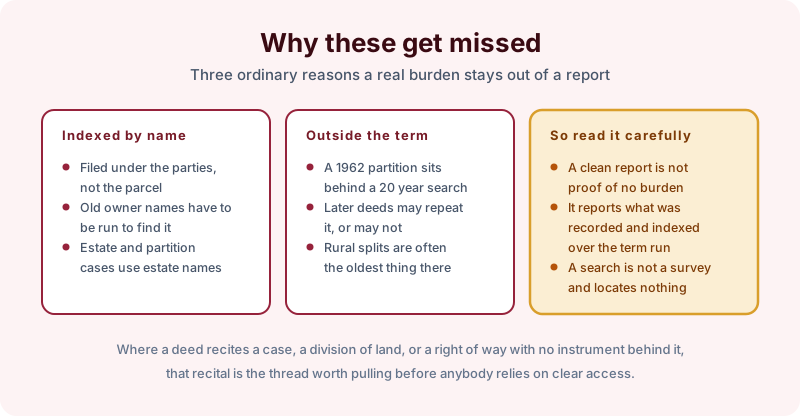
Three ordinary reasons, none of them exotic. The filing is indexed under party names rather than the parcel, so finding it means running the right historical owners, and partition and estate cases often appear under an estate name nobody would guess. The case is frequently old, because land gets divided among heirs once and then stays divided, which puts a 1962 partition comfortably behind the reach of a 20-year search. And the recital in a later deed, which is the usual breadcrumb, is easy to read past.
So treat a clean report with the care it deserves. It tells you what was found of record over the term run. It is not proof the parcel carries no burden, and prescriptive claims and easements by necessity behave the same way, which is the point made in prescriptive easements and the record. A search is also not a survey and does not locate anything on the ground.
The takeaway
When a chain shows land being split among family, or a deed cites a civil action, or access exists that no recorded instrument explains, you are probably looking at a court’s work. Push the term back far enough to reach the division, run the historical owner names, and pull the case file when a recital points at one. Start the order online, or send us the address and the county and we will tell you which search term fits and what it would and would not cover before anything is ordered.