

· AFX Research
Boundary Line Agreements: Fixing a Disputed Line by Consent
Two neighbors can settle a line by written agreement rather than litigating it, and the instrument only works if it is drafted and recorded properly. What to check.
Table of Contents
Not every boundary problem needs a lawsuit. Where two descriptions conflict, or a fence has been treated as the line since the 1970s, or a new survey turns up an overlap, the neighbors can agree on where the line runs and record an instrument saying so. Done properly it settles the question for both parcels permanently and costs a fraction of a quiet title action. Done casually it produces a document that fails at the next sale, which is a worse outcome than the ambiguity it replaced. This sits next to our note on encroachment or easement, which covers the situation where a structure rather than a line is the problem.
When an agreement is the fix
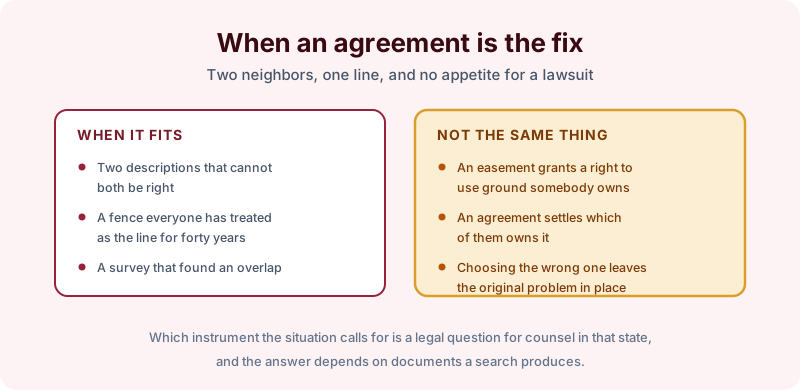
Three situations call for it: two descriptions that cannot both be right, a fence everybody has treated as the boundary for decades, and a survey that reveals an overlap or a gap.
The distinction to hold onto is what the instrument does. An easement grants a right to use ground somebody else owns. A boundary line agreement settles which of them owns it. Choosing the wrong instrument leaves the original problem in place with a new document sitting on top of it, and which one a situation actually calls for is a legal question for counsel in that state.
There is a related instrument worth knowing about where a wall or structure straddles the line, and that is the subject of our note on party wall agreements.
What the instrument needs
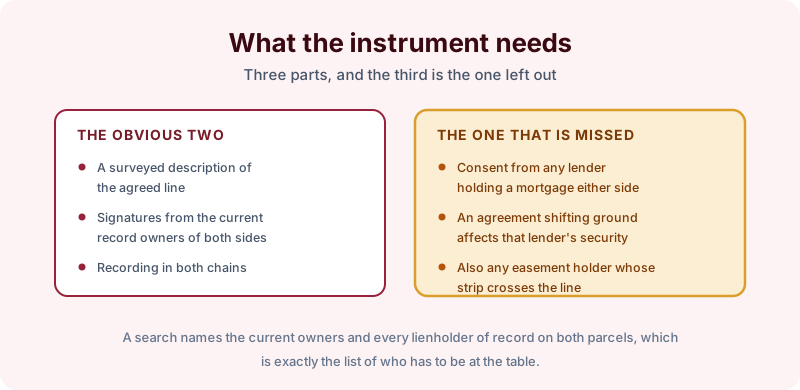
The obvious parts are a surveyed description of the agreed line, signatures from the current record owners of both parcels, and recording in both chains so a future searcher on either side finds it.
The part that gets left out is consent from anybody else with an interest. A lender holding a mortgage on either parcel has security that an agreement shifting ground directly affects, and an easement holder whose strip crosses the line has the same problem. A search produces exactly that list: the current owners and every lienholder of record on both parcels, which is the roster of who has to be at the table.
Why they come undone
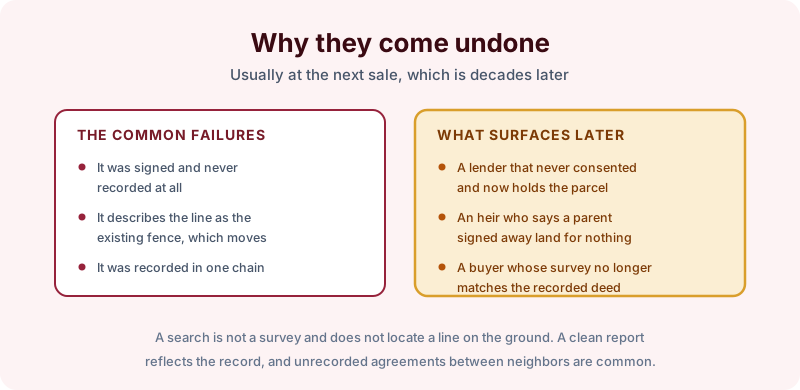
The failures are consistent. It was signed and never recorded. It describes the line as the existing fence, which then rots and gets rebuilt three feet over. Or it was recorded against one parcel and not the other, so it is invisible to a searcher on the side that matters.
What surfaces later is equally predictable: a lender that never consented and now owns the parcel through foreclosure, an heir arguing a parent gave away land for nothing, or a buyer whose new survey no longer agrees with the recorded deed. All of these arrive at a closing, which is the worst possible time.
What the search shows
The report is what was recorded and indexed over the term searched, with copies: the descriptions in both chains, any prior boundary agreement, easements crossing the area, mortgages and other liens on both parcels, and any plat. Choose a search term long enough to reach back past the conflicting descriptions rather than only past the current owners, since the error usually predates them. Turnaround is 2 to 3 business days. Read the result against the types of easements that could also be affected.
A search is not a survey and does not locate a line on the ground, which on this topic is the whole practical question. Unrecorded agreements between neighbors are common, so a clean report reflects the record rather than proving no agreement exists. Recording and indexing practice varies by county.
The takeaway
Before negotiating a line with a neighbor, search both parcels so you know who the record owners are and which lenders have to consent, and insist the agreed line be surveyed rather than described by a fence. Start the order online, or send us the address and the county and we will tell you which search term fits and what it would and would not cover before anything is ordered.