

· AFX Research
Party Wall Agreements: Shared Walls and Shared Obligations
A wall two buildings depend on carries rights and repair duties for both owners. What a party wall agreement covers, and what the county record will show.
Table of Contents
Rowhouses, downtown storefronts, and townhouse blocks all share a structural feature that ordinary suburban houses do not: a wall that holds up two buildings at once. Neither owner can remove it, both need it maintained, and either one can create an expensive problem for the other by renovating carelessly. Whether any of that is written down is a records question, and it belongs beside the shared driveway as a classic shared-use arrangement.
How a shared wall is held
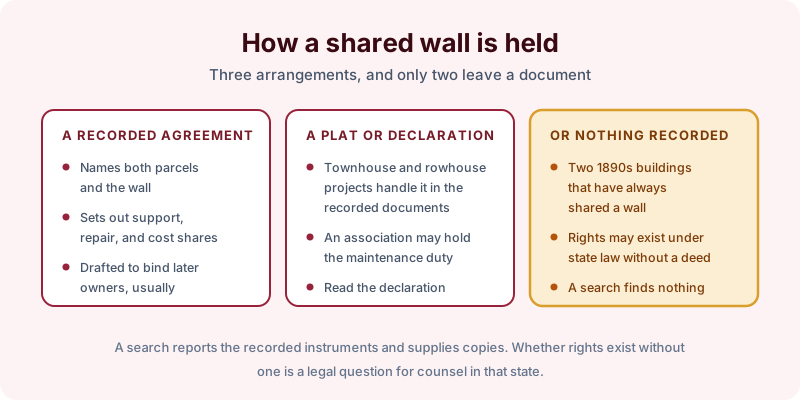
A recorded party wall agreement is the clean case. It names both parcels, identifies the wall, and sets out support rights, repair obligations, and cost shares. Well-drafted ones are written to bind later owners, which is exactly what makes them worth finding before you buy.
A plat or declaration handles it in most modern attached housing. Townhouse and rowhouse projects address party walls in the recorded subdivision documents, sometimes assigning maintenance to an association rather than to the two neighbors, so the declaration is the document to read.
Or nothing is recorded. Two buildings put up in the 1890s that have always shared a wall may have no instrument anywhere in the index. Rights and duties can still exist under state law, arising from the shared construction and long mutual use, but a records search will not produce a document, and whether such rights exist here is a legal question for counsel in that state.
What the agreement should settle
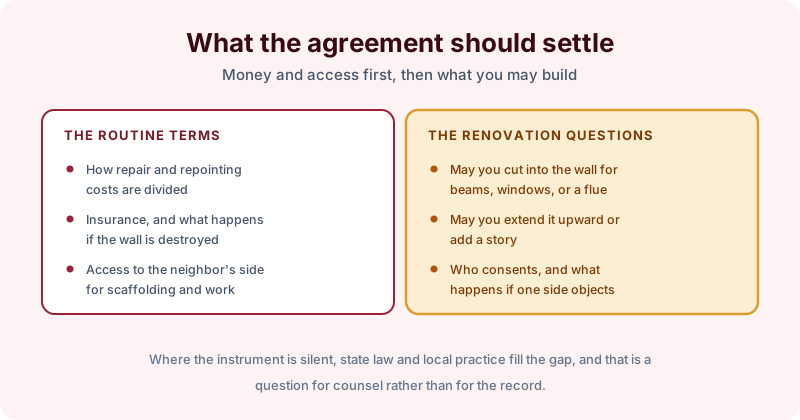
Read for money and access first. How are repair, repointing, and waterproofing costs divided? Who insures the wall, and what happens if fire or collapse destroys it? May each owner enter the other’s side to erect scaffolding and do the work, and on what notice?
Then read for the questions a renovation turns on. May you cut into the wall to seat beams, open a window, or run a flue? May you extend it upward to add a story, and if so does the neighbor gain the right to use the extension by paying a share? Who consents, and what happens if one side simply objects? These are the clauses that decide whether a planned buildout is possible, and where the instrument is silent, state law and local practice fill the gap.
One more item belongs in the same review. A wall that has drifted over the boundary, or a building that was built a few inches onto the neighbor’s lot, raises an encroachment question rather than a party wall question, and our note on encroachment or easement covers where that line falls.
A purchase sequencing note. Both the agreement and the plat belong in front of you before the inspection period closes, because the remedy for a missing or unfavorable party wall arrangement is a negotiation with the neighbor rather than a repair, and that takes time you will not have in the last week before closing.
Scoping the search
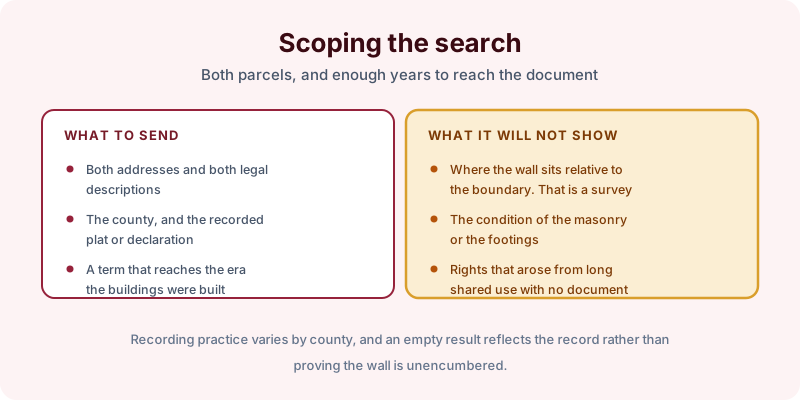
Send both addresses and both legal descriptions, since an agreement may be indexed against the neighbor’s parcel rather than yours, along with the county and the recorded plat or declaration. Depth matters here: an agreement recorded when the buildings went up may be a century old, so ask for a search term that reaches that era. Turnaround is 2 to 3 business days.
What comes back is the agreements, easements, and declarations found of record for those parcels over the term searched, with copies attached. What does not come back is where the wall sits relative to the boundary, which is survey work, or the condition of the masonry and footings, which is an engineer’s call. Recording practice varies by county, and an empty result reflects the record rather than proving the wall is unencumbered.
The takeaway
Before you buy an attached building or plan work on a shared wall, find out whether an agreement exists and read what it says about cutting, extending, and paying. The answers govern the renovation, and they are usually decided by a document nobody has looked at in decades. Start the order online, or send us the address and the county and we will tell you which search term fits and what it would and would not cover before anything is ordered.