

· AFX Research
Cemetery Access Easements: Rights of Way to Family Plots
A small family burial ground in the middle of a field comes with access rights, and often with no recorded document. What the record shows, and what statutes add.
Rural parcels across the country contain small family burial grounds: a dozen stones inside a rusted fence, sometimes fewer, sometimes with no fence at all. They come with two questions that surprise buyers. Who owns that ground, and who is entitled to walk across your property to reach it. Neither answer is reliably in the deed, and the second one frequently is not in the record at all. This is the least commercial of the access questions on this site, and one of the most emotionally charged, which is its own reason to get it right before closing. It resembles easement by necessity in that the right can exist without a document.
Three sources of access
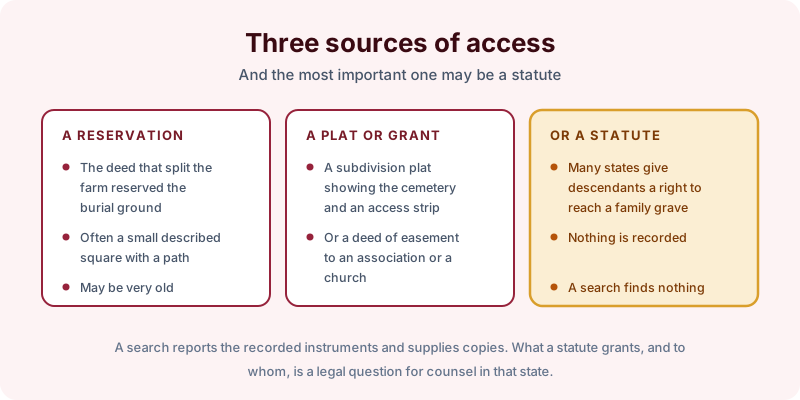
A reservation is the cleanest case. The deed that split the original farm reserved the burial ground, often as a small described square, sometimes with a path or a right of ingress described alongside it. These are frequently a century old and written in language nobody has read since.
A plat or a deed of easement is the second form. A subdivision plat may show the cemetery and an access strip, or a deed may have conveyed the plot itself to a family association or a church, leaving the surrounding land in private hands.
Or a statute supplies it. Many states give descendants, and sometimes any interested person, a right to reach a family grave for visitation and maintenance. Nothing is recorded when a right comes from a statute, so a records search will report no easement while a right of access still exists. That is the accuracy point to hold onto here, and it is the same limitation described in our note on prescriptive easements.
Two sets of expectations
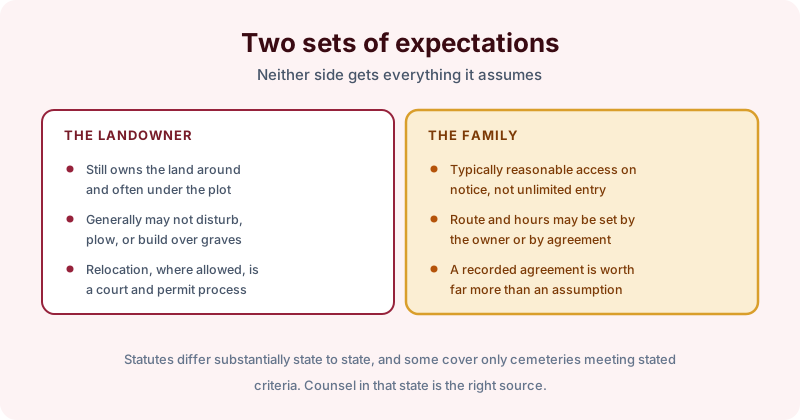
Landowners generally keep the land around and often under the plot, and generally may not disturb, plow, or build over the graves. Relocating a burial, where a state permits it at all, is a court and permit process rather than a weekend project.
Families generally get reasonable access on notice rather than unlimited entry, and the route and hours may be set by the owner or by agreement. Both sides tend to arrive with a stronger view of their position than the law supports, which is why a written and recorded agreement is worth considerably more than an assumption. State statutes differ substantially, some apply only to cemeteries meeting stated criteria, and what applies to a given parcel is a question for counsel in that state.
Two other items turn up in these files. A cemetery is sometimes excepted from the legal description entirely, meaning the parcel you are buying has a hole in it. And the plot may be owned by a defunct association whose successors nobody can identify, which is a title question rather than an access question.
Scoping the search
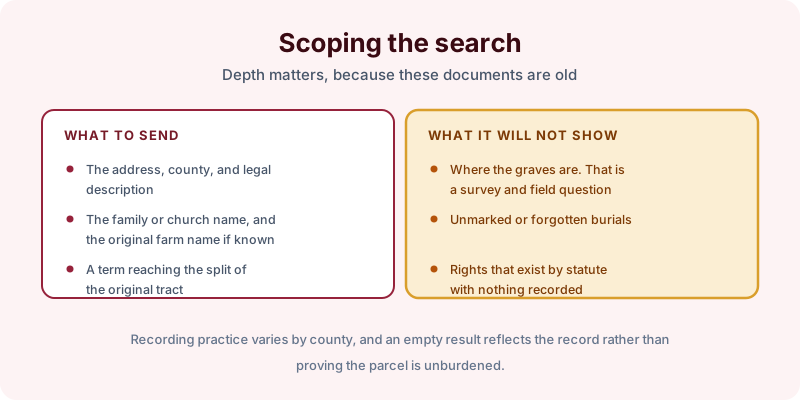
Send the address, county, and legal description, and the family, church, or original farm name if you have any of them, since an instrument from 1908 is likely indexed under a name rather than a modern parcel description. Depth is what makes this work, so ask for a search term that reaches the split of the original tract. Turnaround is 2 to 3 business days.
What comes back is the reservations, easements, plats, and conveyances found of record for that parcel over the term searched, with copies attached. What does not come back is where the graves actually are, which is survey and field work, or the existence of unmarked burials. Recording practice varies by county, and an empty result reflects the record rather than proving the parcel is unburdened.
The takeaway
If a parcel has stones on it, treat access as a live issue and find out what is recorded before you fence, plant, or build near it. The recorded documents are worth having, and where nothing is recorded, a written agreement with the family is the cheapest thing you will ever buy. Start the order online, or send us the address and the county and we will tell you which search term fits and what it would and would not cover before anything is ordered.