

· AFX Research
Condemnation Easements and What They Leave in the Record
A road widening or a transmission line can take a strip without taking the parcel. How these easements are acquired, who holds the power, and what the county record shows.
Table of Contents
A buyer looks at a rural lot with a highway along one edge and a line of poles across the back, and assumes both were negotiated with a previous owner. Sometimes they were. Often they were acquired under the power of eminent domain, which means the previous owner had rather less choice than the word easement implies. The recorded result looks similar either way, and the differences that matter are in how you find it and what you read. It sits alongside railroad right of way easements, where the same authority produced much of what is still on the ground.
A strip rather than the whole parcel
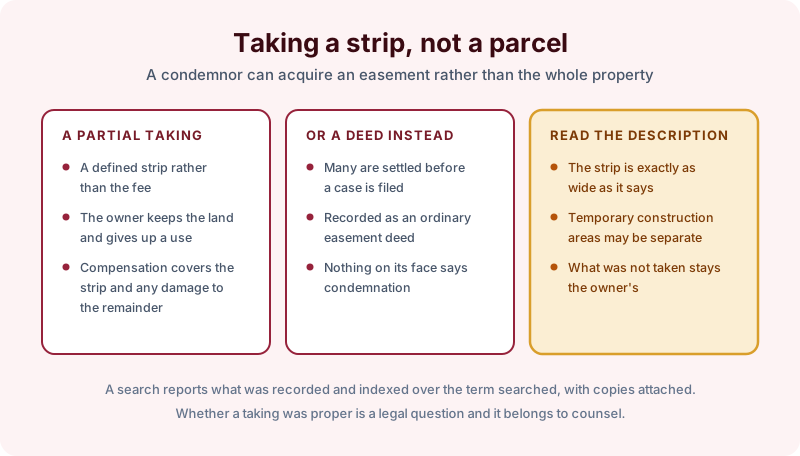
A condemnor does not have to take the fee. Very often it takes an easement over a defined strip, leaving the owner with the land and removing a particular use of it, with compensation covering the strip itself and any damage to the remainder.
A great many of these never reach a courtroom. The authority exists, both sides know it, and the matter settles with the owner signing an easement deed that is recorded like any other conveyance. Nothing on the face of that document announces how the negotiation went.
Read the description carefully, because it is the whole of the burden. The strip is exactly as wide as it says. Temporary construction easements, which expire, are frequently separate instruments from the permanent one. Whatever was not described was not taken, and it remains the owner’s.
Who actually holds this power
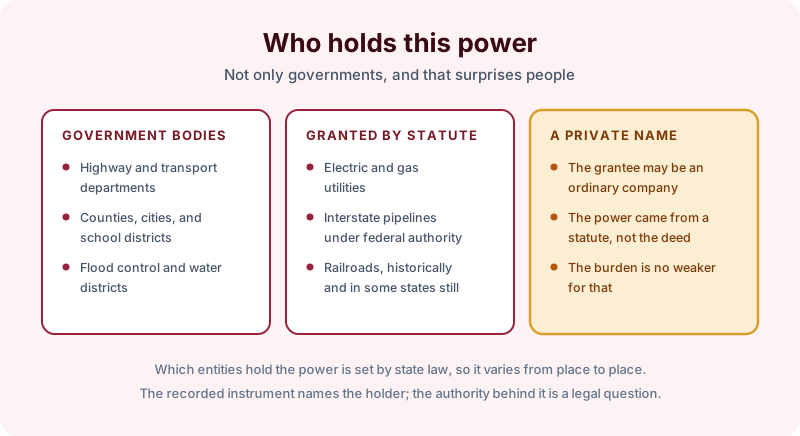
Government bodies are the obvious holders. Highway and transportation departments, counties, cities, school districts, flood control and water districts.
Less obviously, state statutes grant the power to a range of private entities. Electric and gas utilities commonly hold it, interstate pipelines hold a federal version of it, and railroads held it historically and in some states still do. Which entities qualify is set by state law and varies considerably.
The practical consequence is that a recorded easement naming an ordinary sounding company may have been acquired under compulsion rather than by agreement. The burden is no weaker for that, and it binds the parcel exactly the same way. Our note on pipeline easements covers the same category from the operator’s side.
Finding one in the record
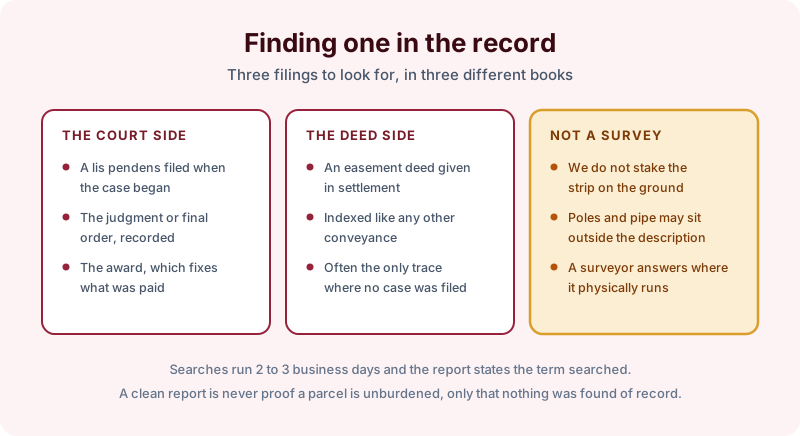
Where a case was filed, there is a court trail. A lis pendens filed at the start, and the judgment or final order recorded at the end, usually with the award that fixes what was paid. Where the matter settled, there is only an easement deed, indexed like any other conveyance, and that is frequently the sole trace.
So the search has to cover both the deed index and any recorded court filings, which is one reason a term long enough to reach the era of the road or the line matters. A highway widened in 1968 left its instrument in 1968.
One further wrinkle is worth knowing. Where a strip was acquired and the project later shifted or was abandoned, the easement does not necessarily go away with it. Releasing it takes a recorded instrument, and an unused corridor across a field can stay fully encumbered for decades because nobody filed one.
What a search cannot do is locate the strip on the ground. Poles, guy wires, and pipe are regularly set slightly outside the described area, and only a surveyor can tell you whether what is built matches what was granted. Searches run 2 to 3 business days, and our search packages set the term.
The takeaway
Treat a road frontage, a transmission line, or a pipeline as a recorded burden with a specific written width, and go and read that width rather than estimating it. Search a term long enough to reach the acquisition, look for the court filings as well as the deeds, and get a surveyor if the location matters. A clean report means nothing was found of record rather than that the parcel is unburdened. Start the order online, or send us the address and the county and we will tell you which search term fits and what it would and would not cover before anything is ordered.