

· AFX Research
Pipeline Easements: What the Recorded Grant Actually Allows
Why pipeline grants are broader than people expect, what the three load bearing terms are, and why the recorded instrument never tells you where the pipe is.
Table of Contents
A pipeline easement is the one burden buyers routinely underestimate, partly because the corridor looks like nothing much: a mowed strip, a marker post, maybe a small vent. The grant behind it is frequently sixty or seventy years old, was signed by a farmer with a pipeline company’s lawyer across the table, and can be considerably broader than a modern utility easement on the same parcel. Reading it before you plan anything is the whole exercise.
Three terms that decide everything
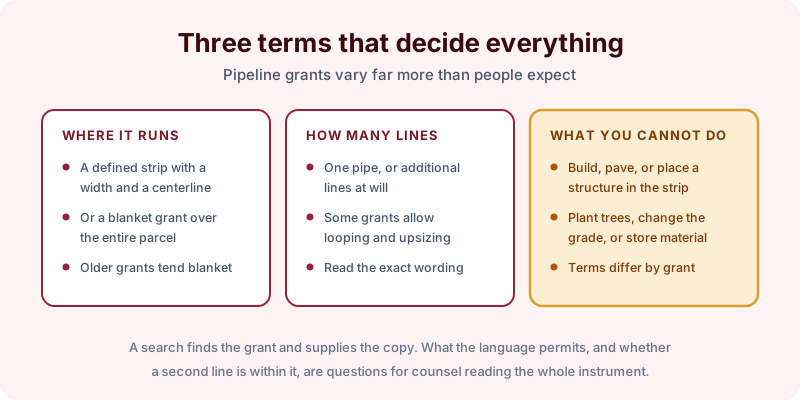
Where it runs. Modern grants describe a strip with a stated width and a centerline. Many older ones do not. A grant conveying a right to lay a line “over and across” the described property, with no width and no located route, is a blanket easement, and it burdens the whole parcel rather than a defined corridor. Those are common in mid century instruments and they are the ones that surprise people.
How many lines. Some grants convey the right to one pipeline. Others allow additional lines, replacement at a larger diameter, or looping, at the holder’s discretion. That single clause is the difference between a settled corridor and one that can be dug up again.
What the owner cannot do. Building, paving, placing structures, planting trees, changing the grade, and storing material within the strip are commonly restricted, and the specifics vary from grant to grant. Anyone planning to build near the corridor needs the actual text rather than a general rule.
An abstractor finds the grant and supplies the copy. What the language permits, including whether a second line falls within it, is a question for counsel reading the whole instrument.
The grant is not a locate
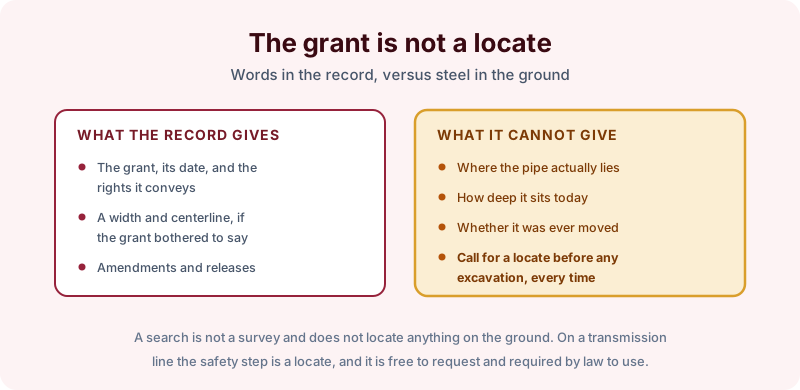
This distinction is worth being blunt about, because on a transmission line it is a safety matter rather than a paperwork one.
The record gives you the grant, its date, the rights conveyed, any width and centerline the instrument bothered to state, and any amendments or releases. It does not tell you where the pipe lies, how deep it sits today after decades of grading and farming, or whether it was ever relocated.
A search is not a survey and does not locate anything on the ground. Before any excavation, call for a utility locate. It is free to request, it is legally required in every state, and no title report substitutes for it.
The name on the grant is old
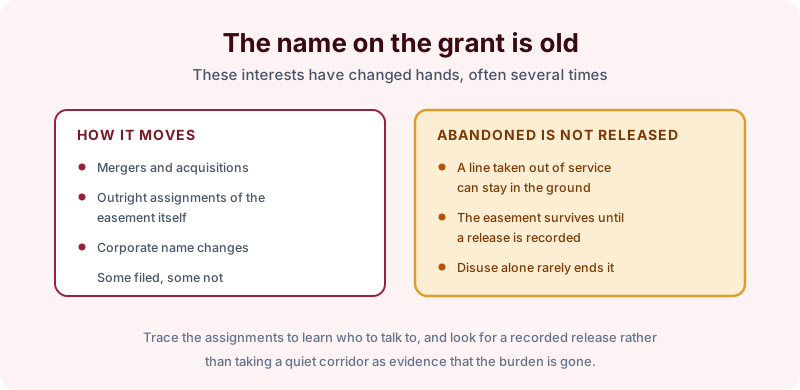
Pipeline interests are held in gross, meaning they belong to a company rather than to a neighboring parcel, and companies consolidate. The grantee named in a 1957 instrument has very likely been through mergers, asset sales, and name changes since. Some of those steps were recorded and some were not, so tracing the assignments is how you learn who to actually call.
The related trap: an abandoned line is not a released easement. A pipe taken out of service is frequently left in the ground, and the easement survives until a release is recorded or a court says otherwise. Disuse alone rarely ends a recorded right, the same way it does not on a right of way, and termination generally takes an act.
What the search covers
A search reports the recorded instruments found for the parcel and term searched, on the date searched, with copies. On pipelines that is a strong result, because these easements are created by recorded grant rather than by conduct, so where one exists there is usually something to find.
Depth is what matters. A grant from the 1950s sits outside a twenty year search entirely, which is why term selection should follow the age of the parcel rather than the age of your transaction. Turnaround is 2 to 3 business days.
The takeaway
Get the grant itself and read the width, the line count, and the restrictions, trace the holder forward through its assignments, and never treat a quiet corridor or a recorded grant as a substitute for a locate before you dig. Start the order online, or send us the address and the county and we will tell you which search term fits and what it would and would not cover before anything is ordered.