

· AFX Research
Railroad Right of Way: Easement, Fee, or Something Else
Why an old rail corridor may be owned outright or merely crossed by an easement, what abandonment and railbanking change, and what the county record can settle.
Table of Contents
An abandoned rail line running through a property generates more questions than almost any other recorded burden, and the reason is simple: nobody can answer them without the original instrument. The strip may belong to the railroad outright, or it may be an easement across ground the neighbors still own. Those two answers lead to opposite outcomes, and the roadbed itself looks identical either way. This is a deeper version of the question behind any right of way.
Three things a railroad might hold
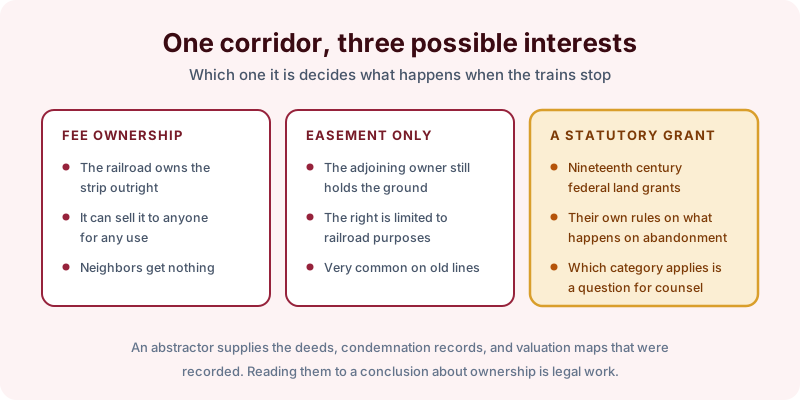
Fee ownership. The railroad bought the strip and owns it like any other parcel. It can sell it to a developer, a county, or a neighbor, and the adjoining owners have no automatic claim to it.
An easement. The railroad acquired only the right to operate a railroad across land that remained in the grantor’s ownership. The adjoining owner still holds the ground beneath the ties, subject to that right.
A statutory grant. Corridors built under nineteenth century federal land grant acts sit in their own category, with federal rules governing what happens if the line goes away.
Which one applies to a given mile of track depends on the wording of instruments signed in the 1870s or 1880s, on state law, and sometimes on whether the strip was taken by condemnation rather than deed. An abstractor’s job is to find and copy those instruments. Reading them to a conclusion about who owns the strip is legal work, and on rail corridors it is genuinely specialized legal work.
When the trains stop
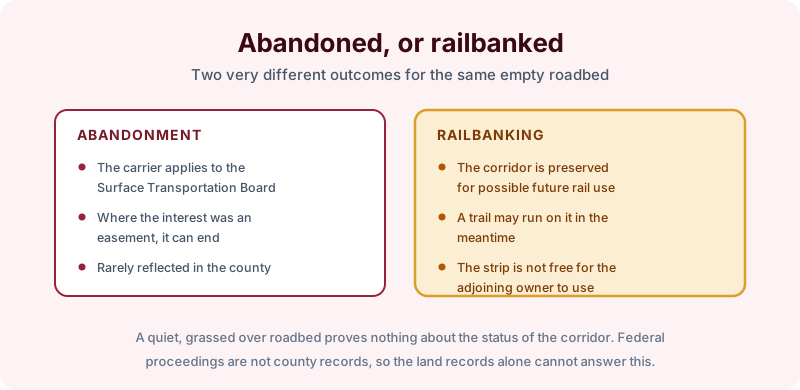
Removing rail service is a federal proceeding. A carrier applies to the Surface Transportation Board, and the outcome matters to the adjoining landowner.
If the Board authorizes abandonment and the interest was only an easement, the easement can end, and the underlying owner’s title is freed of it. If instead the corridor is railbanked under the Trails Act, it is preserved for possible future rail use, often with a trail operating on it in the interim, and the adjoining owner cannot treat the strip as their own.
Two practical consequences follow. First, an empty roadbed with weeds growing through it tells you nothing; disuse alone does not end a recorded right, which is the same principle behind how easements actually terminate. Second, these proceedings are federal, so the county land records may show nothing at all about the corridor’s current status even when everything else about it is recorded there.
Searching a parcel on an old line
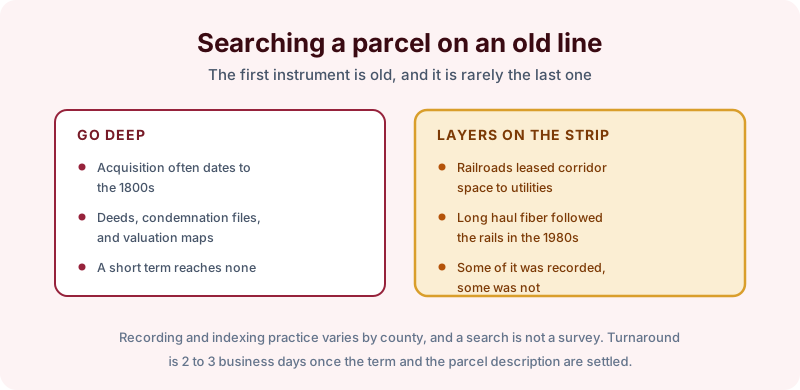
Depth is the first decision. If the acquisition happened in 1884, only a long term reaches it, and the three search terms exist precisely so the depth can match the parcel rather than the transaction. Along with the deeds, the useful records include condemnation proceedings and the railroad’s valuation maps where they were filed locally.
Then expect company. Railroads leased corridor space for decades, so telegraph, power, and later long haul fiber frequently follow the rails. Some of those arrangements were recorded and some were not, and the ones that were may name a company that has since changed hands several times.
Read the report for what it is. It sets out the instruments recorded and indexed for that parcel over that term, as of the search date, with copies attached. Recording practice varies by county, an empty result is not proof the corridor is unburdened, and a search is not a survey and does not locate the strip on the ground. Turnaround is 2 to 3 business days.
The takeaway
Everything about a rail corridor turns on one question: easement or fee. Get the original instrument, get the later layers, then take the wording to a lawyer in that state before you fence, build, or buy on the assumption the strip is yours. Start the order online, or send us the address and the county and we will tell you which search term fits and what it would and would not cover before anything is ordered.