

· AFX Research
Drainage Easements: Where the Water Is Legally Allowed to Go
The three shapes a drainage burden takes, who is actually responsible for keeping it clear, and the version of the problem that no document records.
Table of Contents
Drainage easements are the ones owners discover by accident. A grassy dip along the side of the yard turns out to be a recorded swale that cannot be filled. A low corner that floods twice a year is a detention area the subdivision depends on. Unlike a right of way, nobody walks across a drainage easement, so there is no visible traffic to prompt the question until somebody wants to build.
Three shapes it takes
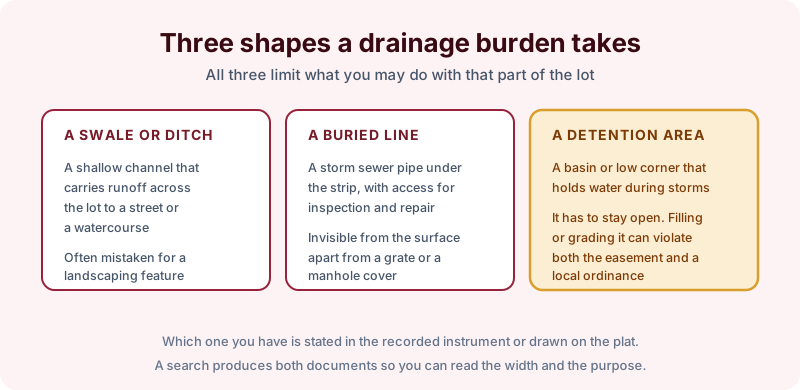
A swale or ditch. A shallow channel carrying runoff across the lot toward a street or a watercourse. These get mistaken for landscaping regularly, and regraded by owners who had no idea they were doing anything significant.
A buried line. A storm sewer pipe under the strip, with access rights for inspection and repair. Invisible from the surface apart from a grate or a manhole cover, and the reason a search matters more here than on easements you can see.
A detention or retention area. A basin or a deliberately low corner that holds water during storms and releases it slowly. This one has to stay open, and filling or grading it can breach the easement and a local ordinance at the same time.
Which one you have is stated in the recorded instrument or drawn on the plat, along with a width. That is why the search produces both documents rather than a summary: the purpose and the width are what tell you which part of the lot is affected and what may happen there.
Who has to keep it clear
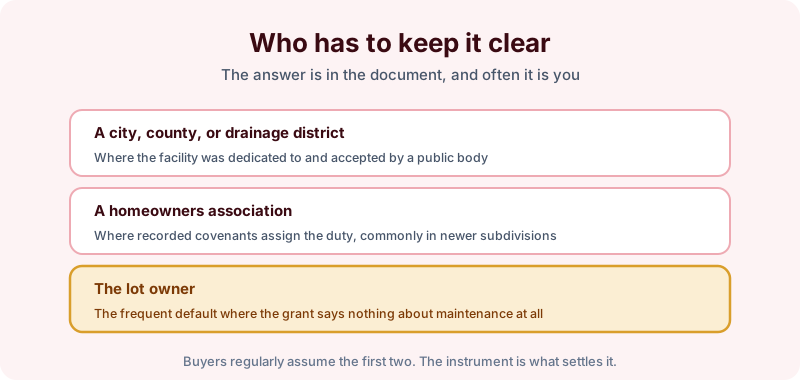
This is the question that generates the most surprise, because the intuitive answer is wrong often enough to matter.
Where a facility was dedicated to and accepted by a city, county, or drainage district, that body generally maintains it. Where recorded covenants assign the duty to a homeowners association, which is common in newer subdivisions, the association handles it. And where the grant says nothing about maintenance at all, the burden frequently falls to the lot owner, who now has an obligation to keep a channel clear that they may not have known existed.
Buyers tend to assume one of the first two. The instrument settles it, and reading the maintenance language is worth as much as reading the width.
Where it is written down, and where it is not
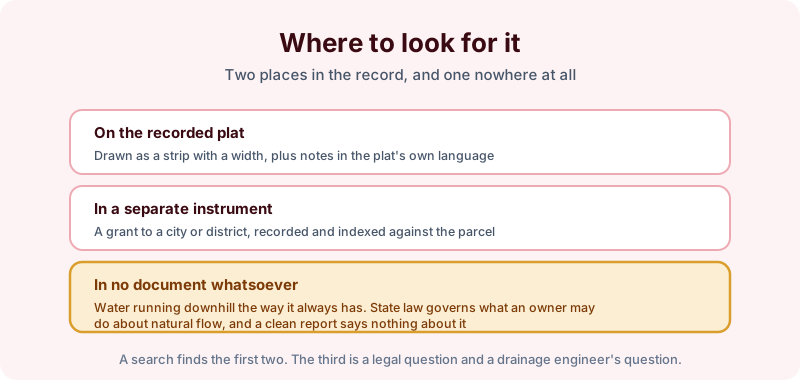
Two places in the record. Drawn on the recorded plat as a strip with a stated width and accompanying notes, or granted in a separate recorded instrument to a city or district. Both are findable, and both come back with copies.
The third version is not in the record at all. Water runs downhill the way it always has, and state law governs what an owner may do about natural flow across their land. Those doctrines vary considerably between states, and none of it is recorded anywhere. A clean report tells you no drainage easement was found of record for the parcel and term searched. It does not tell you that you may redirect water, or that your neighbor may not send more of it your way. That question belongs to counsel and, on the engineering side, to a drainage engineer or surveyor.
The same limit applies to the broader point we make across this lane: prescriptive and implied rights arise without any recorded instrument, and a records search cannot reach them.
Reading the report before you build
If a plan touches the strip, the sequence is the same one that applies to building near any easement: read the recorded terms first, have a surveyor locate the strip if the plan is close, then approach the holder. On drainage the holder may be a district or an association rather than a utility, and a partial release is generally harder to obtain here than elsewhere, because the facility usually has to keep functioning for lots other than yours.
Pick a term that reaches the original subdivision, since drainage easements are typically created when the lots were platted. The search terms differ mainly in depth, and our process page covers the 2 to 3 business day turnaround.
The takeaway
Find out which of the three shapes you have, read who is responsible for maintenance rather than assuming a public body is, and treat natural water flow as a separate question the record cannot answer. Start the order online, or send us the address and the county and we will tell you which search term fits and what it would and would not cover before anything is ordered.