

· AFX Research
Easement Appurtenant or Easement in Gross: Who Holds It
The difference between a right that belongs to a neighboring parcel and one that belongs to a company, how to spot each in a recorded grant, and why it matters to a buyer.
Table of Contents
Two easements can cross your land in exactly the same place and behave completely differently, and the difference is not the strip. It is who owns the right. That single distinction decides who can enforce the easement, whether it can be sold to someone else, and how it might ever come to an end, which is why the terms show up in every title report and confuse nearly everyone who reads one.
Two ways a right can be owned
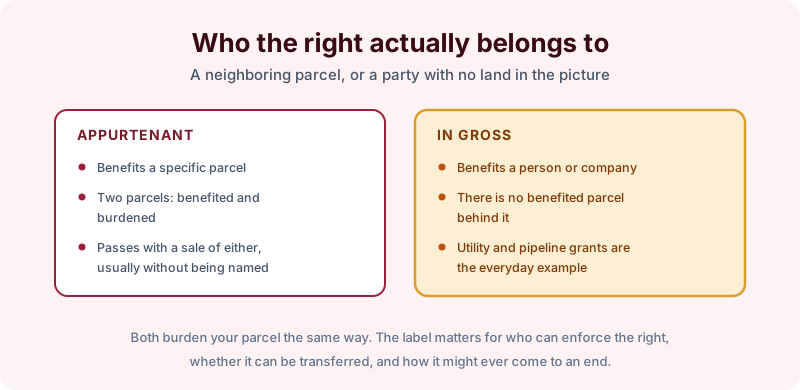
An easement appurtenant belongs to a parcel. There are two pieces of land in the picture: the benefited parcel that holds the right, and the burdened parcel that carries it. A driveway easement letting the lot behind you reach the road is the standard example. Because the right belongs to the land rather than to a person, it generally passes automatically when either parcel sells, usually without being mentioned in the new deed at all.
An easement in gross belongs to a person or a company, with no benefited parcel behind it. Utility easements are the everyday case: the power company holds a right to run and maintain lines across your land, and it owns no land nearby that the right attaches to. Billboard, pipeline, and cell tower grants tend to be in gross as well.
Both are recorded, and both burden your parcel identically as far as the strip is concerned.
Telling them apart in the record
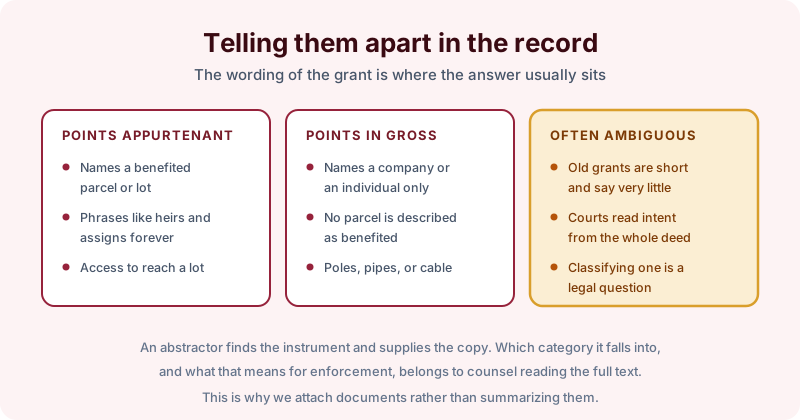
The wording of the grant is where the answer normally sits. A grant that describes a benefited parcel, refers to a lot by number, or runs to the grantee’s “heirs and assigns” in connection with land points toward appurtenant. A grant naming only a company or an individual, with no benefited land described anywhere, points toward in gross.
Older instruments are frequently ambiguous, because they were short and nobody expected to be read this closely a century later. Where the text is unclear, courts look at intent across the whole document and the circumstances, and classifying a particular easement is a legal question for counsel rather than something an abstractor determines. What we do is find the instrument and hand over the complete copy, which is exactly why we attach documents instead of summarizing them.
What it changes for a buyer
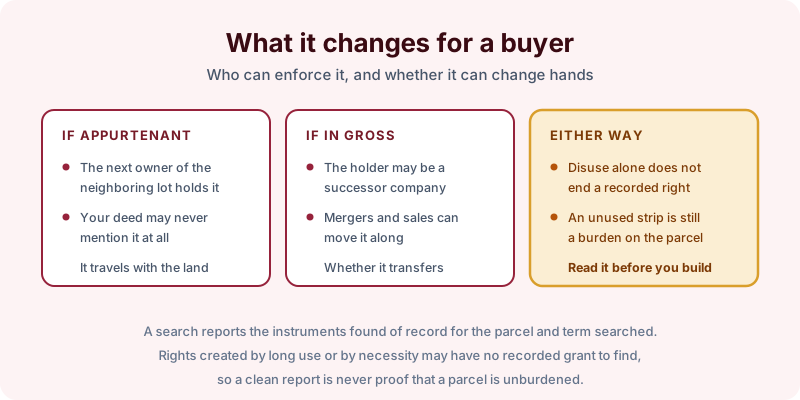
If the easement is appurtenant, whoever buys the neighboring lot next inherits the right, and your own deed may never mention the burden. That is normal and it is not a defect. It does mean the chain has to be read rather than only the current deed.
If it is in gross, the holder may have become a successor company through a merger, an acquisition, or an outright assignment, so the name on a 1962 grant may bear no resemblance to whoever holds it today. Whether a specific easement in gross is transferable depends on its terms and on state law.
Either way, one thing does not change: disuse alone does not end a recorded easement. An overgrown strip nobody has walked in twenty years is still a burden on the parcel until something is recorded to release it, or a court says otherwise. That matters most when you are planning to build near it.
What a search establishes
A search reports the recorded instruments found for the parcel and term searched, on the date searched, with copies. Recording and indexing practice varies by county, and rights created by long use or by necessity may have no recorded grant to find at all, so a clean report is never proof that a parcel is unburdened. Our search terms differ mainly in how far back they reach, and depth is what decides whether an old grant surfaces.
The takeaway
Read the grant to see who holds the right, expect an appurtenant easement to travel with the neighbor’s land whether or not your deed mentions it, and treat an unused strip as live until a release is recorded. Start the order online, or send us the address and the county and we will tell you which search term fits and what it would and would not cover before anything is ordered.