

· AFX Research
Easement Search for a Data Center or Substation Site, What to Check
The parcel is the easy part. Power, fiber, water and discharge all arrive across land somebody else owns, and a single gap in the route strands the whole project.
Table of Contents
Somebody options 90 acres of former farmland for a data center. The parcel searches beautifully. Eighteen months later the project is stalled because the fiber route crosses a quarter mile of land whose owner will not grant, the transmission corridor relies on a 1948 blanket easement that may not cover a new line, and the interconnection queue has moved. None of that was a defect in the parcel, and all of it was findable. The lesson is the one in easement search before buying vacant land, scaled up to a route rather than a lot.
What such a site depends on
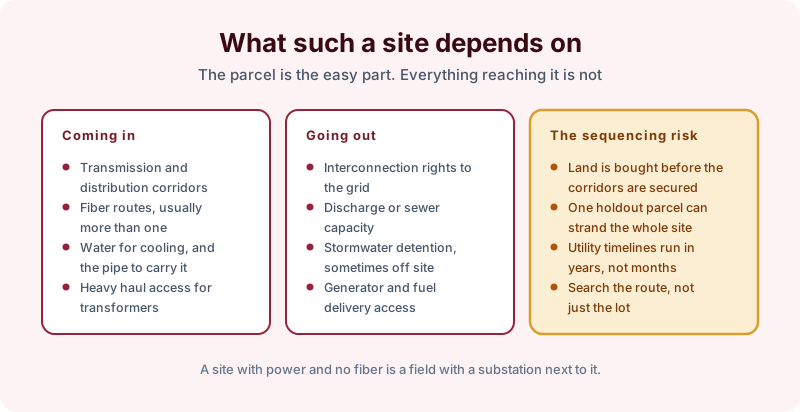
Coming in, the site needs transmission and distribution corridors, fiber routes and usually more than one for redundancy, water for cooling with a pipe to carry it, and heavy haul access capable of taking a transformer that weighs as much as a house.
Going out, it needs interconnection rights to the grid, discharge or sewer capacity, stormwater detention that is sometimes located off site entirely, and access for generator fuel delivery.
Every one of those crosses land the buyer does not own. The parcel can be perfect and the project can still be impossible, and the sequencing makes it worse — land is routinely bought or optioned before the corridors are secured, because the land is the cheap part and the corridors take years. One holdout parcel strands the site.
Where the rights are recorded
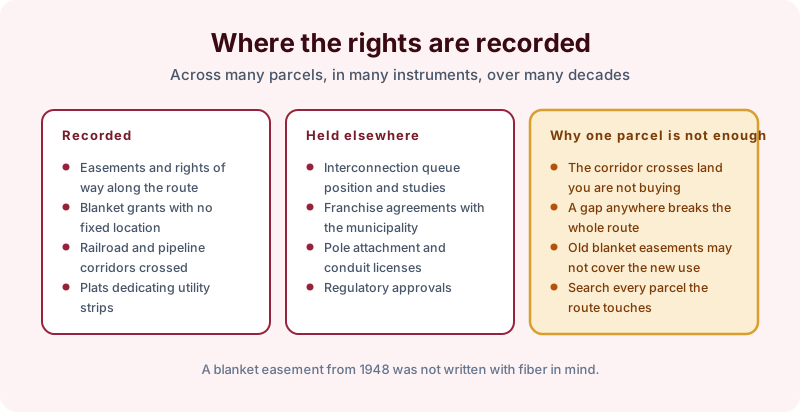
A good deal is recorded, spread across many parcels and many decades. Easements and rights of way along the route. Blanket grants with no fixed location, which are common on old utility corridors and are their own problem — see blanket easements with no defined location. Railroad and pipeline corridors that the route has to cross. Plats dedicating utility strips.
A great deal is not. Interconnection queue position and the system impact studies. Franchise agreements with the municipality. Pole attachment and conduit licenses. Regulatory approvals of every kind. Those sit with the utility and the commission.
The point that matters operationally is that a search of the site parcel answers almost none of this. The corridor crosses land you are not buying, a gap anywhere breaks the whole route, and an old blanket easement granted for a distribution line in 1948 was not written with a fiber bundle or a 230 kV upgrade in mind. Search every parcel the route touches.
Why old grants are the recurring problem
Because they were drafted for a different technology and a smaller burden. A 1950s grant for “electric transmission and telephone lines” may or may not permit fiber. A grant for one circuit may not permit two. A grant with no stated width leaves everything open.
Whether a given grant covers a proposed use is a question of construction, and it is one courts answer differently in different states. A records search produces the instrument and its exact language. Counsel produces the answer. Prescriptive rights and rights arising by necessity can also exist with nothing recorded, so a clean report is never proof a corridor is unburdened or, for that matter, that it is available.
Scoping the search
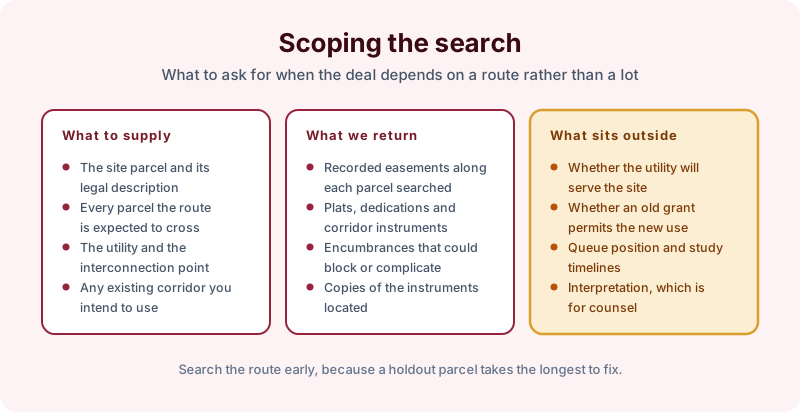
Give us the site parcel and its legal description, every parcel the route is expected to cross, the utility and the interconnection point, and any existing corridor you intend to use. What comes back is the recorded easements along each parcel searched, the plats, dedications and corridor instruments, the encumbrances that could block or complicate the route, and copies of the instruments located.
What sits outside is whether the utility will serve the site, whether an old grant permits the new use, and where the project stands in the queue. Our process page sets out how the search itself is done.
The takeaway
On a site like this the title question is a route question, and the route crosses land nobody is buying. Search it early, parcel by parcel, because a holdout owner is the slowest problem in the whole development to fix. Start the order online, or send us the site and the corridor parcels and we will tell you which term fits and what it would and would not cover before anything is ordered.