

· AFX Research
Blanket Easements: When the Instrument Names No Location
Some grants burden an entire parcel without describing a route. What a blanket easement means for building, how a location gets fixed, and what the record can show.
Table of Contents
Most easements come with a description: a twenty foot strip along the south line, a driveway from the county road to the barn. A blanket easement does not. It grants a right over the parcel as a whole, names no route, and leaves the holder free to be somewhere rather than in one place. On paper the burden covers everything, which is why these turn up in a title commitment as an exception nobody can plot. They are common in old utility and pipeline grants, and our note on pipeline easements covers that family in more detail.
A right, without a route
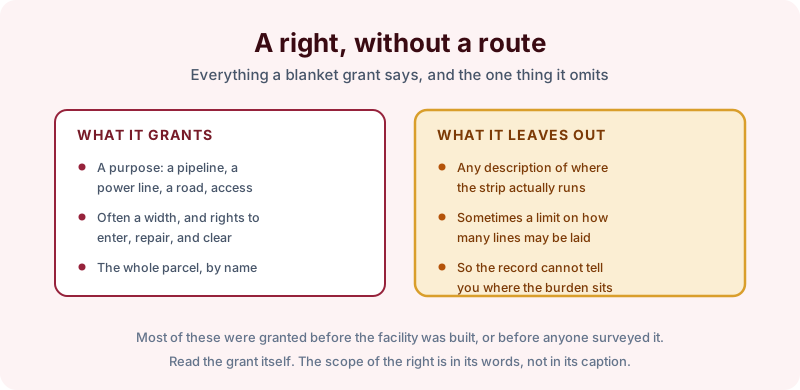
The grant usually does state a purpose, often a width, and rights to enter, repair, and clear vegetation. What it omits is where. Most of these instruments were signed before the facility was built or before anyone surveyed the route, and the grantee wanted flexibility while the engineering was still moving.
Read the grant rather than its caption. Two clauses matter more than the rest: whether the holder may lay additional lines under the same grant, and what rights of access come with it. A grant permitting one line is a very different burden from a grant permitting as many as the holder chooses.
How the location settles
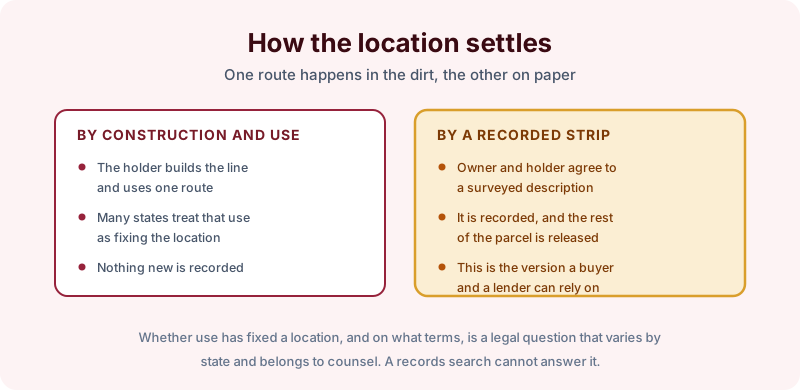
There are two paths, and only one of them leaves a record.
The first happens in the dirt. The holder builds, uses one route, and in many states the law treats that use as having fixed the location, so the rest of the parcel is effectively free. Whether that has happened, and on what terms, is a legal question that varies by state and belongs to counsel. Nothing new gets recorded, which is exactly why the record stays ambiguous.
The second happens on paper. Owner and holder agree on a surveyed description, record it, and release the balance of the parcel. That is the outcome a buyer and a lender can actually rely on, and the mechanics are the same ones described in our note on relocating or amending an easement, including the need to release what is being replaced.
When you want to build
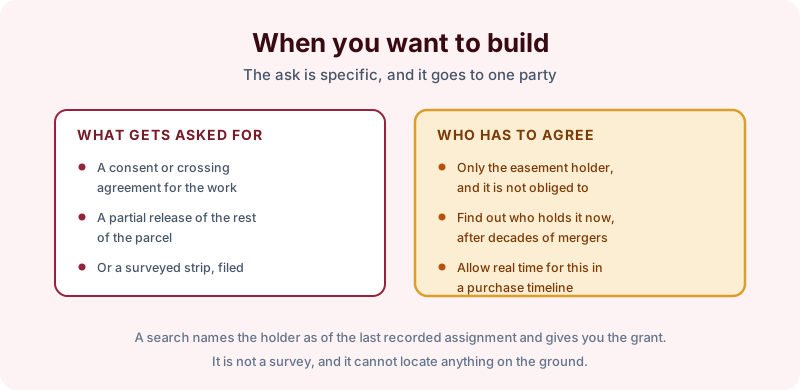
Because the exception cannot be plotted, underwriters tend not to insure over it, and the practical consequence lands on the buyer. The usual asks are a consent or crossing agreement for the specific work, a partial release covering the rest of the parcel, or a recorded description of the strip. The exception is written that way precisely because there is nothing to draw, and it stays that way until somebody produces a description.
Only the holder can grant any of that, and it is not obliged to. Finding out who the holder is today, after decades of mergers and assignments, is often the slow part, so allow real time for it rather than assuming a two-week turnaround on a consent.
What the search shows
The report is what was recorded and indexed over the term searched, with copies: the original grant, its assignments, any amendment or partial release, and any later instrument that describes a defined strip. Choose a search term long enough to reach the original grant, because these are frequently very old and a short search returns the assignments while missing the document that created the right. Turnaround is 2 to 3 business days.
The limits are worth stating plainly. A search is not a survey, so it cannot locate a line on the ground or tell you whether use has fixed the route. Rights can also arise from long use with nothing filed at all, as our note on prescriptive easements explains. A clean report reflects the record and is not proof that a parcel is unburdened. Recording and indexing practice varies by county.
The takeaway
If a commitment shows an easement that cannot be plotted, get the original grant and read the additional-lines and access clauses, then decide whether you need a defined strip recorded before closing rather than after. Start the order online, or send us the address and the county and we will tell you which search term fits and what it would and would not cover before anything is ordered.