

· AFX Research
Easements, Title Insurance, and the Schedule B Exceptions
Why a title policy lists easements instead of covering them, how to read the exceptions on a commitment, and what a search gives you that a policy does not.
Table of Contents
A buyer reads the title commitment, finds a paragraph citing an easement by book and page, and reasonably asks what the insurance is for. It is a fair question with a slightly uncomfortable answer: the policy is not promising the easement is not there. It is telling you the easement is there, and excluding it from coverage. Understanding that distinction is what turns a commitment from paperwork into information, and it is why so many buyers order their own easement search alongside it.
Two products doing two jobs
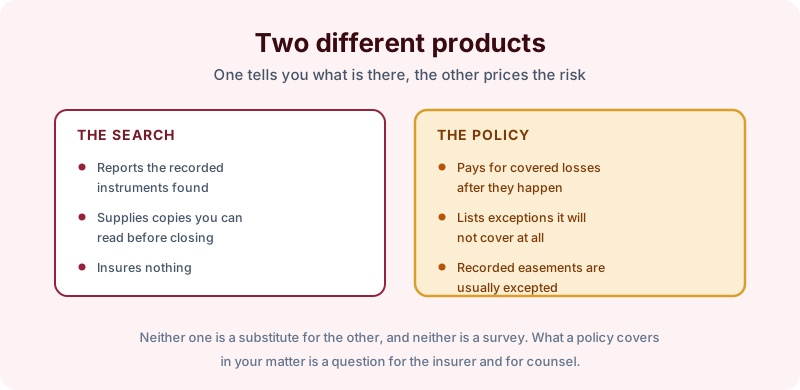
A search is research. It reports the instruments recorded and indexed against a parcel and supplies copies, so you can read what the grant actually says.
A policy is insurance. It pays for certain covered losses after they occur, and it lists what it will not cover. Recorded easements are routinely on that list, because an insurer does not indemnify you against something the record plainly discloses.
Neither product replaces the other, and neither is a survey. They answer different questions, and the question most owners actually have is the search’s question: what is on my land, where, and who may use it.
How easements appear on a commitment
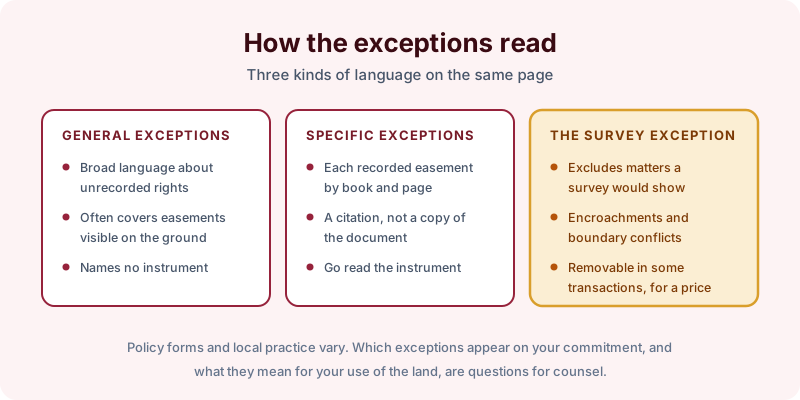
There are usually three flavors of language, and they carry very different amounts of information.
General exceptions are broad. They often exclude rights and claims that are not shown by the public records, which by definition includes the prescriptive claims and easements by necessity that were never written down at all.
Specific exceptions name instruments: an easement recorded at a stated book and page, or a plat with dedications on it. This is the useful part of the page, and it is a citation rather than a copy. Nothing in the exception tells you the width, the stated purpose, the maintenance obligation, or whether the holder may add a second line.
The survey exception removes matters a survey would disclose, which is where encroachments and boundary conflicts live. In some transactions it can be removed for a price, with a current survey.
What an exception does not tell you
Reading a list of exceptions is not the same as knowing what burdens the parcel. Three gaps are worth naming.
An exception may be broad enough to cover a document nobody has read. It may cite an instrument recorded against a parent tract, described in terms that no longer match today’s lot. And it says nothing about location, so an exception for a fifty-foot utility easement gives you no idea whether it runs along the back fence or through the middle of the building envelope, which is precisely the question when building near an easement.
Coverage is also not a plan. An insurer paying a claim years later does not put a garage where a corridor was, and it does not stop a holder from exercising a right the grant clearly gave them.
Why buyers order a search anyway
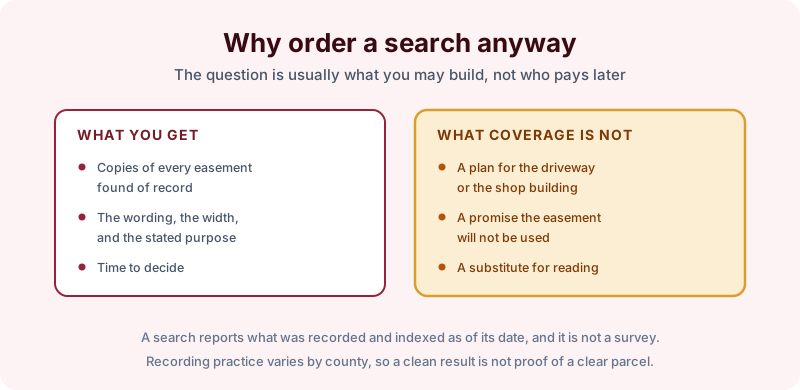
The value is the documents. A search returns the recorded instruments themselves, so the wording, the described width, the stated purpose, and any later amendments are in front of you before closing rather than after a dispute. The three search terms let the depth match the parcel, which matters on older ground where the burden was created generations ago and reaffirmed since.
Read the report for what it is. It sets out what was recorded and indexed for that parcel over that term, as of the search date, with copies attached. Recording practice varies by county, an empty result is not proof the parcel is unburdened, and a search is not a survey and does not locate anything on the ground. Turnaround is 2 to 3 business days. What a policy covers in your transaction is a question for the insurer and for your attorney.
The takeaway
Treat the exceptions page as a table of contents, not an answer. Pull the instruments it cites, find out what the general exceptions might be hiding, and get the wording in hand before you close or build. Start the order online, or send us the address and the county and we will tell you which search term fits and what it would and would not cover before anything is ordered.