

· AFX Research
Easements Created by Dedication, and What Acceptance Adds
How an offer of dedication creates public rights, why an unaccepted offer can sit open for decades, and where the proof of acceptance actually lives.
Table of Contents
Most easements are granted from one owner to another. Dedication works differently. An owner offers land to the public, usually by recording a plat showing streets and alleys, and the public gets rights in it once somebody accepts the offer. Two steps, and the second one is where a great deal of confusion lives, because an offer can sit open and unaccepted for a very long time.
Offer and acceptance
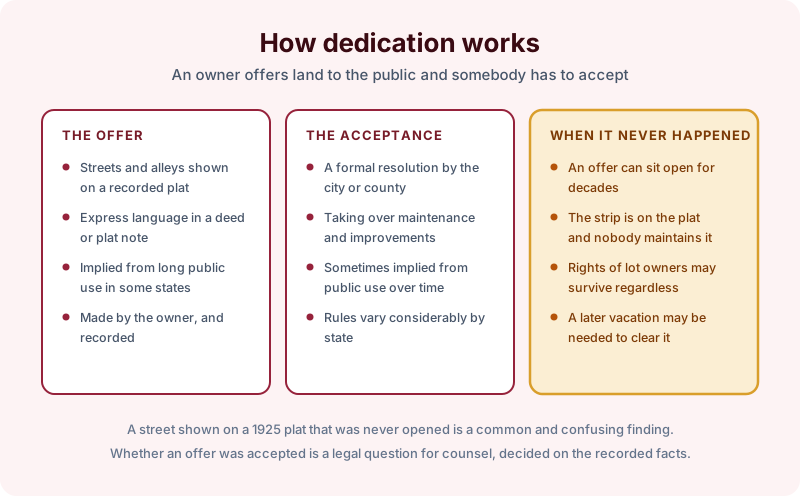
The offer is usually the plat. Streets, alleys, and sometimes parks are shown, and the act of recording it offers those areas for public use. It can also be made expressly in a deed, and in some states it can be implied from long public use.
Acceptance is the municipality’s move. A formal resolution is the clean version. Taking over maintenance, paving, or installing utilities is acceptance by conduct. Some states allow acceptance to be implied from public use over time, and the rules vary enough that the state’s law has to be read rather than assumed.
The practical significance is responsibility. An accepted street is the municipality’s to maintain, light, and repair. An unaccepted one is nobody’s, which is how a subdivision ends up with a gravel track the county will not grade and the neighbors cannot agree to pay for.
The unaccepted offer
Here is the situation that produces awkward reports. A subdivision was platted in 1925, the streets were drawn, half of them were never built, and the city never formally accepted them. The offer is on the record. Nothing has happened since.
What that leaves is a strip appearing on the plat that nobody maintains, that may or may not still be subject to an open offer, and in which the individual lot owners may hold private rights regardless of what the city did. Those private rights matter, because they can survive a later vacation of the street, and they are held by people who bought lots in reliance on the plat. Clearing the situation usually needs a formal vacation, which is the territory of vacated streets and alleys.
A plat dedication creates more than streets
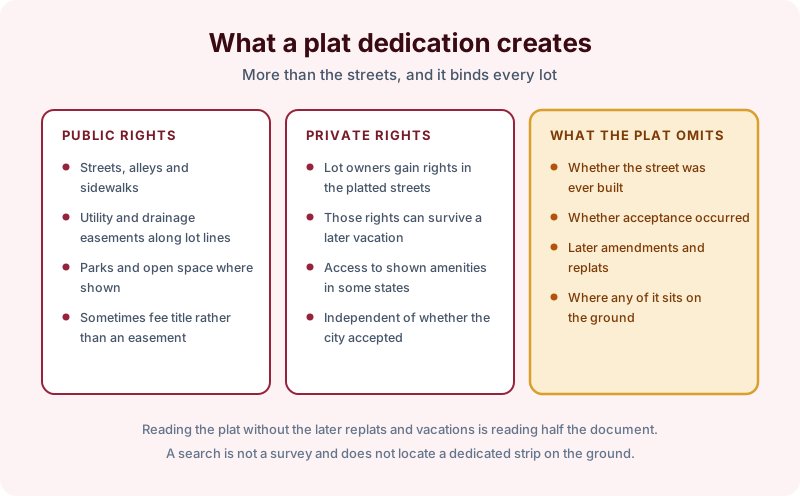
Utility and drainage easements along lot lines, sidewalks, and open space all commonly arrive the same way, which is why easements created by a subdivision plat repays reading alongside this. In some states a dedication passes fee title to the municipality rather than an easement, and which one it was changes what happens if the street is ever vacated.
What the plat will not tell you is whether the street was ever built, whether acceptance occurred, what later replats changed, or where any of it sits on the ground. For that last one you need a surveyor, and the distinction is the same one drawn in how to find easements on a property.
Where the answers live
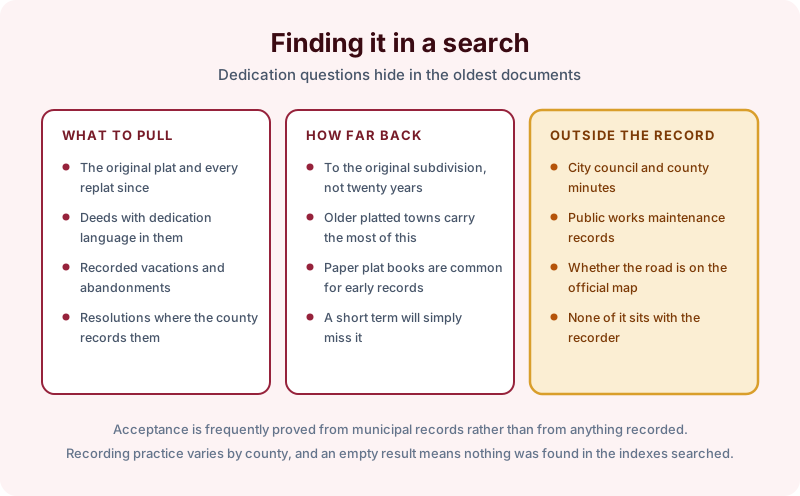
Pull the original plat and every replat since, deeds carrying dedication language, and any recorded vacation or abandonment. Reach back to the original subdivision rather than to an arbitrary twenty years, because this is a question about the oldest documents in the chain and a short term simply will not see them.
Then accept that part of the answer is not in the land records at all. Acceptance is frequently proved from city council or county minutes, from public works maintenance records, or from whether the road appears on the official map. None of that sits with the recorder, and a report that implied otherwise would be overstating its reach.
Recording and indexing practice varies by county, so an empty result means nothing was found in the indexes searched rather than that the parcel is unburdened. Reports run 2–3 business days, and a search is not a survey.
The takeaway
Dedication is an offer plus an acceptance, and the two do not always both happen. Find the plat, read the dedication language, check for a vacation, and treat the acceptance question as one that may need municipal records to answer. Whether a given offer was accepted is a legal conclusion for counsel. Start the order online, or send us the address and the county and we will tell you which search term fits and what it would and would not cover before anything is ordered.