

· AFX Research
Vacated Streets and Alleys: What the Easement Search Shows
When a city vacates a street or alley, the fee usually goes to the abutting owners and the utility easements usually stay. What the record shows, and what it will not.
Table of Contents
A vacated alley is one of the few things in property research that makes a parcel bigger. A city or county gives up a public right of way, the strip stops being a street, and the abutting lots absorb it. Buyers hear that and start measuring for a garage. The complication is that vacation deals with the public’s right to travel, and it very often leaves other rights untouched, so the pavement can disappear while the burden stays exactly where it was. These strips were usually created by a plat in the first place, which is where our note on easements created by a subdivision plat picks up the story.
The fee moves, the burden may not
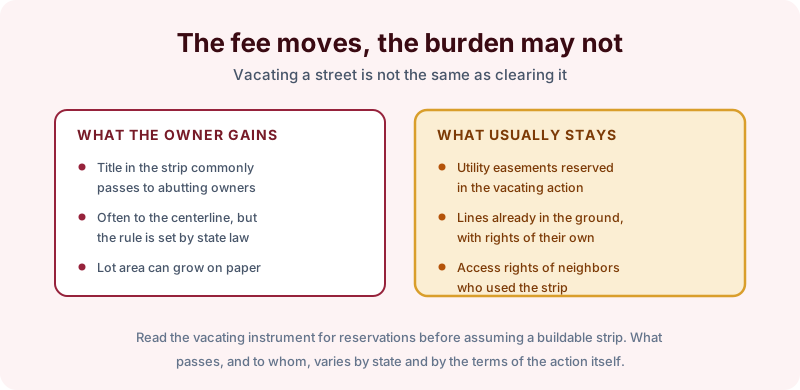
In most states, title to a vacated strip passes to the owners on either side, commonly to the centerline. The rule is a matter of state law and of the language in the vacating action, so it is worth confirming rather than assuming.
What typically does not go away is the utility interest. Vacating ordinances routinely reserve easements for lines already in the ground, and even where the ordinance is silent, the utility may hold rights of its own. Water, sewer, gas, electric, and telecom lines run under alleys precisely because alleys were convenient, and our note on utility easements explains how those grants read. A strip you now own and cannot build on is a common and disappointing result.
Two places the paper can live
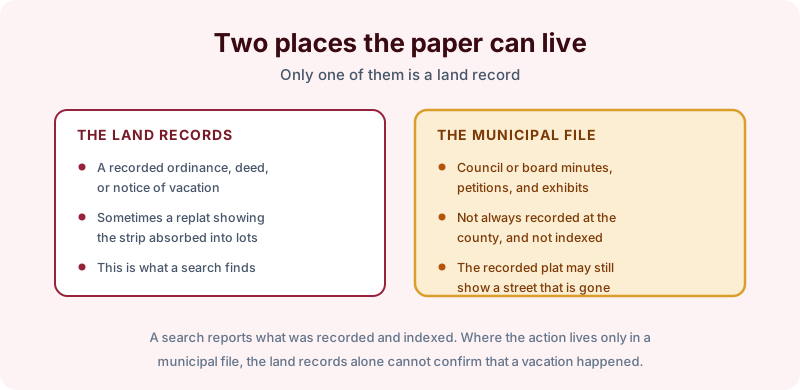
This is the part that surprises people. A vacation is a municipal act, adopted by a council or a board, and whether it ends up in the county land records depends on local practice. Sometimes an ordinance or a notice is recorded. Sometimes a replat shows the strip absorbed into the adjoining lots. And sometimes the action lives only in a municipal file, in which case a search of the land records will not confirm it, and the recorded plat will keep showing a street that has not existed for thirty years.
The reverse also happens. A plat dedicates an alley that was never opened or improved, and nothing was ever vacated, so the dedication is still of record over ground that has looked like a back yard for decades. Both situations are ordinary, and both are reasons to read the recorded documents rather than the aerial photo.
Who was using it to get out
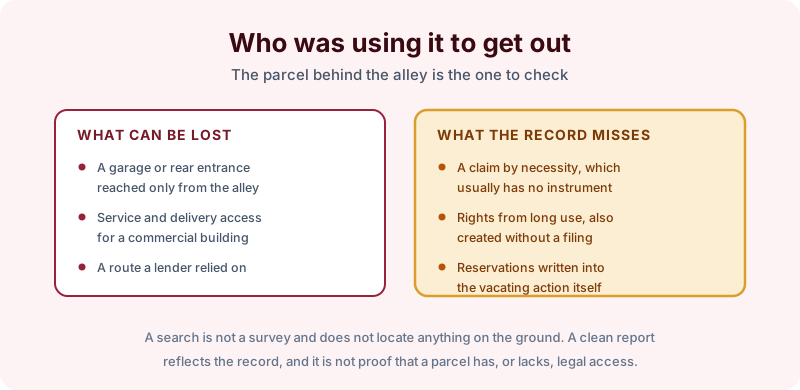
Vacation can strand a neighbor. A rear garage, a service entrance, or a parcel whose only practical route to a public street ran through the alley all become access problems the moment the strip is private. Where that happens, claims of necessity or of long use may arise, and those are frequently created with no recorded instrument at all, the subject of our note on landlocked property and easements by necessity. Whether such a claim exists is a legal question for counsel, not a records finding.
What the search shows
The report is what was recorded and indexed over the term searched, with copies of the instruments found: the plat and any replat, the vacating instrument if it was recorded, reservations in favor of utilities, easements granted before or after the vacation, and how the abutting lots are described. Choose a search term long enough to reach the original plat, because a short search on an old urban lot can miss the dedication entirely. Turnaround is 2 to 3 business days.
Two limits matter here. A search is not a survey, so it cannot tell you where the strip sits on the ground or whether a structure encroaches. And a municipal action that was never recorded will not appear, so a clean report reflects the record rather than proving that a street was, or was not, vacated. Recording and indexing practice varies by county, and the practice for vacations varies more than most.
The takeaway
Before you treat a vacated strip as buildable land, get the vacating instrument and the plat, and read the reservations. Before you treat a platted alley as open, confirm nothing vacated it. Start the order online, or send us the address and the county and we will tell you which search term fits and what it would and would not cover before anything is ordered.