

· AFX Research
Easements in a Manufactured Home Community, What to Check
Two structures look identical from the road and are completely different in the record. One gives residents a recorded property right and the other gives them a lease.
Table of Contents
Two manufactured home communities on opposite sides of the same road can look indistinguishable and be entirely different in law. In one, a single owner holds the whole parcel and residents rent a site. In the other, every lot is separately deeded and an association holds the streets. The first gives a resident a lease. The second gives them a recorded property right. Establishing which one you are looking at is the first question, and the answer changes everything that follows.
How a park is held
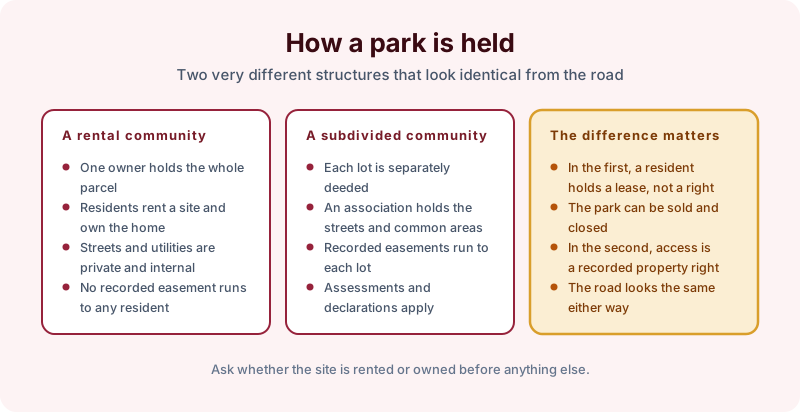
In a rental community, one owner holds the whole parcel, residents rent a site and own the home, the streets and utilities are private and internal, and no recorded easement runs to any resident. The home itself may be titled as personal property rather than as real estate, so it is not part of the land at all.
In a subdivided community, each lot is separately deeded, an association holds the streets and common areas, recorded easements run to each lot, and assessments and declarations apply exactly as in any other subdivision.
The difference decides what a resident actually has. In the first structure the park can be sold and closed, and the residents hold leases. In the second, access is a recorded property right that survives a sale of anything. The road looks the same either way, which is why asking is the only reliable method.
What crosses the ground
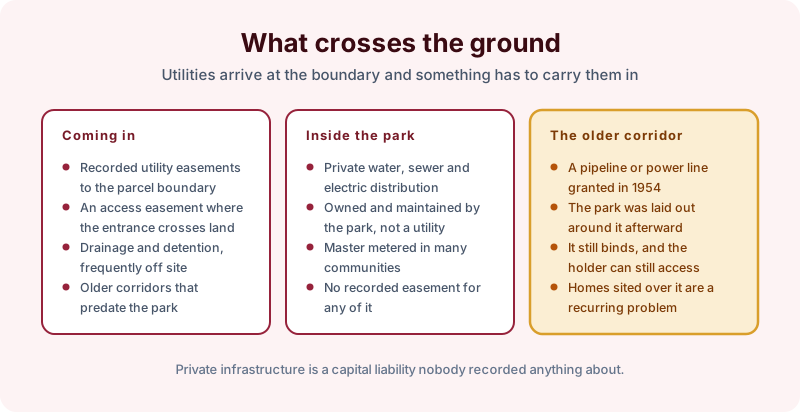
Coming in, the parcel depends on recorded utility easements reaching its boundary, an access easement where the entrance crosses adjoining land, drainage and detention that is frequently located off site, as in stormwater detention and retention pond easements, and occasionally older corridors that predate the community.
Inside, almost nothing is recorded. The water, sewer and electric distribution is private, owned and maintained by the park rather than by a utility, master metered in many communities, and carried on no recorded easement because the owner does not need an easement across its own land.
The older corridor is the recurring problem. A pipeline or transmission easement granted in 1954, with the park laid out around it afterward. It still binds, the holder can still require access, and homes sited over it are a genuine and frequently discovered issue. That is the blanket easement question in blanket easements with no defined location.
Why the private infrastructure matters to a buyer
Because it is a capital liability that no recorded instrument describes. A community with sixty-year-old clay sewer laterals and a private water system has a replacement cost sitting somewhere in its future, and the owner carries it rather than a utility.
Where sites are separately deeded, the association carries it instead, which makes the reserve position the thing worth examining. Where they are rented, the park owner carries it and the residents feel it through rent.
A records search reports what was recorded and indexed over the term searched. It establishes the easements serving the parcel and says nothing about the condition of anything inside it, and a clean report is not proof the systems work.
Scoping the search
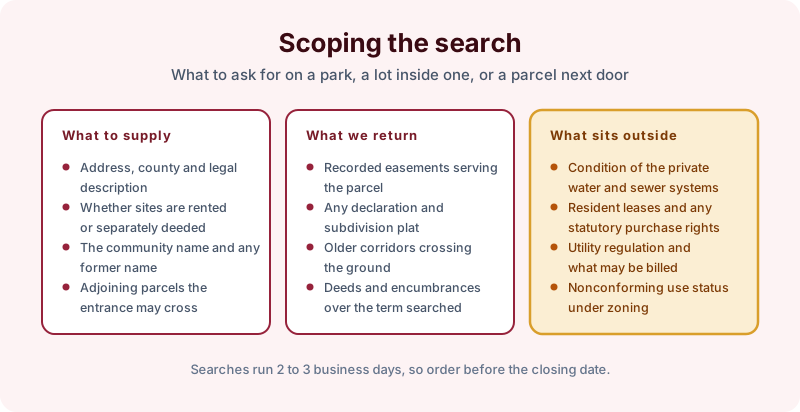
Give us the address, county and legal description, whether sites are rented or separately deeded, the community name with any former name, and the adjoining parcels the entrance may cross. What comes back is the recorded easements serving the parcel, any declaration and subdivision plat, the older corridors crossing the ground, and the deeds and encumbrances over the term searched. Our process page explains how that is done.
What sits outside is the condition of the private water and sewer systems, the resident leases and any statutory purchase rights, utility regulation and what may be billed, and nonconforming use status under zoning.
The takeaway
Two structures, identical from the road, with completely different records behind them. Establish whether the sites are rented or owned before anything else, and search for the older corridors, because those predate the park and bind it regardless. Start the order online, or send us the address and the county and we will tell you which term fits and what it would and would not cover before anything is ordered.