

· AFX Research
Stormwater Detention and Retention Pond Easements on a Lot
The basin at the edge of a subdivision comes with pipes, access rights, and a maintenance duty someone inherits. What is recorded, and who ends up paying for it.
Table of Contents
Every subdivision built in the last forty years has to do something with its runoff, and the usual answer is a basin at the low corner. It looks like landscaping. It is a piece of infrastructure with a recorded easement, a network of pipes reaching across other lots, and a maintenance obligation that has to belong to somebody. Working out who is the part that matters when a lot changes hands, and it starts in the same place as drainage easements generally.
The pond is not the whole burden
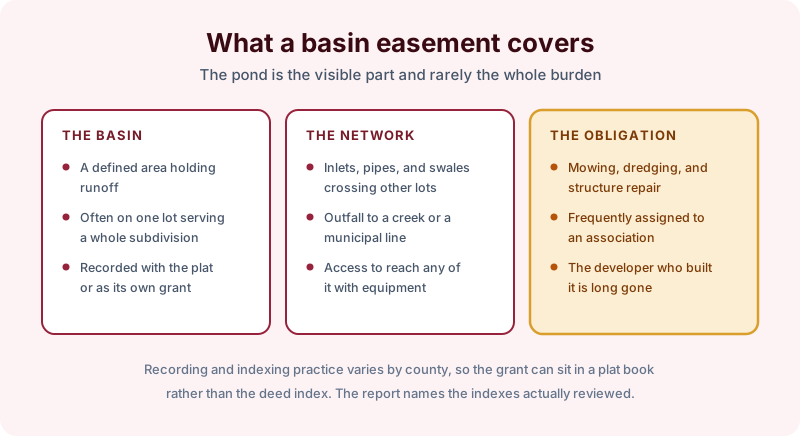
The basin is a defined area holding runoff, frequently sitting on one lot while serving the whole development, and recorded either with the plat or as its own grant.
The network reaching it is easy to miss and often larger. Inlets, pipes, and swales crossing other lots, an outfall to a creek or a municipal line, and access rights letting somebody bring equipment to any part of it. A lot that contains no pond at all can still carry several of these.
The obligation is the durable part. Mowing, dredging out accumulated sediment, and repairing the outlet structure are real recurring costs, usually assigned to an association, and the developer who built the thing has generally been gone for twenty years.
Who has to maintain it
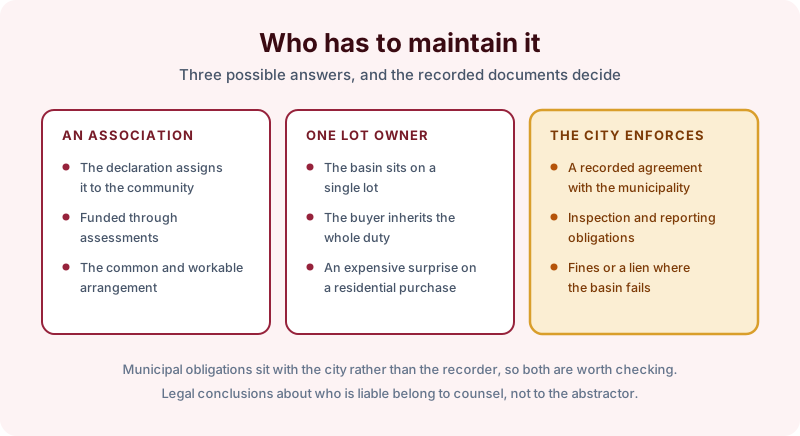
The common and workable arrangement is that the declaration assigns the basin to the association and funds it through assessments. That spreads the cost the way it was intended to be spread.
The arrangement that catches buyers is the one where the basin sits on a single lot with no association behind it, or where the association was never properly formed or has lapsed. The owner of that lot inherits the whole duty, and dredging a silted basin is not a small residential expense.
Worth distinguishing the two types while you are reading, because they age differently. A detention basin holds water briefly and releases it slowly, so it is dry most of the time and looks like a shallow field. A retention basin keeps a permanent pool, which is the one marketed as a water feature and the one that silts up and grows algae. The second carries the heavier ongoing cost.
Either way, the municipality is usually in the picture. Many of these were approved subject to a recorded maintenance agreement with the city, carrying inspection and reporting obligations, and a failing basin can produce enforcement or a lien. That half sits with the city rather than the recorder, so both need checking, which is the same split described in private road maintenance agreements.
Before you buy the lot
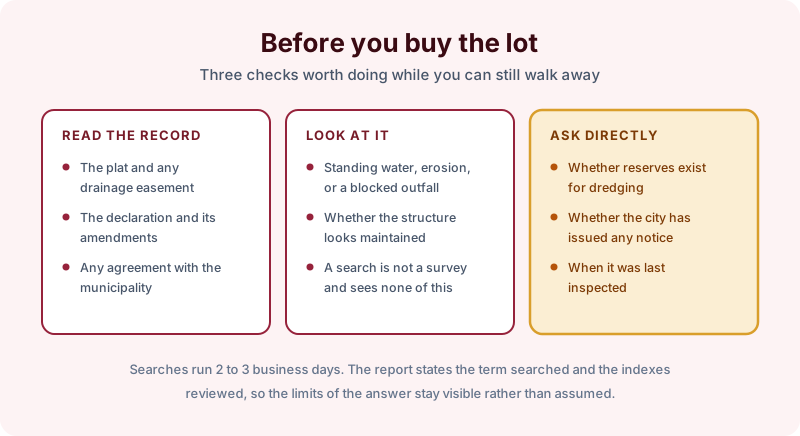
Read the record. The plat and any drainage easement, the declaration and its amendments, and any agreement with the municipality. Recording and indexing practice varies by county, so a basin easement can sit in a plat book rather than the deed index, and a search that never opens the plat book will miss it.
Look at the thing itself, because a search is not a survey and observes nothing. Standing water where there should not be, erosion around the inlet, a blocked outfall, or a structure that plainly has not been maintained.
Then ask. Whether reserves exist for dredging, whether the city has issued any notice, and when it was last inspected. Those answers come from the association and the municipality, and they are the difference between a landscaping feature and a five-figure liability. Searches run 2 to 3 business days, and our search packages set the term.
The takeaway
Treat a basin as infrastructure with a recorded easement and an owner. Read the plat and the declaration to find who maintains it, check whether a municipal agreement adds obligations on top, and walk the site because the record cannot see it. A clean report means nothing was found of record rather than that the lot is unburdened. Start the order online, or send us the address and the county and we will tell you which search term fits and what it would and would not cover before anything is ordered.