

· AFX Research
What a Bankruptcy Does to an Easement, and What It Cannot
A recorded easement is an interest in land and usually survives a bankruptcy. Where the case file sits, why the county index never flags it, and what to pull when one appears.
Table of Contents
Bankruptcy shows up in chains of title constantly, and people reading one tend to assume it wiped the slate. It clears debt efficiently and it is much less effective against property interests, which is why an easement recorded before a filing usually walks out the other side intact. Working out whether yours did is a two-office exercise, closer in shape to easements created by a court order than to anything in the deed books.
What a bankruptcy reaches
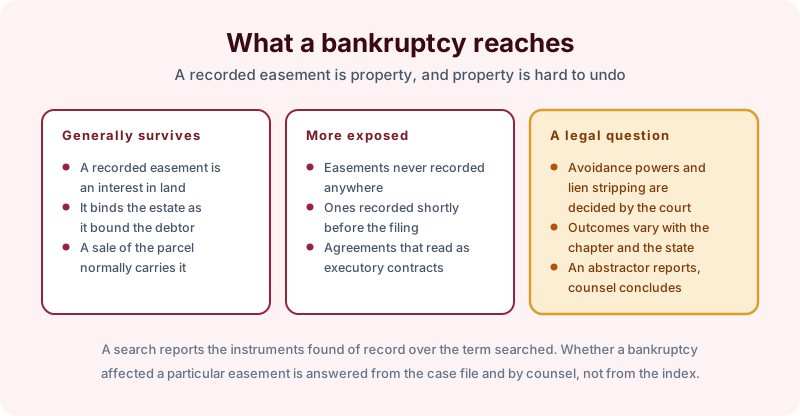
An easement is an interest in real property, not a debt. The estate created by a filing takes the debtor’s land subject to whatever burdened it, and a sale of the parcel during the case normally carries the easement along. That is the ordinary outcome and it is the one to expect.
Some easements are more exposed than others. One that was never recorded anywhere is vulnerable to a trustee’s power to take the position of a hypothetical purchaser without notice. One recorded shortly before the filing can attract a preference or fraudulent transfer argument. And an arrangement that reads more like a continuing contract than a property grant, a shared maintenance agreement with ongoing obligations for instance, may be treated as executory and can be rejected.
Whether any of that happened in a given case is decided in the bankruptcy court, not in the index. Avoidance powers, sales free and clear, and what a confirmed plan did to a particular interest all turn on the chapter, the state and the facts. An abstractor reports the recorded picture and counsel draws the conclusion.
Two files, two indexes
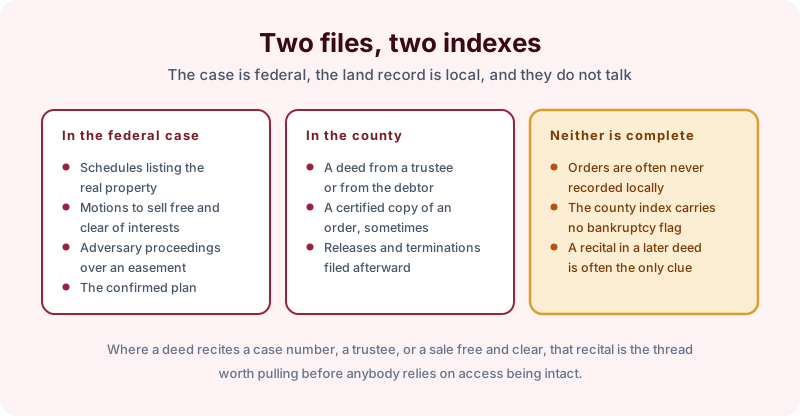
The case is federal and the land record is local, and nothing automatically connects them.
In the case file sit the schedules listing the real property, any motion to sell free and clear of interests, any adversary proceeding brought over an easement specifically, and the confirmed plan. That is where the substance is.
In the county you may find a deed from a trustee or from the debtor, sometimes a certified copy of an order, and any release or termination recorded afterward. You may equally find none of that, because orders are frequently never recorded locally and the county index carries no bankruptcy flag of any kind.
So the usual clue is a recital. A deed referring to a case number, a trustee, or a sale free and clear is the thread worth pulling, and it is easy to read past. Recording practice differs county to county on whether a judgment or order affecting land has to be filed at all, so never take one county’s habit as the rule.
Reading the chain around it
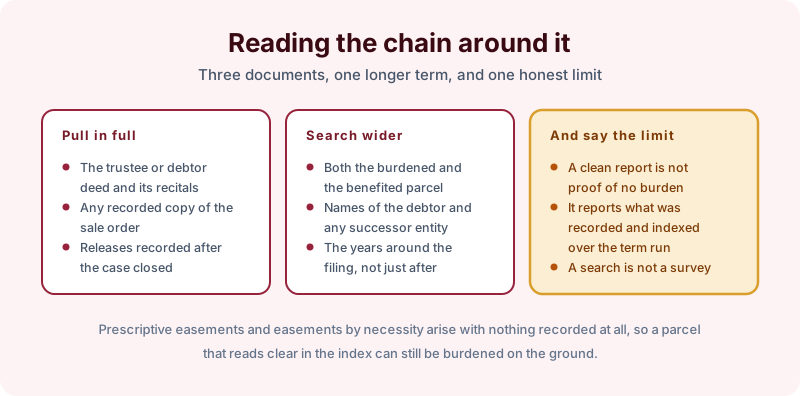
Pull the trustee or debtor deed in full and read its recitals, any recorded copy of the sale order, and anything released after the case closed. Index lines will not carry the language that matters.
Search wider than the transaction parcel. Both the burdened and the benefited parcel, since an easement has two ends and only one of them may have been in the estate. The debtor’s name and any successor entity. And the years around the filing rather than only afterward, because the instrument that decides this is usually older than the case.
Then read the result honestly. A clean report tells you what was found of record over the term run. It is not proof the parcel is unburdened, and prescriptive easements and easements by necessity arise with nothing recorded at all. A search is also not a survey and locates nothing on the ground, which is the standing caveat set out in how to find easements on a property.
The takeaway
Treat a bankruptcy in the chain as a signal to widen the search rather than as a line you can start reading from. Pull the deed and its recitals, look for a case number, and get the case file when one appears. Whether a particular interest survived is a legal question, and it is one worth answering before closing rather than after a neighbor blocks the drive. Start the order online, or send us the address and the county and we will tell you which search term fits and what it would and would not cover before anything is ordered.