

· AFX Research
Easements Reserved in a Deed Versus Granted by a Separate Instrument
The two ways an easement gets created, why a reservation buried in a deed is far harder to find than a standalone grant, and what the index does and does not tell you.
Table of Contents
Two parcels can carry exactly the same burden and leave completely different traces in the county record. In one case somebody signed an easement deed, it was recorded under its own instrument type, and a name search finds it in a minute. In the other, the right was kept back inside the deed that sold the land, the index entry says nothing but deed, and the only way to find it is to read the instrument. The burden is identical. The visibility is not, and that gap accounts for a large share of the easements described in why a recorded easement gets missed.
The two routes
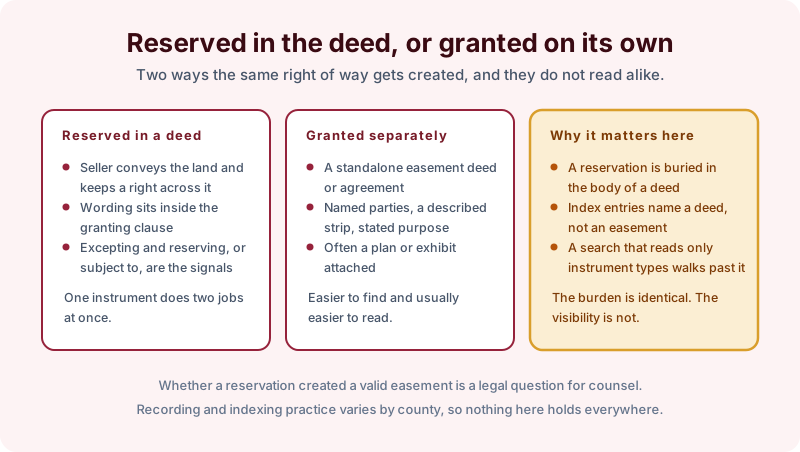
A separate grant is what most people picture. Two named parties, a described strip, a stated purpose, often a plan attached as an exhibit. It was drafted to be an easement and it reads like one.
A reservation is the other half of a sale. The seller conveys the parcel and keeps something back — a driveway across the front, a line to a well, the right to cross to a back field that is no longer being sold. The words sit inside the granting clause of the deed itself, usually introduced by excepting and reserving, or sometimes by subject to, which is weaker language and not always doing the same work. One instrument does two jobs, and only one of them is announced.
What the index can tell you
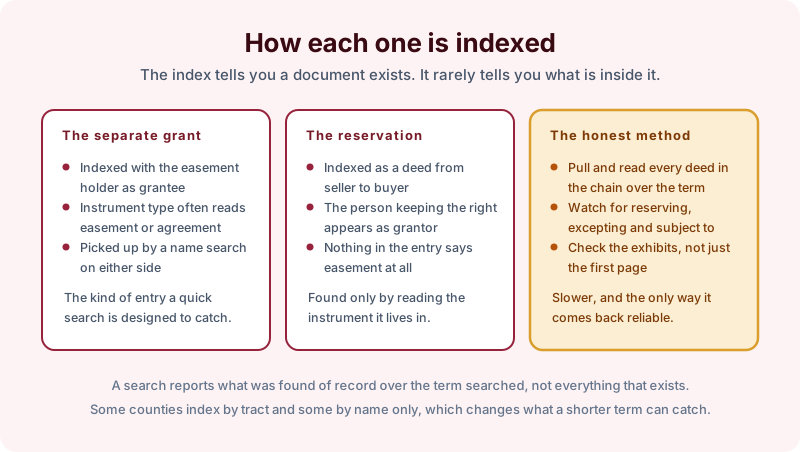
A standalone easement is indexed with the holder as grantee and the instrument type often reads easement or agreement. A name search on either side catches it.
A reservation is indexed as an ordinary deed from seller to buyer. The person who kept the right appears as the grantor — the same role they occupy in every other sale in their life — and nothing in the entry flags an easement at all. In a county that indexes by tract, the deed at least sits against the parcel. In a name-only county it sits against two names, and a short-term search that never reaches the year of that sale will not see it.
Which is why the method matters more than the term. Pull and read each deed in the chain, watch for reserving and excepting language, and check the exhibits rather than the first page. That is slower, and it is the only approach that comes back reliable. It is also why the 30-year and 50-year search terms earn their keep on a parcel that was carved out of something larger.
Reserving a right for somebody else
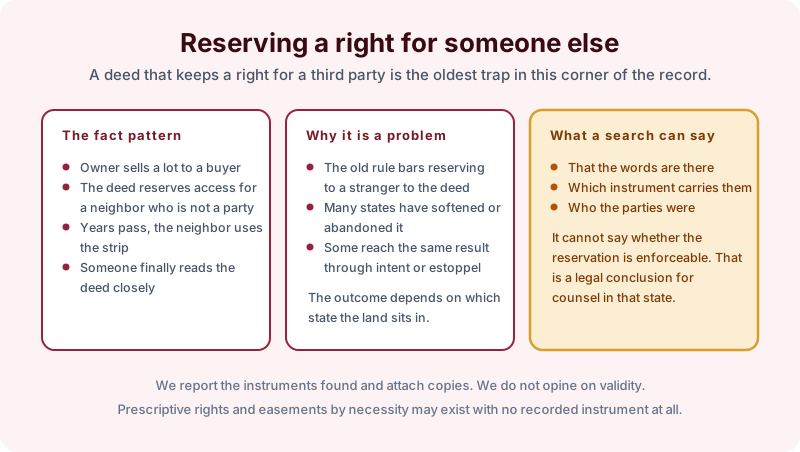
There is an old and genuinely unsettled wrinkle here. A deed sometimes tries to reserve a right not for the seller but for a third party who never signed anything — a neighbor, a family member, a church next door. The traditional rule says you cannot reserve an interest to a stranger to the deed. Many states have abandoned or softened that rule, several reach the opposite result through intent or estoppel, and the answer turns entirely on where the land sits.
A search can tell you the words are in the instrument, which deed carries them, and who the parties were. It cannot tell you whether the reservation is enforceable today. That is a legal conclusion and it belongs to counsel licensed in that state, which is the same line we draw in who had authority to grant the easement.
The takeaway
Recording and indexing practice varies county by county, and a clean report is never proof a parcel is unburdened — prescriptive rights and easements by necessity are routinely created with no recorded instrument at all. What a careful search of the right term does is read the conveyances rather than skim the index, so a right kept back forty years ago in the body of a deed comes out with the rest. Turnaround is 2–3 business days. Start the order online, or send us the address and the county and we will tell you which term fits and what it would and would not cover before anything is ordered.