

· AFX Research
Livestock Crossing and Agricultural Access Easements on Farms
When a farm is divided, the water, the barn, or the road often ends up on one side. What a recorded crossing grant defines, and why so many were never written down.
Table of Contents
Somebody buys forty acres of pasture and discovers that twice a year the neighbor moves cattle straight across the middle of it, along a track that has been there since before either of them was born. Whether that is a right or a habit depends on documents that may or may not exist, and the answer is worth establishing before the first gate goes up. It is the agricultural version of the problem in landlocked property and easements by necessity.
Why the crossing exists at all
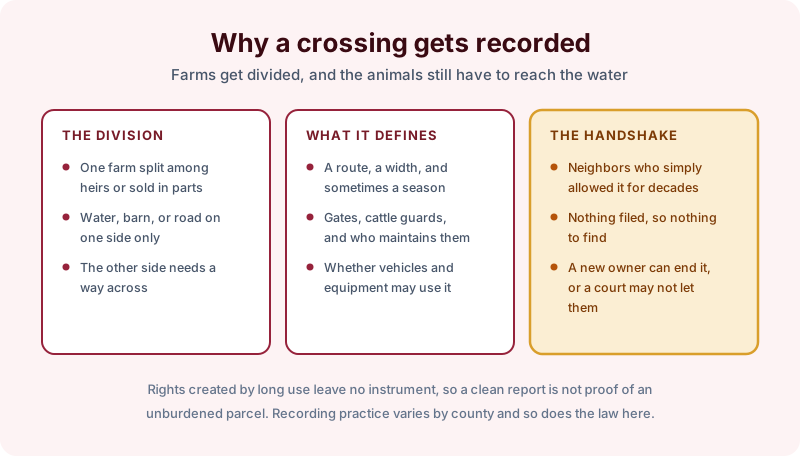
Almost always, because a farm was divided. One operation split among heirs, or sold off in parts, leaving the creek, the barn, the loading pens, or the road frontage on one side of a new line and the ground that depends on them on the other.
Where somebody was thinking clearly at the time, a crossing easement was drafted and recorded. It defines a route and a width, sometimes a season, the gates and cattle guards and who maintains them, and whether vehicles and equipment may use it or only animals.
Where nobody was thinking about it, there is nothing. Neighbors simply allowed the crossing for decades because that is how the family had always done it. Nothing was filed, so nothing will be found. A new owner may be able to end that arrangement, or a court may find that long use created a right anyway, and a records search cannot settle either possibility. That is the same limit described in prescriptive easements and the record.
Reading a grant that does exist
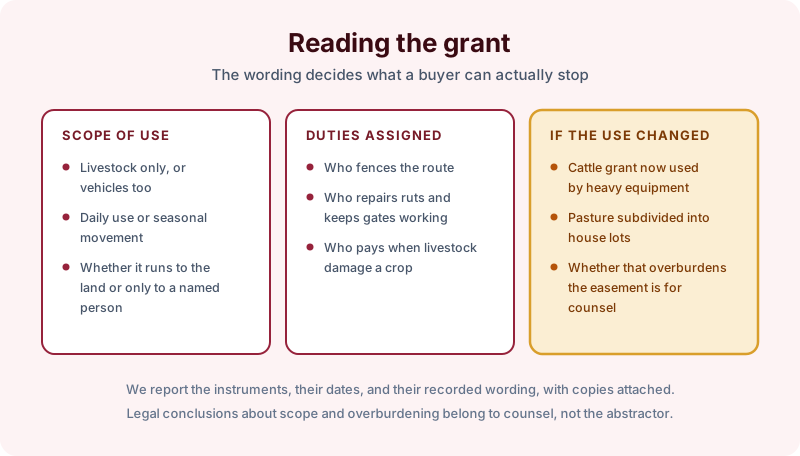
Scope first. Livestock only or vehicles too, daily use or seasonal movement, and crucially whether the right runs with the land or was granted personally to a named neighbor. A personal right dies with the arrangement; one that runs with the land arrives with the deed.
Then the duties, which on farm crossings are unusually specific and unusually load-bearing. Who fences the route, who repairs the ruts and keeps the gates working, and who pays when animals get into a crop. These clauses are the reason the easement gets read again years later.
Then the question of changed use. A grant written for cattle now used by heavy equipment, or pasture on the benefited side subdivided into house lots, raises whether the easement has been overburdened. That is a legal conclusion and it belongs to counsel. We report the instrument, its date, and its recorded wording, with copies attached.
Seasonal wording deserves a second look too. A grant permitting movement in spring and fall reads as generous until somebody wants to run stock through in July, and a route described as following the existing lane raises the question of which lane, given that farm tracks move as fields are reworked.
Before you buy the ground
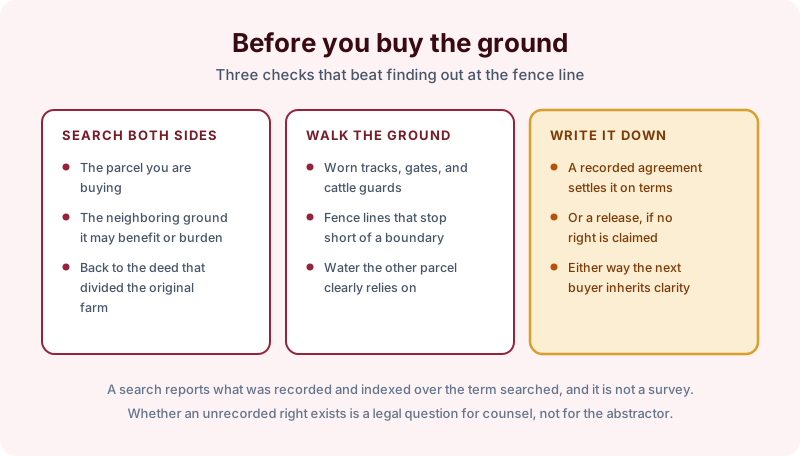
Search both sides. The parcel you are buying and the neighboring ground it may benefit or burden, back far enough to reach the deed that divided the original farm, because that is where a crossing right was most likely created or forgotten.
Walk the ground, since a search is not a survey and observes nothing. Worn tracks, gates, cattle guards, fence lines that stop short of a boundary, and water the other parcel plainly relies on are all evidence the record will not give you.
Then, where a real question emerges, write something down. A recorded agreement settles it on terms both sides accept, and a release settles it where no right is claimed. Either way the next buyer inherits clarity instead of the same conversation. Our guarantee covers the search that establishes what is currently on file.
The takeaway
A crossing is either a recorded right or an accumulated habit, and the difference decides what a new owner can do about it. Search both parcels back to the division, read the scope and the maintenance duties rather than the label, and walk the route. Searches run 2 to 3 business days. Start the order online, or send us the address and the county and we will tell you which search term fits and what it would and would not cover before anything is ordered.