

· AFX Research
Merger of Title and What Happens to an Easement After It
When one owner acquires both parcels the easement can be extinguished, and nothing gets filed to say so. Why the grant stays in the index and when merger does not apply.
A buyer finds a driveway easement in the title report, recorded in 1978, letting the lot next door cross the property. Then they notice that between 1994 and 2006 one owner held both lots. If merger applied, the easement was extinguished thirty years ago and the document in the report describes something that no longer exists. If it did not apply, the right is live. The record will not tell you which, and it will not tell you that the question exists. It is one of the subtler entries in how an easement is terminated.
The doctrine, briefly
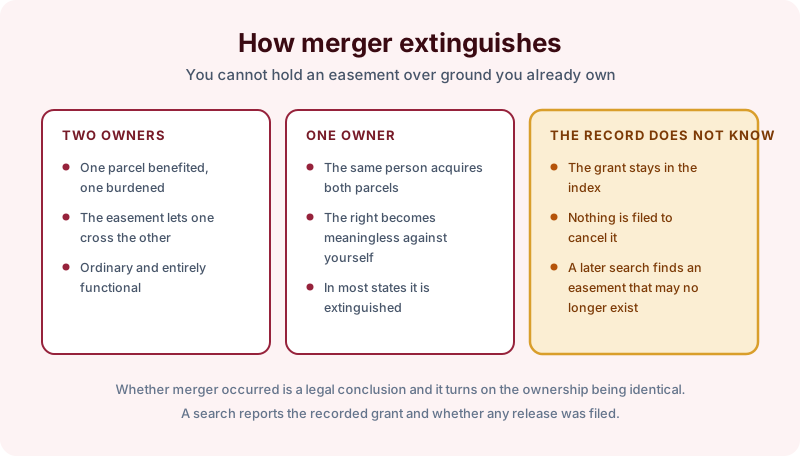
An easement needs two parcels in different hands. One benefited, one burdened, a right for one to cross the other.
When the same person acquires both, the right becomes meaningless. You do not need permission to cross your own land, and in most states the easement is extinguished at that moment rather than suspended.
Here is the practical problem. Nothing is filed to record that. The 1978 grant stays in the index exactly where it was, no release is prepared, and a search decades later finds a recorded easement that may or may not still exist. The record shows what was filed, and merger happens without a filing.
When merger does not apply
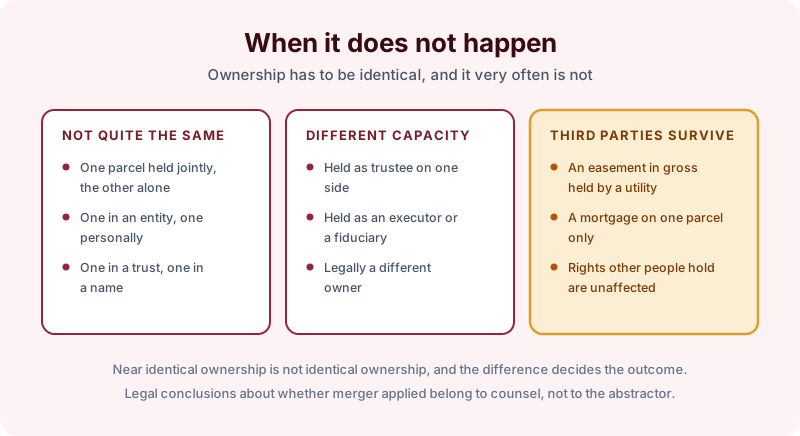
The requirement is that ownership be identical, and near identical does not count. One parcel held jointly and the other alone, one in an entity and one personally, or one in a trust and one in a name are all different owners for this purpose even where the same human being is behind both.
Capacity matters the same way. Land held as trustee, executor, or another fiduciary is legally held by a different owner from the same person’s own property.
And third party rights survive regardless. An easement in gross held by a utility does not care who owns the two parcels, and a mortgage on one parcel only can prevent merger from operating cleanly. That last point catches people, because a lender’s interest in one of the two parcels is exactly the kind of complication nobody thinks to look for.
Reading it in the chain
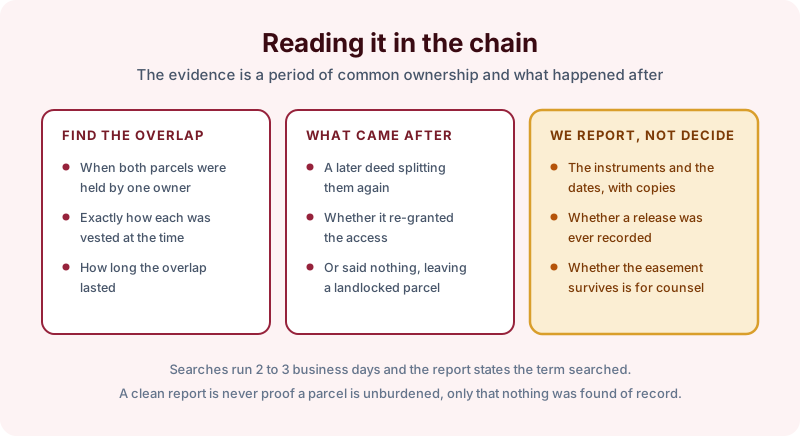
Find the overlap. When both parcels sat with one owner, exactly how each was vested during that period, and how long it lasted. That takes a chain search on both parcels rather than one, which is a scoping decision worth making at the start.
Then read what came after. A later deed splitting them again either re-granted the access or said nothing, and where it said nothing the back parcel may now be landlocked, which is the territory of landlocked property and easements by necessity.
That second outcome is the expensive one, and it is more common than it should be. A developer buys two adjoining parcels, holds them together for a few years while nothing happens, then sells one off using a description copied from the original deed. Nobody involved is thinking about an access right that stopped existing quietly during the period of common ownership.
We report the instruments and the dates with copies attached, and whether any release was ever recorded. Whether merger actually extinguished the easement is a legal conclusion for counsel, and it turns on facts about ownership and capacity that the deeds show but do not decide. Searches run 2 to 3 business days.
The takeaway
A recorded easement is not proof of a live easement, and a period of common ownership in the chain is the flag worth catching. Search both parcels, establish exactly how each was vested during the overlap, and read the deed that split them again. Recording practice varies by county, and a clean report means nothing was found of record rather than that a parcel is unburdened. Start the order online, or send us the address and the county and we will tell you which search term fits and what it would and would not cover before anything is ordered.