

· AFX Research
Overburdening an Easement, and When Extra Use Goes Too Far
What a recorded grant fixes about permitted use, the changes that push a right of way past its limits, and what the county record can and cannot settle.
Table of Contents
An easement is permission to do a specific thing on somebody else’s land. It is not a general license to use the strip however the benefited owner finds convenient. When use grows past what the grant allows, the word for it is overburdening, and it is one of the most reliable ways a quiet arrangement between neighbors turns into a dispute.
The trigger is rarely a new owner. It is a change in load — a lot split, a new building, a business where a house used to be — on land that has carried the same access for decades.
What the grant actually permits
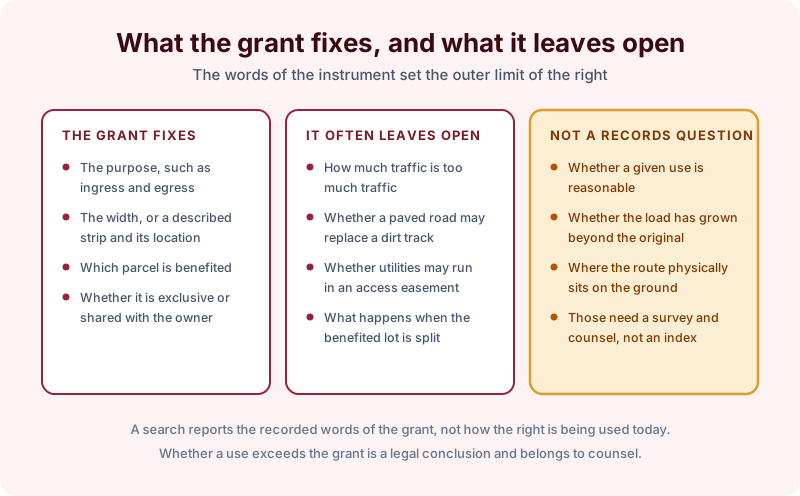
Start with the words. A grant for ingress and egress gives you passage, and it does not obviously give you a place to bury a water line. A grant describing a twenty-foot strip describes twenty feet, not thirty. A grant naming one lot as the benefited parcel benefits that lot, which matters enormously when that owner later buys the parcel behind it and starts driving both across the same lane.
Some limits are written down. Others follow from the purpose the grant states, since a right is generally read to permit what that purpose reasonably requires and not much more. Whether a use clears that bar is a legal question, and it helps to know which of the types of easements you are holding before anyone argues about it.
The changes that raise the question
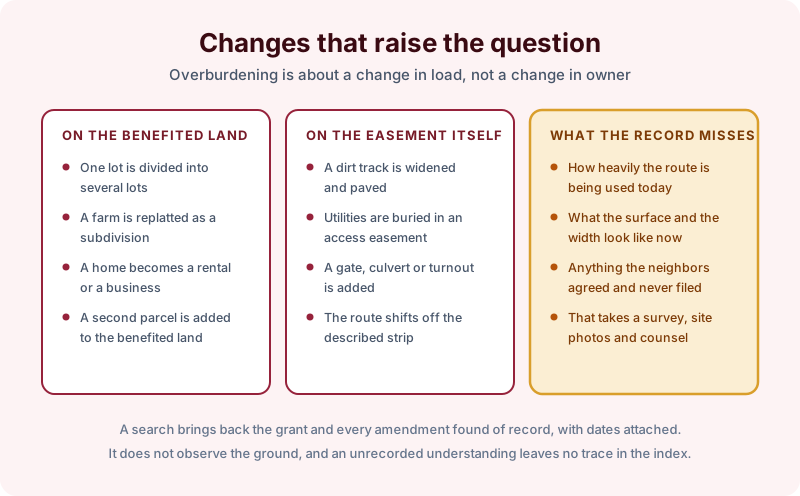
Three patterns account for most disputes.
The first is division of the benefited parcel. One farmhouse used a lane for sixty years. The farm is platted into fourteen lots, and fourteen households now use that lane. Whether the easement stretches to cover them often turns on what the original grant said about successors and assigns, and on whether the division was foreseeable.
The second is a change of use. A right of way serving a cabin reads differently once the cabin becomes a short-term rental or a wedding venue. The route has not moved an inch, but the traffic has.
The third is physical change to the easement itself, meaning widening, paving, adding a gate, or running utilities down an access strip. Improving a route to serve its stated purpose is frequently allowed. Adding a different use usually is not, which is why burying fiber in an old road easement is such a common flashpoint, covered in our guide to telecom and fiber easements.
What the record settles, and what it does not
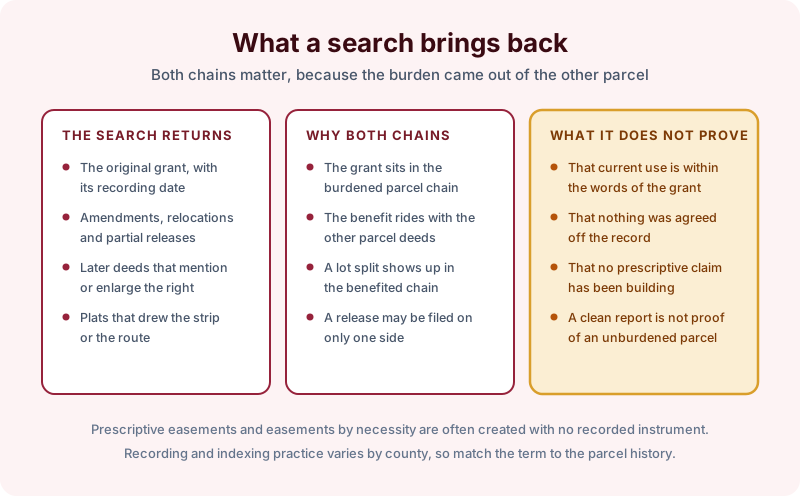
A records search answers the first half of the question precisely. It brings back the original instrument with its recording date, book and page, together with amendments, relocations, partial releases, and any plat that drew the route. It reads both chains, because the grant was recorded against the burdened parcel while the benefit travels with the other one, and a document filed on one side may never appear on the other. Our process walks through how that is assembled.
What it cannot do is measure the load. A search does not observe the ground, does not count vehicles, and is not a survey, so it will not tell you where the route sits or whether the paving has crept outside the described strip. It cannot show what two neighbors agreed and never recorded. And a clean report is never proof that a parcel is unburdened, because prescriptive easements and easements by necessity are routinely created with no instrument at all. Whether a use exceeds its grant is a conclusion for counsel, drawn from facts the search supplies.
Choosing the term for an overuse question
The practical question is how old the grant might be. Where the arrangement predates a subdivision, the paperwork usually sits at the split, frequently forty or fifty years back, and the 50-year easement search reaches it. Where the right was created on a recent plat, a shorter term will do. Recording and indexing practice varies by county, so settle the scope before ordering rather than after. Turnaround is 2–3 business days.
The takeaway
Overburdening is a question about load, not about ownership, and you answer it by setting what the grant permits against what is actually happening. Get the instrument itself rather than an index line, read both parcels’ chains, and pair the record with a survey wherever the physical route is in doubt. Then hand the file to counsel, where the conclusion belongs.
Start the order online, or send us the address and the county and we will tell you which search term fits and what it would and would not cover before anything is ordered.