

· AFX Research
Parking Easements and Shared Lot Agreements, and What They Bind
Whether the parking you rely on is an easement, a lease or a handshake, what the instrument should pin down, and why both parcels have to be searched.
Table of Contents
Plenty of commercial buildings do not have enough parking on their own lot and never have. The spaces the business actually uses sit next door, and everyone involved treats that as settled. From the parking lot, three completely different legal arrangements look identical — and only one of them survives the neighbor selling.
That is the question worth answering before a purchase, a refinance or a lease renewal. Not how many spaces there are, but on what basis you get to use them.
Three arrangements, three outcomes
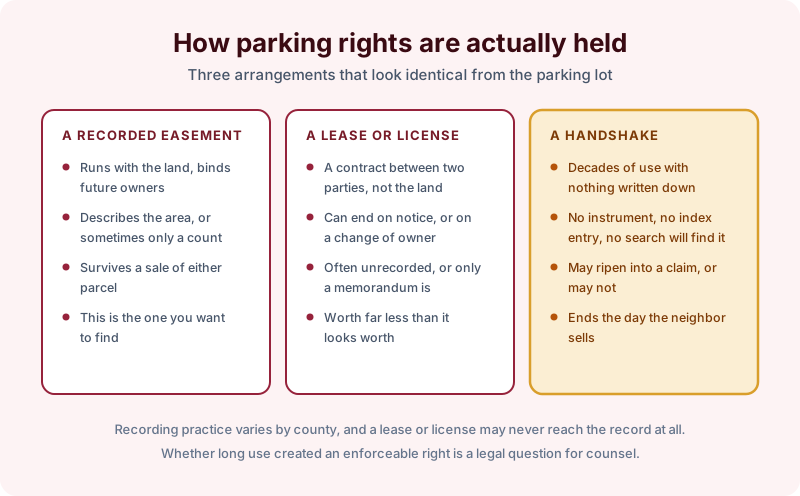
A recorded parking easement is the durable one. It is an interest in the neighboring land, it runs with both parcels, and it binds whoever buys either of them. It is an easement appurtenant, and it is what a lender wants to see when the parking is necessary to the building’s use.
A lease or license is a contract. It may be perfectly valid and it may run for years, but it binds the parties rather than the land. Many are never recorded at all, and where a memorandum is recorded it may say little beyond the fact that something exists. A license in particular can often be revoked on notice, which makes it a thin foundation for a building that cannot function without it.
An informal arrangement is the common one, and it is the one that produces the phone call. Two owners agreed something in 1987, the businesses have both changed hands twice, and nobody has ever written anything down. There is no instrument, no index entry, and no search on earth will find it. Long use may or may not have ripened into a prescriptive claim, and that is a question for counsel rather than for the record.
What a good grant pins down
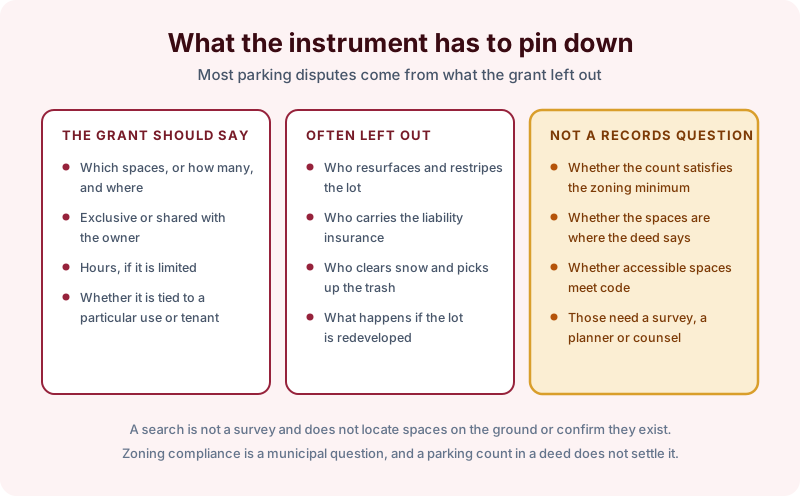
Most parking disputes trace back to what the original grant did not say. A well drafted one identifies the spaces or at least the area and a count, says whether the use is exclusive or shared with the burdened owner, states any time limits, and says whether the right is tied to a particular building use or tenant.
What grants routinely omit is the operating detail. Who resurfaces and restripes. Who insures. Who clears snow. What happens if the burdened owner redevelops. Those omissions rarely matter until the lot needs serious work, at which point they matter a great deal.
And some questions the record cannot reach at all. Whether the spaces satisfy the municipality’s zoning minimum is a planning question. Whether the spaces are physically where the deed says they are is a survey question — a search is not a survey and does not locate anything on the ground. Whether accessible spaces meet code is neither.
Searching both sides of the line
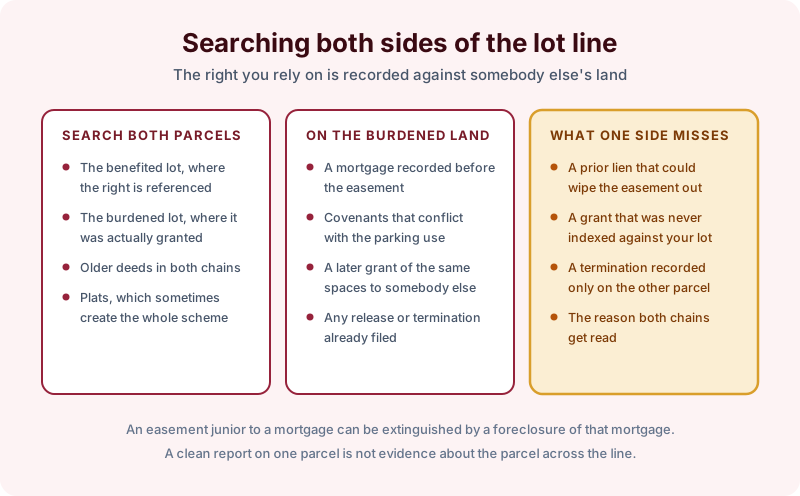
Here is the part that gets skipped. The right you are relying on was granted out of somebody else’s land, so it was recorded in that parcel’s chain. Searching only your own parcel can miss the grant entirely, and it will certainly miss anything that happened to the burdened land afterward.
Two things on the burdened side deserve specific attention. A mortgage recorded before the easement can extinguish it if that mortgage is ever foreclosed, which turns a permanent-looking right into a temporary one. And a later grant of the same spaces to a third party is more common than it should be, particularly where the original grant described a count rather than a location.
Plats are worth pulling as well, since in planned commercial developments the whole parking scheme is frequently created on the plat rather than by separate deed. That is the same mechanism covered in easements created by a subdivision plat.
Getting the term right
For a parking arrangement of unknown age, the question is how far back the grant might sit. Where the buildings date from the 1970s or earlier, the 30-year or 50-year search is usually the one that reaches it. Where the development is recent and platted, a shorter term may be enough. Send us the addresses of both parcels and we will say which fits, and turnaround is 2–3 business days once the scope is settled.
The takeaway
Parking that has worked for thirty years is not evidence that it is protected. Find out which of the three arrangements you actually have, search the burdened parcel as carefully as your own, and read the grant for what it left out rather than only what it granted. The cheapest time to discover it was a handshake is before you own the building.
Start the order online, or send us the address and the county and we will tell you which search term fits and what it would and would not cover before anything is ordered.