

· AFX Research
Slope and Grading Easements, and What They Let Someone Do
A grading easement lets someone reshape ground you still own. Where these rights come from, what they stop you doing, and how a records search turns one up.
Table of Contents
A buyer looks at a lot with a gentle bank running along the road frontage and sees landscaping. What is actually there, quite often, is a slope easement — a recorded right allowing a road authority or a developer to cut, fill, and hold that ground in a particular shape, along with a standing right to come back and work on it. The land stays in the owner’s name and the tax bill still arrives, but a strip of it has been spoken for. It is the same category of surprise as a utility easement on your property, with a different purpose.
What the right actually allows
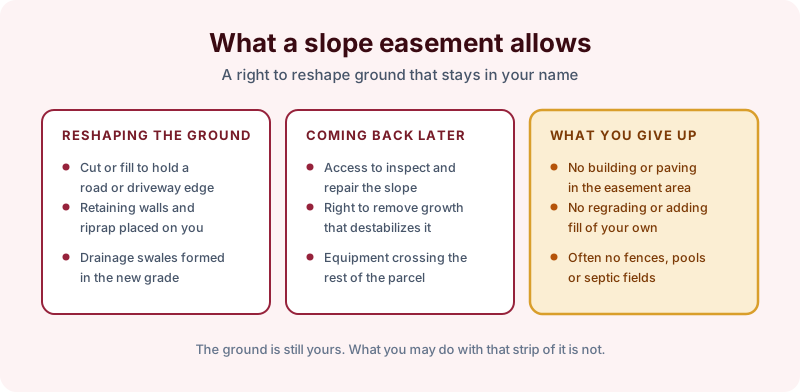
The core permission is reshaping. A road built above or below the natural grade needs somewhere for the transition to happen, and that transition usually sits on private land. The instrument allows cut or fill to support the roadway edge, retaining walls or riprap where the slope is steep, and drainage swales formed into the new contour.
It also usually allows a return visit. The holder may inspect and repair, remove vegetation that threatens stability, and bring equipment across the rest of the parcel to reach the work area. That last part catches people out, because the easement area may be twenty feet wide while the access needed to service it is not.
The restrictions are the half owners actually feel. Within the easement area you generally cannot build, pave, regrade, or add fill of your own, and depending on the wording you may not be able to put in a fence, a pool, or a septic field either. If the buildable part of a lot is small to begin with, a slope easement along the frontage can be the difference between a workable site plan and a redesign. Checking that before closing is a good deal cheaper than discovering it during permitting, and the same logic applies to building near an easement generally.
Where these rights come from
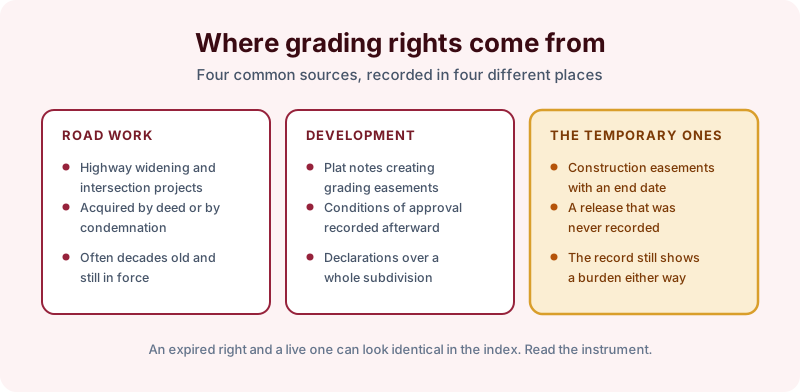
Road work is the most common source. Highway widenings, intersection rebuilds, and drainage projects acquire slope rights by deed or by condemnation, frequently decades before the current owner bought. Those instruments are usually permanent and usually still in force.
Development is the second. A subdivision plat may create grading easements across lot lines, conditions of approval get recorded after the fact, and a declaration over a whole tract can impose grading and drainage obligations on every parcel in it.
Then there are the temporary ones. A construction easement granted for the duration of a project should expire on its own terms, but the release is not always recorded. That leaves an instrument sitting in the index with no recorded end, and it means the wording of the original grant is what you have to read. Recording and indexing practice varies by county, so where these sit is a local matter, and our report names the indexes reviewed rather than implying one filing place nationwide.
What a search settles, and what it does not
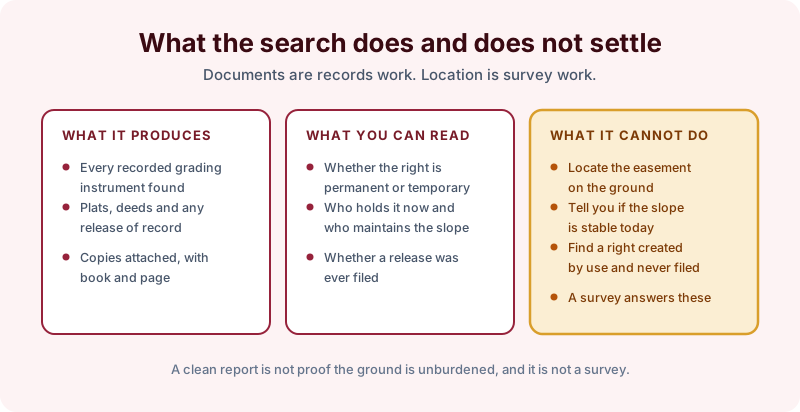
A search over the parcel produces every recorded grading instrument found across the term searched, along with the plats, the deeds, and any recorded release, with copies attached and book and page references. From those you can read whether the right is permanent or temporary, who holds it now, who is responsible for maintaining the slope, and whether anybody ever filed a release.
What it cannot do is put the easement on the ground. A search is not a survey and does not locate a boundary or measure a setback. It also cannot tell you whether the slope is stable, which is an engineering question, and it cannot find a right that was created by long use and never recorded. A clean report is evidence, not proof that a parcel is unburdened. Our terms run 20, 30, and 50 years, and our abstractors return most searches in 2–3 business days. Which term fits depends on how far back the road work in that area goes.
The takeaway
Treat a graded bank along a frontage as a question rather than as scenery. Get the recorded instruments, read whether the right is permanent and how wide it is, and pair the report with a survey before anyone designs around it. Start the order online, or send us the address and the county and we will tell you which search term fits and what it would and would not cover before anything is ordered.