

· AFX Research
Snow Storage and Plowing Easements, What the Record Shows
Plowed snow has to be pushed somewhere, and on a shared lot or a private road that somewhere is a burden on a parcel. What gets recorded and what stays a habit.
Table of Contents
In a commercial center in northern Michigan, the plow driver has been pushing snow into the same corner of the same lot since the buildings went up. Nobody has ever thought of it as an easement. Then the corner lot sells, the new owner plans to build on it, and two things become urgent at once — whether anyone had a right to put snow there, and where the snow is supposed to go now. This is a seasonal version of the question set out in private road maintenance agreements, with a physical storage burden attached.
What a snow easement grants
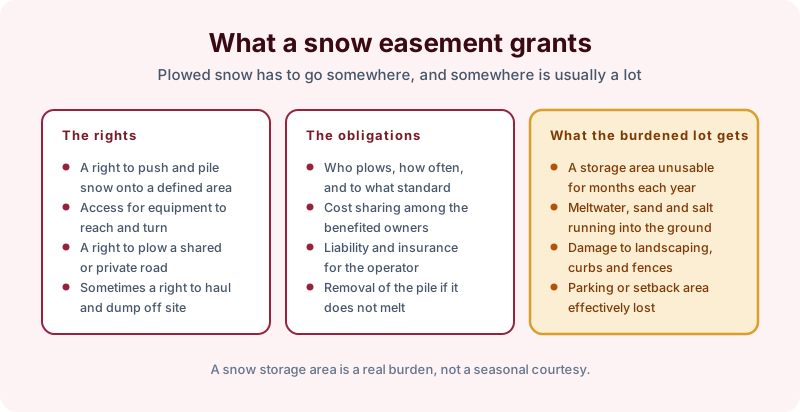
A properly drafted instrument grants a right to push and pile snow onto a defined area, access for equipment to reach and turn, and usually a right to plow a shared or private road. Where a site is tight, it may grant a right to haul snow off the property entirely.
It also imposes obligations, and the useful ones are specific. Who plows, how often, and to what standard. How the cost is shared among the benefited owners. Who carries liability and insurance for the operator. And what happens to the pile if it does not melt, which on a bad year is a genuine question.
The burden on the receiving parcel is real and it is not seasonal in effect. A storage area is unusable for months, the meltwater carries sand and salt into the ground, landscaping and curbing take damage every year, and the parking or setback area is effectively lost. A buyer who values that corner as buildable is valuing something that may be encumbered.
Where the rights are recorded
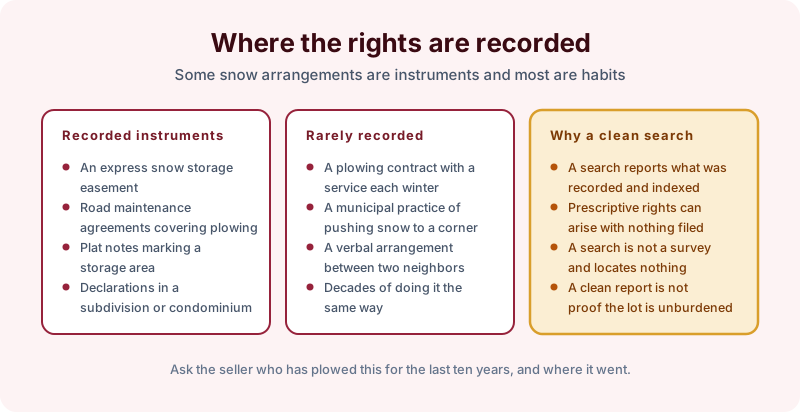
Some of this is recorded and a search will find it. An express snow storage easement, a road maintenance agreement covering plowing, plat notes marking a storage area, or a declaration in a subdivision or condominium that allocates the whole arrangement.
Most of it is not. A plowing contract renewed each winter is a service agreement between the owner and a contractor, not a property interest. A municipal practice of pushing street snow to a particular corner is a practice. A verbal arrangement between two neighbors is exactly as durable as their relationship.
That gap matters more here than in most easement questions, because decades of doing the same thing is precisely the fact pattern that produces a prescriptive claim. A search reports what was recorded and indexed over the term searched. Prescriptive rights arise without any recorded instrument, so a clean report is never proof that a parcel is unburdened, and a search is not a survey and does not locate anything on the ground. That limit is spelled out in prescriptive easements and the record.
Why buyers find this late
Because it is invisible in July. A site visit in summer shows a clean corner of a parking lot. The plow contract is not in the diligence file because nobody thinks of snow removal as a title matter. And the seller answers honestly that there is no agreement, which is true and is not the same as saying there is no right.
The practical question to ask is not whether there is an easement. It is who has plowed this for the last ten years and where the snow went.
Scoping the search
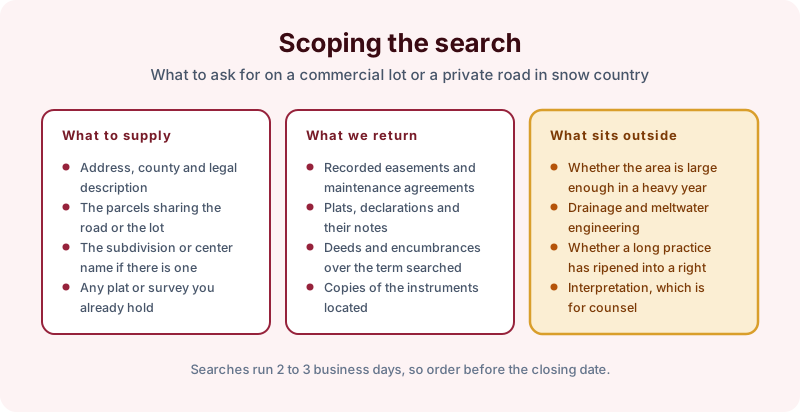
Give us the address, county and legal description, the parcels sharing the road or the lot, the subdivision or center name, and any plat or survey you hold. What comes back is the recorded easements and maintenance agreements, the plats and declarations with their notes, the deeds and encumbrances over the term searched, and copies of the instruments located. Our search packages set out the terms available.
What sits outside is whether the storage area is adequate in a heavy year, how the meltwater drains, and whether a long practice has ripened into a right. The first two are engineering questions and the third belongs to counsel.
The takeaway
Snow storage is an ordinary property burden that people treat as a housekeeping detail, and the arrangements that matter most are frequently the ones nobody recorded. Search the record, then ask who has been plowing. Start the order online, or send us the address and the county and we will tell you which term fits and what it would and would not cover before anything is ordered.