

· AFX Research
Solar Access Easements and the Right to Unblocked Sunlight
Nobody owns the sunlight crossing a neighbor's land unless somebody granted it. How a solar easement is written, and which parcel a search has to run.
Table of Contents
A homeowner spends a great deal on rooftop panels, and four years later the neighbor builds a second story or simply lets a row of conifers grow. The panels now produce a fraction of what they did. The usual first question is whether anything can be done about it, and the usual answer turns on something nobody thought about at installation, which is whether a right to that sunlight was ever created. This is genuinely different from the equipment-and-lease questions in solar and wind energy easements.
There is no natural right to light
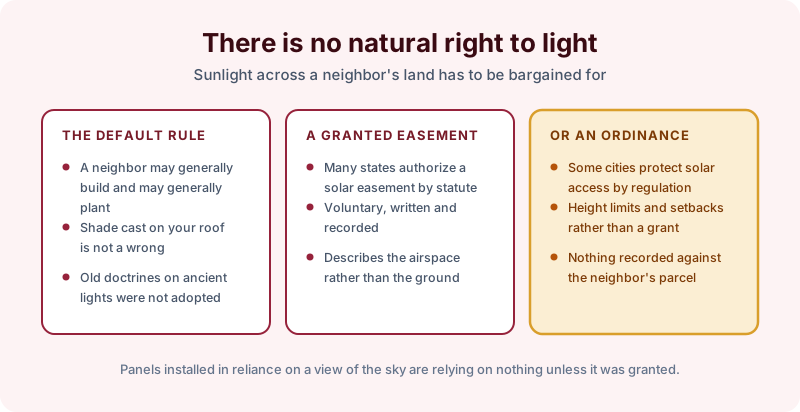
The default position in the United States is that a landowner may generally build on their land and may generally let things grow on it, and shade cast on a neighbor’s roof is not by itself a legal wrong. The older English doctrines about ancient lights were not carried over here in any general way, which surprises people who expect decades of uninterrupted sun to have earned them something.
What does exist is a solar easement created by agreement. A majority of states have statutes expressly authorizing one, and they work like other easements — voluntary, written, recorded, and running with the land — except that what they describe is airspace rather than ground.
Some cities go at it from the other direction and protect solar access by ordinance, through height limits, setbacks, or tree rules. That protection is real and it is regulatory, so nothing appears against the neighbor’s parcel in the land records at all.
What the grant has to describe
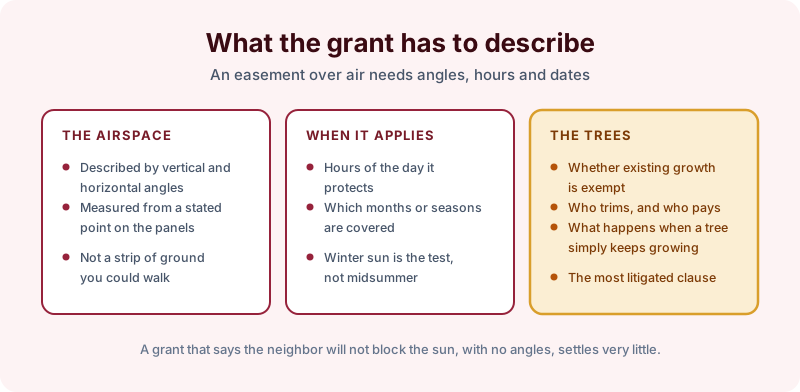
Describing airspace is harder than describing a strip of land, and a vague grant is close to worthless. A usable one gives vertical and horizontal angles measured from a stated point on the collector, so that what is protected can actually be drawn, and so a surveyor or an engineer can say whether a proposed building would intrude on it.
It also says when. Which hours of the day and which months of the year are covered, because the binding case is low winter sun rather than midsummer, and a grant that protects June and says nothing about December protects the months that did not need it.
The vegetation clause is where these end up in dispute. Whether existing trees are exempt, who is responsible for trimming, who pays, and what happens as something that was eight feet tall at signing becomes forty. A grant silent on growth has deferred the argument rather than settled it, in the way overburdening an easement does from the other side.
Searching for the right
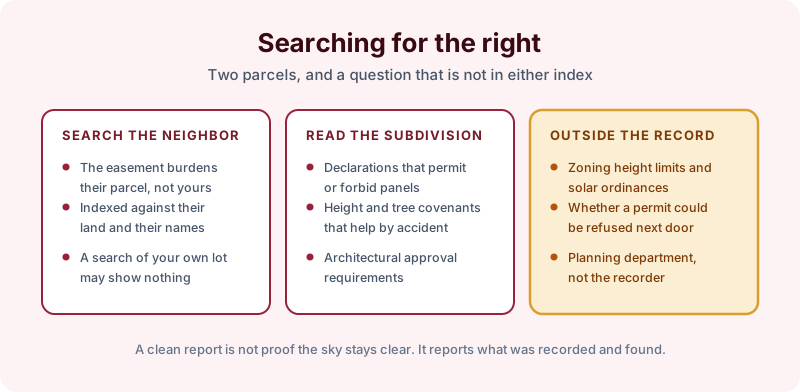
The search has to run the neighbor’s parcel. A solar easement burdens their land and is indexed against it and against their names, so a search confined to your own lot can come back clean while the grant sits one parcel over.
Read the subdivision documents as well. Declarations sometimes address panels directly, and height or tree covenants written for entirely different reasons can protect sunlight by accident. A two story height limit imposed in 1986 to preserve views may be doing more for a solar array today than any grant.
What sits outside the record is the regulatory half. Zoning heights, solar ordinances, and whether a permit next door could be refused are planning questions. Our abstractors report what was recorded and found over the term searched, recording practice varies by county, and a clean report is not proof that the sky will stay clear. Terms run 20, 30, and 50 years, our process explains what each one reaches, and most searches return in 2–3 business days.
The takeaway
Before installing panels, find out whether anything protects the light they depend on. Search the neighboring parcels rather than only your own, read any grant for angles, hours, seasons and trees, and check the local ordinance separately. Start the order online, or send us the address and the county and we will tell you which search term fits and what it would and would not cover before anything is ordered.