

· AFX Research
Solar and Wind Energy Easements: What Gets Recorded, and Where
How solar access rights and wind leases reach the land records, why a memorandum may be all you find, and what to ask for when a parcel sits inside a project.
Table of Contents
Renewable energy runs on land rights, and land rights end up in the county recorder’s office. A solar array needs sunlight to keep arriving across a neighbor’s lot; a wind or utility-scale solar project needs acreage, roads, transmission corridors, and setbacks across dozens of parcels. Every one of those needs is a private agreement between owners, which puts it in the same family as any other easement and makes it findable — sometimes only partly findable.
Three instruments behind one idea
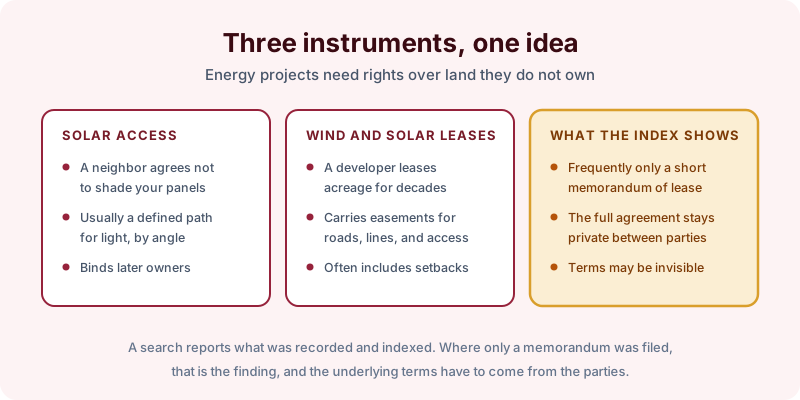
A solar access easement is the small-scale version: the owner of one parcel agrees not to shade another, usually by limiting building height or tree growth within a described area. It is a burden on one lot and a benefit to another, exactly like an easement appurtenant of any other kind.
A wind or solar lease is the utility-scale version, and it is bigger in every dimension. A developer signs up landowners for terms measured in decades, and the agreement typically carries easements for access roads, collection lines, transmission, and setbacks that restrict what the owner may build near a turbine.
What reaches the index is often less than the whole. Developers frequently record a short memorandum of lease naming the parties, the parcel, and the term, while the operative agreement stays private. A memorandum is real notice that something exists, and it is not a copy of the terms.
What a solar easement actually protects
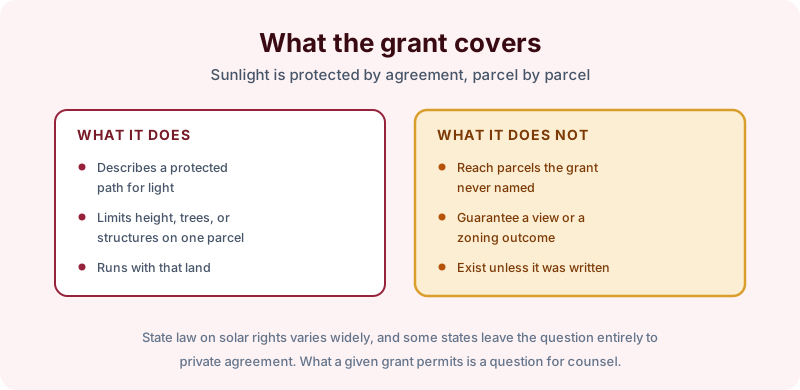
A recorded solar easement describes a path for light and limits what may block it on the burdened parcel. It runs with that land, so the neighbor who sells next year sells subject to it.
It does not reach parcels the grant never named. If the shading risk is the lot two doors down, an easement against the immediate neighbor does nothing about it. And no easement guarantees a view or a zoning outcome. State law here varies more than in almost any other easement category — some states have statutes addressing solar rights and some leave the entire question to private agreement — so what a particular grant permits is a question for counsel in that state.
Why these show up in ordinary transactions
Most people who need this research are not developers. They are buying rural acreage inside a wind project’s footprint, inheriting farm ground under lease, or building a house next to a parcel someone signed up years ago.
The practical questions are consistent. Where can a building go, given setbacks a lease may impose? Who has the right to drive across the property, and for how long? Does the agreement bind a buyer, and can it be assigned to a company nobody has heard of? None of that is answerable from the parcel map, and all of it starts with locating the instruments. This is a version of the layering that shows up along pipeline corridors, where one strip carries several generations of grants.
Scoping the search
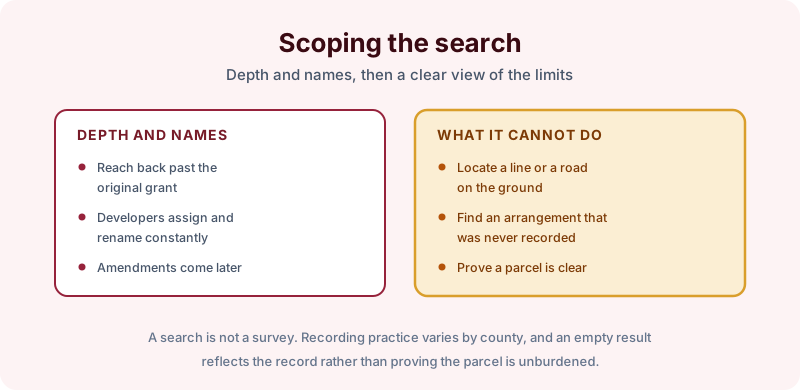
Two decisions matter. Choose a term that reaches back past the original grant, since a project signed in 2009 may sit on top of a transmission easement from 1962; the three search terms exist so the depth can match the parcel. Then account for names, because energy projects are assigned, refinanced, and renamed constantly, and amendments recorded later may be indexed under a company that did not exist when the lease was signed.
Read the report for what it is. It sets out the instruments recorded and indexed for that parcel over that term, as of the search date, with copies attached. Recording practice varies by county, an empty result is not proof the parcel is unburdened, and a search is not a survey and does not locate a road or a line on the ground. Turnaround is 2 to 3 business days.
The takeaway
Energy rights are ordinary easements wearing modern clothes, and the record is the place to start. Find the grant, find the amendments, find out whether the county holds the full agreement or only a memorandum, and take the wording to a lawyer before you build near it or buy into it. Start the order online, or send us the address and the county and we will tell you which search term fits and what it would and would not cover before anything is ordered.